
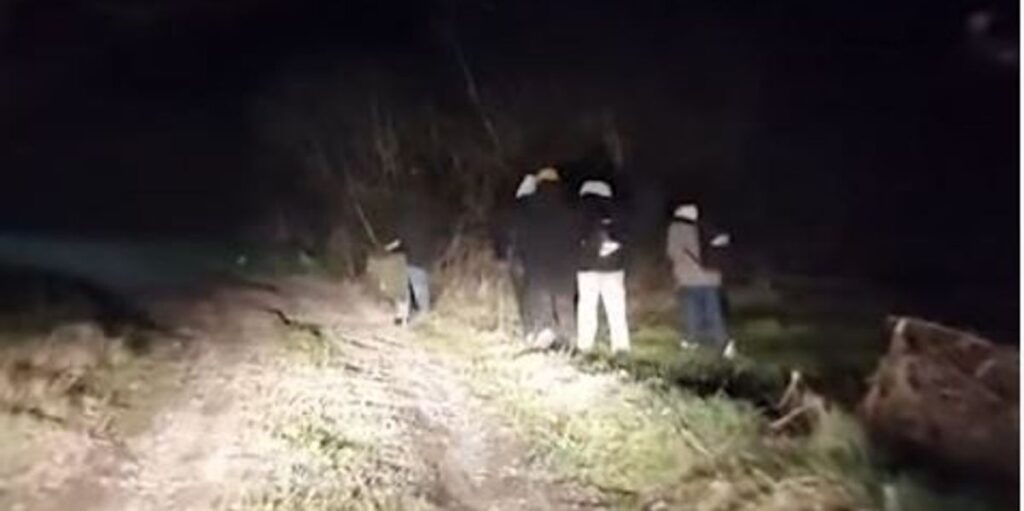
A bridge over which the railway from the Leposavic area leads to the border with Serbia has become one of the main illegal crossing points for immigrants crossing from Kosovo to Serbia.
Within a year, people from different countries around the world use this route to continue their migration towards Europe.
The area is considered difficult to control.
The lack of police communication between Kosovo and Serbia has turned the area into a space where immigrants, according to investigative sources, pass through without many obstacles.
According to the legislation in force, the Police can operate within the territory of Kosovo, but the criminal offense is only committed at the moment of crossing to the Serbian side.
Investigative files show that migrants are brought to the area in taxis, vans or buses, organized in advance. They come from various directions – through North Macedonia, Albania or through Pristina International Airport.
On Serbian territory, according to investigations, they are met by other associates of criminal groups, who then send them north, including the Subotica area or the border between Bosnia and Herzegovina and Croatia.
The “Kallxo Përnime” team has documented frequent movements in this area.
Around the bridge and railway tunnel are found food, documents, and personal belongings discarded by migrants before crossing the border.
During the night, in the village of Jarinje, groups are encountered seeking illegal exits, while movement instructions are given over the phone by people suspected of being part of the smuggling network.
Avdyl Sekiraqa, a Border Police investigator, confirms the difficulties on the ground.
“At the Leposavic railway, at the tunnel, we have managed to stop irregular immigrants several times, mainly of Jordanian nationality. But the problem is that there is no communication with the Serbian side. We carry out our work within our territory, but that’s where everything ends. Without genuine cooperation between the two states, this activity cannot be combated,” he said.
Statistics from 2025 show that around 6.100 citizens from Jordan entered Kosovo, while around 35% of them did not leave the territory.
According to the Border Police, this raises suspicions that entry as tourists has been misused for irregular migration towards European Union countries or the United Kingdom.
Authorities estimate that Kosovo remains a transit country on the so-called “Balkan Route”, which is considered one of the easiest for traffic to the West, but at the same time one of the most profitable for smuggling networks.