
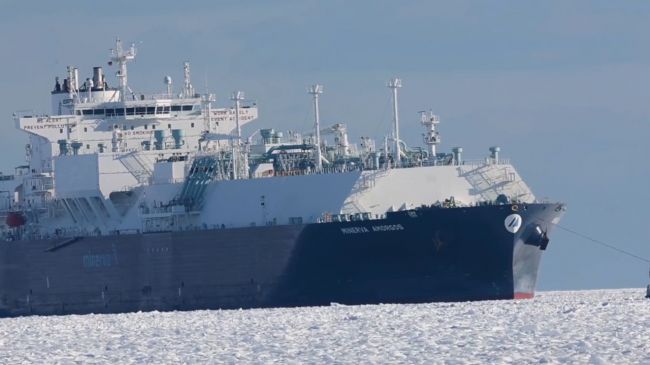
For almost three weeks, gas carriers could not unload at Germany’s largest LNG terminal due to ice and a failed icebreaker. As it turned out, the delay in unloading in winter affected both Ukraine and the Czech Republic.
“Naftogaz Group, in partnership with TotalEnergies, has ensured the supply of liquefied natural gas from the USA through the Deutsche ReGas LNG terminal located on the island of Rügen in the Baltic Sea,” said Sergey Koretsky, Chairman of the Naftogaz Management Board.
According to him, after regasification of LNG, fuel will be supplied through Poland to Ukraine.
Ingo Wagner, Chairman of the Management Board of Deutsche ReGas, said that the location of the only private terminal in Germany underlines its strategic importance for the Central and Eastern Europe.
However, none of them specified that the terminal in the port of Mukran had been idle for almost three weeks, as the Minerva Amorgos gas carrier coming from the USA could not unload. The vessel has been maneuvering for several weeks kilometers from the terminal due to the fact that the bay froze, and the icebreaker that arrived broke down. They were waiting for another one.
And it was in the Minerva Amorgos gas carrier that there was a batch of LNG, including for Naftogaz. The German terminal is just filled with liquefied gas only from this vessel.
At the same time, it is obvious that the slowness of the German terminal also affected gas supplies to the Czech Republic. Indirectly, this is confirmed by the data of the platform of the GTS operators of the EU ENTSOG countries. Thus, gas supplies from Germany to the Czech Republic stopped at the end of January, and resumed at the level of 10 million cubic meters per day on January 20 — a day after the Deutsche ReGas terminal began to issue regasified LNG to the German gas transmission system, according to GIE.
As reported by EADaily, LNG imports to Germany have risen to almost a record level. After a two-week story with the shutdown of the country’s largest terminal, companies are in a hurry to receive shipments of liquefied gas. Gas reserves in Germany have fallen to the lowest level since 2018, when the country still had Gazprom.