

Montenegro’s Quiet Upgrade to a Real Residency‑by‑Investment Regime
For years, Montenegro was the Balkans’ “open secret”: buy just about any property, however modest, and you could convert that asset into a temporary residence permit. It was messy, under‑standardized, and frankly underpriced for what you got.
That era is over.
From 2026, third‑country nationals (non‑EU/EEA/Swiss) who want to base their stay on property ownership must now hold real estate with a tax‑assessed value of at least €150,000, as determined by the Tax Authority when calculating transfer tax. The purchase contract price, agent brochure, or what you feel the property “should be worth” is irrelevant; what matters is the official taxable value stamped by the government.
Investors who obtained residence on the old rules are effectively grandfathered and can maintain their status without retroactively meeting the €150K threshold, giving early movers a quiet structural advantage.
The €150K Taxable Value: What It Really Means
Here’s where many otherwise sophisticated investors trip up: the €150,000 is not a simple “purchase at or above €150K and you’re done” sticker. It’s a tax‑assessed benchmark.
- The Tax Authority values the property when it assesses real estate transfer tax; that value may be below your contractual price in an overheated micro‑market, or above it if you negotiated well.
- If the official taxable value is €150,000 or more, you’re in the game and can apply for a 1‑year temporary residence based on ownership.
- If the taxable value comes in below €150,000, you do not qualify under this route, regardless of how much you actually paid or what your bank transfer shows.
In practice, this nudges serious investors toward mid‑market or better quality assets—villas, modern apartments in prime coastal locations, or solid residential units in growth‑corridor cities—rather than ultra‑cheap rural stock that once offered a “residency on the cheap” arbitrage.
Who This Applies To (and Who It Doesn’t)
The €150K minimum applies to third‑country nationals relying on real estate ownership as the basis for temporary residence. EU/EEA and Swiss nationals sit in a different regulatory track thanks to their existing mobility rights and aren’t constrained by this threshold in the same way.
For qualifying foreign investors, the property‑based permit is:
- A 1‑year temporary residence card, renewable annually as long as the legal criteria remain satisfied.
- Explicitly tied to maintaining ownership, continued eligibility, and regulatory compliance.
Residence granted on this basis does not automatically permit employment or commercial activity in Montenegro; work and business activities fall under separate regimes and need their own structuring.
Core Eligibility: Beyond Just Buying the Asset
Owning a qualifying property is the anchor, not the whole vessel. To obtain a temporary residence permit based on property ownership, you’ll generally need to demonstrate:
- Ownership of real estate in Montenegro with a tax‑assessed value ≥ €150,000 (for new third‑country applicants).
- Sufficient financial means to support yourself (and dependents, if applicable).
- Proof of accommodation (your property) and valid health insurance coverage.
- A valid passport with at least three months’ validity beyond the intended stay.
- No entry ban into Montenegro, no serious criminal convictions, and no security or public health risk indicators.
- Documentation clearly establishing the purpose of stay—in this case, residence based on ownership under Article 56 of the Law on Foreigners.
Under earlier versions of the law, investors could qualify through virtually any property—sometimes even by owning just part of a modest apartment, provided their share was substantial (e.g., at least half of the title). The recent reforms sharpen that into a more recognizable “residency‑by‑investment‑style” framework with a firm financial floor.
Scope of Qualifying Property: More Than Just Beachfront Apartments
Article 56 is broad in what it accepts as a real estate basis for residence. For a foreigner, acceptable property types can include:
- Cottage or weekend home
- Villa or residential house
- Apartment (including in branded developments)
- Restaurant, café, or hospitality unit
- Utility or ancillary space
- Commercial premises such as an office, salon, or retail unit
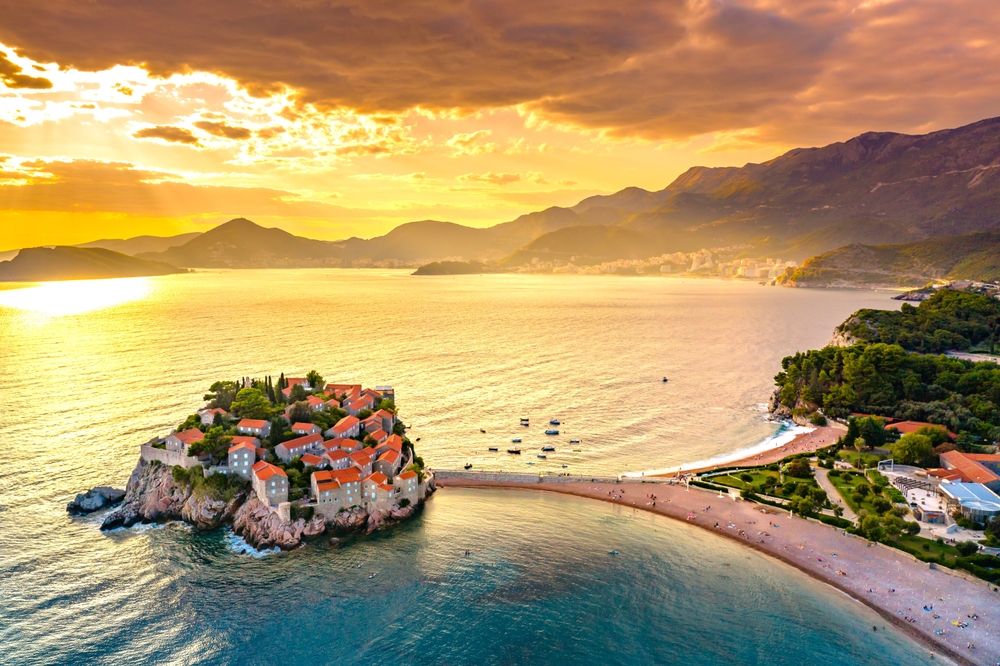
The key is clear title, registration in the land registry, and meeting the taxable valuation threshold. Mixed‑use properties and income‑generating assets can be especially interesting to investors who want both a lifestyle foothold and cash‑flow potential.
Step‑by‑Step: How the Application Typically Works
There’s nothing exotic about the process, but timing and sequencing matter. In simplified form:
- Acquire the property
Complete the purchase of qualifying real estate in Montenegro, ensuring that the deal structure and documentation will support a favorable tax valuation (≥ €150K). - Register ownership
Record the property in the land registry and obtain the folio/title deed as official proof of ownership. - File in person
Apply at the competent branch of the Ministry of Interior, submitting the required documents (ownership, financial means, insurance, criminal record certificates, passport, purpose‑of‑stay documentation). - Biometrics capture
Provide photograph, fingerprints, and digital signature as part of the residence permit issuance process. - Security and background review
Authorities cross‑check documentation, financial sufficiency, property registration, and security findings, often integrating inputs from the Police and the National Security Agency. - Decision period
Expect roughly 40 days for the process in typical cases, though high‑season application swells can stretch timelines. - Issuance of card
If approved, you receive a temporary residence permit valid for up to 12 months, tied to the underlying property and your ongoing eligibility.
One practical note executives often underestimate: document apostille, translation, and coordination between home‑country and Montenegrin authorities can be more time‑consuming than the formal “40 days” suggests, so planning several months ahead is simply prudent.
Renewal Mechanics and Exit Triggers
Temporary residence based on property is designed to be renewable, not permanent by default. To extend it, you typically must:
- Apply for renewal no later than 30 days before the permit expires.
- Submit a valid passport/travel document and ID, plus proof that you still qualify—most importantly, proof of ongoing property ownership.
- Undergo a fresh biometric capture if five years have passed since the last one.
If you continue to meet the conditions, the permit can be extended for another year at a time.
Your temporary residence will normally end if:
- You fail to renew on time.
- You sell the property that underpins the permit.
- You remain outside Montenegro beyond permitted absence rules during the permit’s validity (practically, more than about a month at a time is often flagged in property‑based regimes, though detailed “days out” tests bite more at the permanent residence stage).
- Serious criminal or security issues emerge, or you’re deported or expelled.
- You transition into permanent residence, at which point the temporary track is no longer relevant.
Family Members: Building a Household Strategy
For many HNWIs, the question isn’t just “Can I get a card?” It’s “Can my family come with me?”
Montenegro allows the main applicant to include close family members—typically:
- Spouse
- Children under 18, whether born in or out of wedlock
- Stepchildren and adopted children under 18
That structure supports multi‑generational planning and lets families treat Montenegro as a Mediterranean “bolt‑hole,” remote‑work base, or stepping stone to some future EU‑orientation, should Montenegro ultimately accede.

Real Estate Economics: Tax, Yields, and Affordability
The residency conversation only makes sense stacked against actual real estate economics. Montenegro’s property market, particularly along the coast and in select developments, still prices well below Mediterranean stalwarts like Spain, France, or Italy on a per‑square‑meter basis, while offering comparable or higher yields in select tourism‑driven nodes.
On the tax side, the country has moved to a more nuanced real estate transfer tax schedule:
- Up to €150,000: 3% tax.
- From €150,001 to €500,000: fixed €4,500 plus 5% of the amount exceeding €150,000.
- Above €500,000: fixed €22,000 plus 6% of the amount exceeding €500,000.
For investors hovering just above the €150K taxable threshold, that tax curve is a minor but calculable friction; for ultra‑prime acquisitions, it’s simply another line item in a broader wealth‑structuring picture.
Combine that with relatively low cost of living, a mild Mediterranean climate, strong English penetration in coastal hubs, and a generally safe environment, and Montenegro still looks underpriced as a lifestyle‑plus‑investment destination.
The Long Game: From Temporary Residence to Citizenship
This is where strategy and patience collide.
The standard path looks roughly like this:
- 5 years of continuous temporary residence (which can be property‑based).
- Then an application for permanent residence, subject to having maintained lawful stay with limited absences, plus ongoing accommodation, financial means, health insurance, and a clean record.
- After a total of 10 years of legal residence, a foreigner may qualify for citizenship by naturalization, assuming they meet conditions such as language ability, tax compliance, income and housing, and security clearance.
There’s a significant political catch: Montenegro generally does not allow dual citizenship for most foreigners, so investors who pursue naturalization are expected to renounce their original citizenship, which is a non‑starter for many global elites.
The End of Formal Citizenship by Investment
Montenegro’s Citizenship by Investment Program, launched in 2019, once offered a direct citizenship route through a mix of real estate investment and a mandatory donation.
Under that program, investors were required to:
- Contribute €200,000 to designated government funds (supporting underdeveloped regions and innovation).
- Invest €450,000 in approved development projects in the capital Podgorica or coastal regions, or
- Invest €250,000 in qualifying projects in northern or central Montenegro (excluding Podgorica).
Sustained pressure from the European Union—focused on security, due diligence standards, and alignment with EU accession expectations—ultimately led to the program’s formal closure by 31 December 2022.
What’s left now is a more conventional, residency‑led, time‑based path to citizenship, not a “cheque‑book passport” scheme.
Why the €150K Residency Route Still Matters to Global Capital
Investors who missed the now‑defunct CBI window sometimes dismiss Montenegro as “done.” That’s premature.
The structured property‑based residence track still offers:
- A clear, low‑six‑figure entry point into a European candidate state with coastal assets and tourism‑supported yields.
- Reasonable holding‑period optionality: you can treat Montenegro as a lifestyle hedge, a secondary base, or a medium‑term bet on EU accession without overcommitting.
- The ability to onboard a spouse and minor children into a single jurisdictional footprint.
- A realistic, albeit slower, route to permanent residence and eventual citizenship for those willing to adapt to language, tax, and single‑citizenship constraints.
If you strip away the marketing gloss, Montenegro’s €150K property rule is effectively a “lite” residency‑by‑investment offer, just without the headline label. For many family offices, that’s preferable: quieter, less politicized, and easier to defend from a reputational standpoint.
Have you read?
Revealed: The 2026 Foodie Capital Rankings for Elite Travelers.
Healthcare BNPL: Reshaping Finance and Patient Affordability in 2026.
The CEO’s Inner Circle: Why the Biggest Secrets Stay with the Coach.
The C-Suite Playbook: Strategic Drivers for Breakthrough Growth.
Human-Centric AI: Why Insight, Not Automation, Drives the Future.