
Weather conditions that can lead to wildfires are becoming more frequent, scientists have found, with the number of hot, dry, and windy days around the world annually tripling over the last four and a half decades, largely due to climate change.
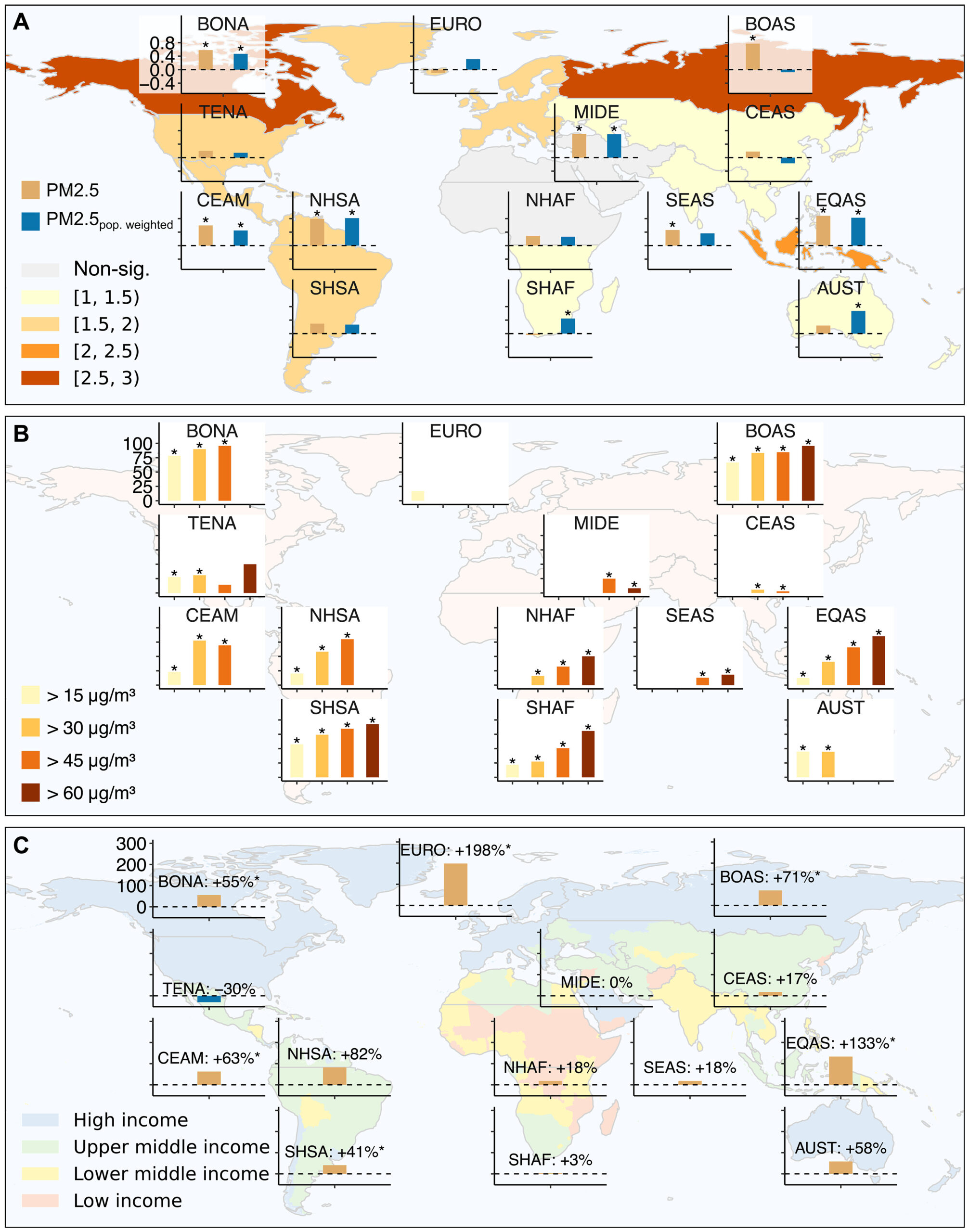
A study published in Science Advances found that in 1979 and for the following 15 years, global synchronous fire weather occurred on average 22 days a year. But by 2023 and 2024, that figure had risen to over 60 days a year.
“These sorts of changes […] increase the likelihood in a lot of areas that there will be fires that are going to be very challenging to suppress,” the paper’s co-author John Abatzoglou, a fire scientist at the University of California, Merced, said.
So-called “concurrent extreme fire weather” or synchronous fire weather (SFW) can spark widespread wildfires through “exceptionally dry, windy, and often warm conditions.” The risk of fire increases by making vegetation more susceptible to ignition and by promoting fire spread. These conditions also “complicate the coordination of fire suppression resources and worsen regional air quality.”
 © Yin et al.
The findings are significant for two reasons, experts are saying. Fire scientist Mike Flannigan of Thompson Rivers University in Canada, not involved in the research, noted that firstly, SFW is the main driver of fire impacts, and that the increasing number of SFW days around the world means different regions more frequently need resources at the same time, when they previously could be shared. Ominously, according to Abatzoglou: “that’s where things begin to break.”
For example, the researchers noted, that during summer 2021’s widespread heat dome and chronically dry conditions in both the US and Canada, fire-fighting resources were “heavily committed” across both nations. Similarly, in the European Union, Portugal and Spain experienced simultaneous extreme fire weather for 19 days per year on average increasing by three days per decade. This phenomenon poses challenges for international firefighting cooperation networks and bilateral coordination.
Using computer modelling, the team also proved that over 60% of the rise in SFW days can be blamed on fossil-fuel-driven climate change, though it is not necessarily the largest consumers of fossil-fuels that are now most at risk. The number of synchronous fire weather days in the continental US went up from an average 7.7 a year between 1979 and 1988, to 38 days a year over the last decade. In South America, the situation is worse, going from an average 5.5 synchronous fire weather days yearly between 1979 and 1988, to 70.6 days a year in the last ten years. 2023 saw a whopping 118 days in 2023.
In fact, the only global region where synchronous fire weather days are diminishing is south-east Asia, where it is becoming more humid instead of dryer, lead author Cong Yin, also a fire researcher at Merced, noted.