
By AzerNEWS Staff
There are wars declared with tanks and parades. And then there
are wars conducted in the shadows through cyber-attacks,
intimidation, energy sabotage and propaganda. In 2025, Azerbaijan
has found itself confronting the latter.
What is unfolding is not an open military confrontation. It is
subtler, deniable and deliberately fragmented. Yet taken together,
the cyber offensives, the attacks on diplomatic missions, the
pressure on diaspora communities, the targeting of energy
infrastructure, the pattern is hard to ignore. It bears the
hallmarks of a hybrid campaign emanating from Moscow.
The deterioration did not happen in a vacuum. Azerbaijan’s
deepening engagement with the west, particularly the United States,
has recalibrated the geopolitical equation. The high-level meeting
on 8 August between the presidents of the United States and
Azerbaijan, followed by the vice-president’s visit and the signing
of a strategic charter, signalled something more than routine
diplomacy. It suggested a long-term alignment. In Moscow, such
signals rarely go unanswered.
The pressure has literally been multidimensional.
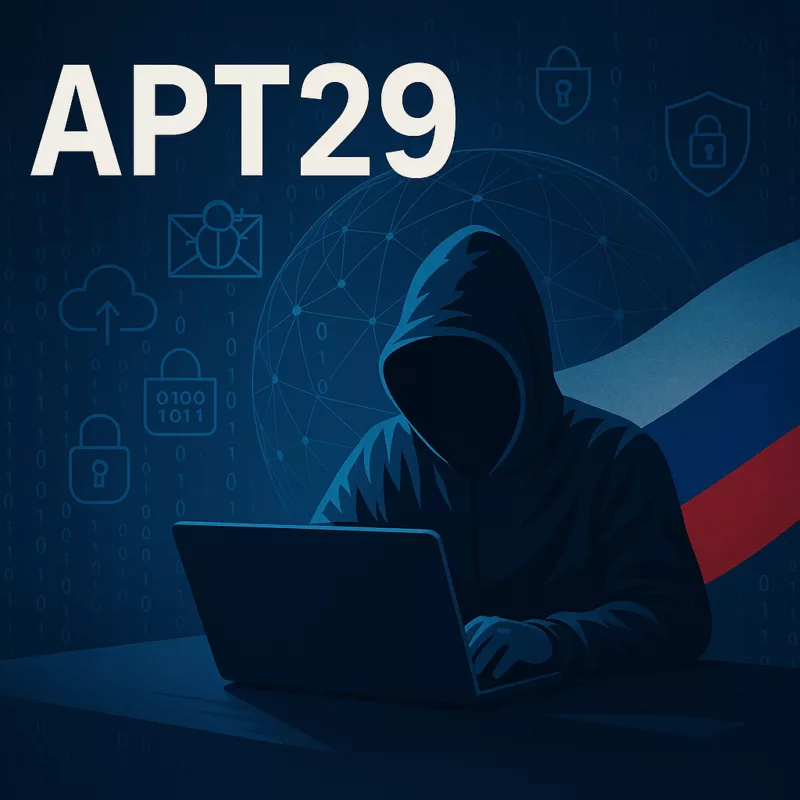
In cyberspace, Azerbaijan’s media landscape faced a sweeping
assault in February 2025. According to the country’s parliamentary
commission on foreign interference and hybrid threats, the
operation was linked to the Russian state-affiliated hacker group
APT29. The attacks reportedly came in the wake of Baku’s decision
to close the Russian House cultural centre and the local bureau of
Sputnik. The message was unmistakable: symbolic sovereignty would
carry digital consequences. Over the course of the year,
Azerbaijani resources were targeted repeatedly from Russian-linked
sources, underscoring that this was not an isolated incident but a
sustained campaign.
Beyond the virtual domain, the physical risks have been more
alarming. Azerbaijan’s embassy in Ukraine was struck by rocket fire
three times amid the ongoing war. Diplomatic missions are protected
under international law; targeting them erodes the very
architecture of state relations. While the broader theatre was
Ukraine’s battlefield, the recurrence of strikes on Azerbaijani
diplomatic property cannot be dismissed as mere collateral
coincidence.
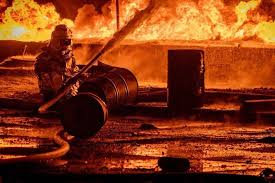
Energy infrastructure, too, has been drawn into the crossfire.
In August 2025, a strike hit the gas distribution and compressor
station in Orlivka near the Romanian border, a key node of the
Trans-Balkan gas corridor. The site was expected to facilitate
imports of Azerbaijani gas via SOCAR, the state energy company,
into south-eastern Europe. Shortly afterwards, drone attacks
targeted a SOCAR-owned oil depot near Odesa. These incidents were
not random acts of wartime chaos. They struck at the connective
tissue of Azerbaijan’s expanding energy footprint in Europe, a
footprint that competes directly with Russian leverage.
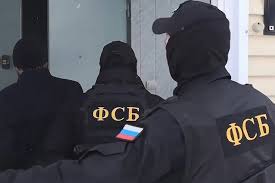
At the same time, Azerbaijani communities in Russia have faced
mounting pressure. Incidents in Yekaterinburg and other regions,
including reports of unjustified detentions and even killings, have
fuelled fears that diaspora populations are being instrumentalised.
Hybrid conflict often operates by amplifying vulnerability:
economic, informational, communal.
The information space has been no less contested. Russian media
narratives about Azerbaijan have hardened conspicuously. Public
figures such as Konstantin Zatulin, alongside a constellation of
commentators and bloggers, have levelled accusations and thinly
veiled threats against Baku. Propaganda, in this context, serves
both as domestic conditioning and as external signalling –
preparing audiences for a tougher line while attempting to
delegitimise Azerbaijan’s independent course.
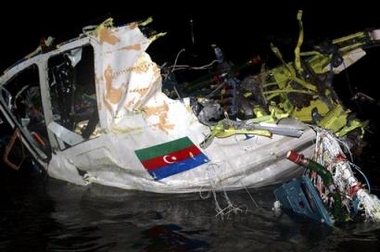
Even aviation has not been immune. The controversy surrounding
an AZAL aircraft incident earlier this year fed into a climate of
distrust and accusation. In hybrid confrontation, ambiguity is a
tool. Events are rarely clarified; they are weaponised.
What, then, is the strategic logic? First, energy. Azerbaijan’s
growing role as a supplier to Europe, particularly as the continent
seeks alternatives to Russian gas, challenges Moscow’s
long-standing dominance. Projects connected to the Trans-Balkan
route and SOCAR’s activities in Ukraine represent not just
commercial ventures but geopolitical statements.
Second, is the alignment, in other words, Baku’s increasingly
visible partnership with Washington alters the balance in the South
Caucasus. For a Kremlin accustomed to viewing the region as its
privileged sphere of influence, such recalibration is perceived as
encroachment.
Third, is the precedent. If Azerbaijan can pursue a multi-vector
policy that strengthens western ties while maintaining sovereignty,
it offers a model uncomfortably at odds with Russia’s
integrationist ambitions in the post-Soviet space.
Hybrid warfare thrives on deniability. Each cyber-attack can be
dismissed as the work of rogue actors. Each infrastructure strike
can be folded into the fog of war in Ukraine. Each propaganda salvo
can be waved away as free speech. But strategy reveals itself in
accumulation.
For Azerbaijan, the response has so far combined restraint with
consolidation of western partnerships. The challenge is to avoid
escalation while defending sovereignty – a delicate balance in a
region where miscalculation has often proved costly.
For Europe, the lesson is equally stark. Hybrid pressure is no
longer confined to the Baltic states or Ukraine. It extends along
energy corridors, through digital networks and into diaspora
communities. The South Caucasus is not peripheral; it is
increasingly central to the continent’s energy security and
geopolitical resilience.
The undeclared front is already open. The question is not
whether hybrid confrontation exists, but how far it will be allowed
to advance before it is recognised as what it is: a strategic
campaign to shape the choices of a sovereign state through coercion
without formal war.