
Published on
February 24, 2026
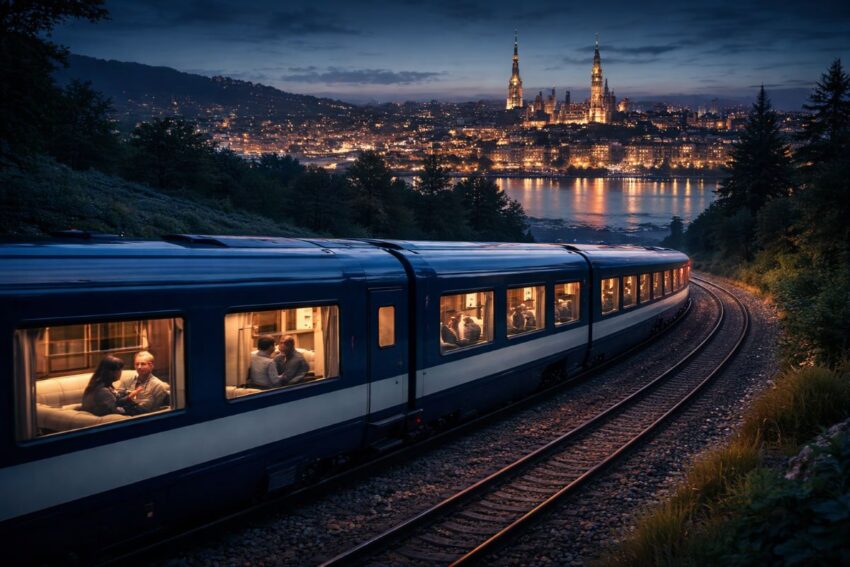
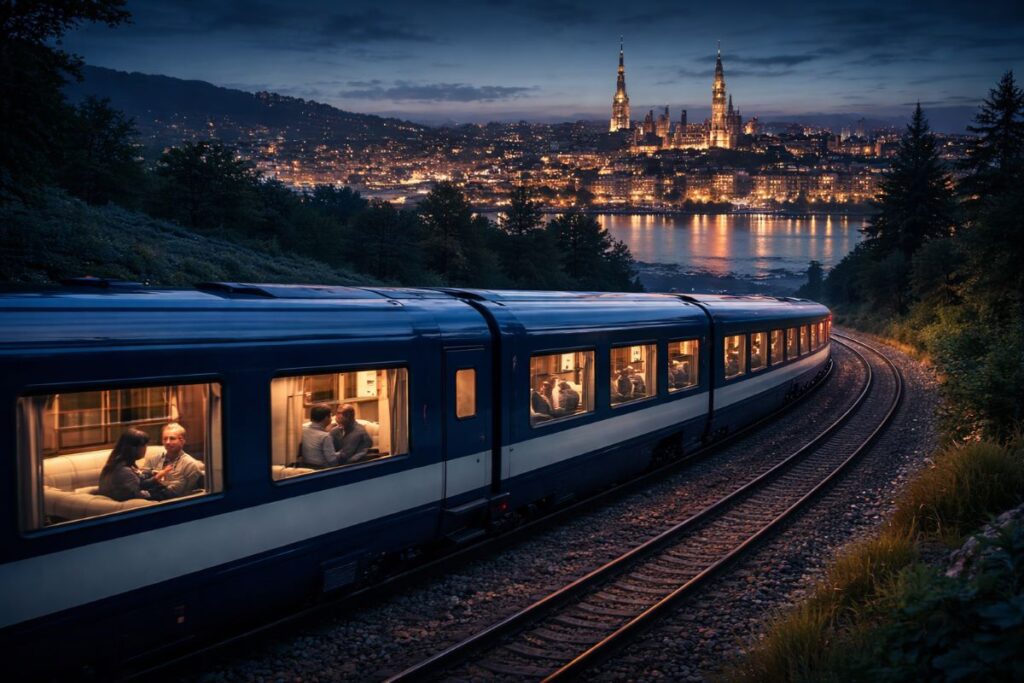
Image generated with Ai
Austria joins Germany, the Czech Republic, and the Netherlands to experience better connectivity as Switzerland brings back night train services, enhancing sustainable travel across Europe. This strategic expansion is part of Switzerland’s efforts to reduce the environmental impact of travel while improving cross-border connections. By reintroducing night trains, Switzerland is making it easier for travellers to move between major cities like Vienna, Berlin, Prague, and Amsterdam without relying on air travel. This initiative supports Europe’s growing demand for sustainable travel options, offering eco-friendly alternatives that align with climate goals. As more countries come together to invest in greener transport solutions, the return of these night train services provides not only a more efficient way to travel but also a step towards creating a more connected and sustainable European transportation network.
Enhanced Connectivity Across Europe
Switzerland’s decision to reinstate and expand night train services comes at a crucial time for Europe, as countries like Austria, Germany, the Czech Republic, and the Netherlands are looking to enhance their connectivity through sustainable means. This move also aims to meet the rising demand for greener travel solutions, which is now a priority for travellers across the continent. As part of this new initiative, Switzerland is providing direct night train connections to and from major cities in neighbouring countries, further strengthening Europe’s transport network.
Here’s a look at the cities benefiting from this night train expansion:
With these newly established routes, travelers now have more options for convenient, sustainable travel across some of the most popular destinations in Europe. Whether it’s a short getaway or a business trip, these connections ensure that visitors can travel without the need to rely on air travel, reducing their overall carbon footprint.
Advertisement
Advertisement
A Focus on Sustainable Travel
Sustainability is at the heart of Switzerland’s night train expansion. As concerns over climate change and the environmental impact of travel continue to grow, night trains offer a much-needed solution. With fewer emissions per passenger than flights, rail travel is significantly more environmentally friendly, particularly when the energy used to power the trains comes from renewable sources, as is the case in Switzerland.
Night trains are one of the most energy-efficient ways to travel long distances. While air travel emits large amounts of CO2, trains produce far fewer emissions per passenger, making them a superior choice for eco-conscious travelers. In Switzerland, much of the electricity used for rail services comes from hydropower, further reducing the environmental impact of the trains.
Advertisement
Advertisement
By taking the train, passengers can make a tangible difference in the fight against climate change, supporting Europe’s broader climate goals while enjoying the convenience of comfortable overnight travel.
Comfort, Convenience, and Efficiency

Image generated with Ai
The night train services being expanded by Switzerland are designed with comfort and efficiency in mind. Unlike the stress of airports, with their long security lines and flight delays, night trains offer a relaxed experience with modern amenities. Passengers can enjoy spacious seating, private sleeping compartments, and even dining options on board. With overnight services, travelers can rest comfortably during the journey, waking up at their destination well-rested and ready to explore.
In addition to comfort, the time-saving benefits of night trains are undeniable. For short and medium-distance travel, passengers can eliminate the need for expensive hotel stays. By sleeping on the train, travelers maximize their time at their destination without wasting a day in transit. The combination of comfort, convenience, and affordability makes night trains an appealing choice for a wide range of travelers.
Supporting Europe’s Broader Rail Renaissance
Switzerland’s expansion of its night train network is not an isolated effort. This initiative is part of a broader movement to reinvigorate rail travel across Europe. In recent years, countries such as Austria, Germany, and France have also invested heavily in rail infrastructure to improve inter-country connectivity and reduce reliance on flights. Austria’s ÖBB, for example, has significantly expanded its Nightjet service, which connects cities across Austria, Germany, and beyond. France has similarly increased investment in high-speed rail and night train services, creating an integrated transport system that allows passengers to travel across borders with ease.
As Switzerland, Austria, Germany, and the Czech Republic continue to invest in rail infrastructure, the future of European travel is looking increasingly green and interconnected. The success of these night train routes is evidence that rail travel can be both sustainable and practical for the modern traveler.
Economic and Social Benefits of Night Trains
Beyond their environmental benefits, night trains also offer significant economic and social advantages. For countries like Switzerland, the expanded night train network can help boost the tourism industry, making it easier for international visitors to reach Swiss cities while also supporting regional economies.
In addition to tourism, night trains are a boon for business travelers who need to travel long distances quickly and efficiently. The expansion of rail services reduces reliance on air travel and encourages business professionals to choose rail over flying, resulting in cost savings and fewer delays. Moreover, night trains are expected to have a positive impact on job creation, particularly in the rail industry, with the need for additional staff to maintain and operate these expanded services.
Overcoming Challenges
Image generated with Ai
Despite the clear advantages, the expansion of night trains comes with its challenges. Building the necessary infrastructure and ensuring that night train services are available at competitive prices requires substantial investment. The rail companies involved must ensure that the operational costs of providing overnight services are balanced by ticket prices that are accessible to a broad range of travelers.
Coordination between countries is also key. As night train services cross national borders, there must be seamless cooperation between rail companies and governments to ensure smooth operations and schedules. This requires alignment on ticketing, regulations, and infrastructure to provide a unified European rail network.
Despite these hurdles, the success of initial night train services across Europe suggests that these challenges can be overcome. As demand for sustainable travel solutions grows, the momentum behind the expansion of night trains is expected to continue.
The Future of European Rail Travel
Switzerland’s reintroduced night train network is setting a precedent for other countries across Europe. As more travelers opt for greener modes of transport, rail is poised to become a central part of the European travel experience. The expansion of night trains helps to shift the travel culture away from air travel and towards more sustainable alternatives, paving the way for a cleaner, more efficient transportation system across Europe.
In the coming years, it’s likely that more countries will follow Switzerland’s lead, investing in the expansion of night train services to make travel between European cities more seamless and eco-friendly. As travelers increasingly seek to reduce their carbon footprint, the future of European travel looks brighter than ever.
Conclusion: A Sustainable Travel Revolution
Austria joins Germany, the Czech Republic, and the Netherlands to experience better connectivity as Switzerland brings back night train services, enhancing sustainable travel across Europe. This revitalised network ensures that travellers have more efficient, eco-friendly options for cross-border journeys, making it easier to explore major European cities without relying on air travel. By offering a sustainable alternative, Switzerland’s night trains help reduce the environmental impact of short-haul flights while fostering greater connectivity between neighbouring countries. As the demand for greener travel solutions grows, this expansion is a critical step in reshaping Europe’s transportation infrastructure. With Switzerland leading the way, the return of night trains signals a brighter, more sustainable future for travel across the continent, encouraging other nations to follow suit and prioritise eco-conscious mobility options.
