
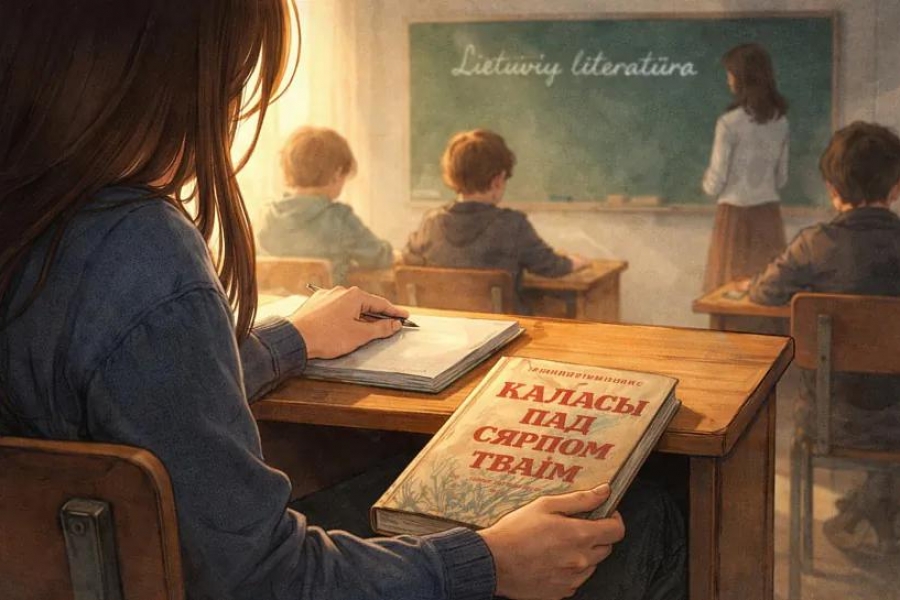
Nasta read “Ears Under Your Sickle” in the original. Image generated with AI
One day Nasta (name changed for security reasons), buying threads at TsUM, was the first to address the saleswoman in Belarusian. And she replied. Also in Belarusian.
“Aha, this is my victory,” she thought then.
Nasta was born in Vilnius into a mixed family: her father is Russian, her mother is Belarusian. She initially attended a Russian-speaking school. In her senior years, she transferred to the Francysk Skaryna Vilnius Gymnasium, where Belarusian was the main language of instruction. That’s why Nasta read “Ears Under Your Sickle” in the original.
The girl often spent summers with her grandmother in a village near the Belarusian border. There, radio and television picked up Belarusian broadcasts. To this day, Nasta recalls an advertisement about a droplet that doesn’t want to drip from the tap. That’s how the Belarusian language naturally entered her life.
Why Belarus seemed attractive
Nasta jokes that she came to Belarus to meet her husband. But that happened later. First, she enrolled in a Belarusian university. Because she longed to be right here.
“I developed some romantic perception of Belarus,” the girl recalls.
When Nasta came here as a teenager to visit relatives, it was always summer, and with it: free time, friends, games. Everyone wanted to befriend her because she was a foreigner.
“We corresponded with many people. I had a big box of letters,” says Nasta.
When she returned to Lithuania, school started again.
“And I didn’t immediately understand why it was so easy in Belarus, why I was different there, and ordinary in Lithuania.”
Павялічыць
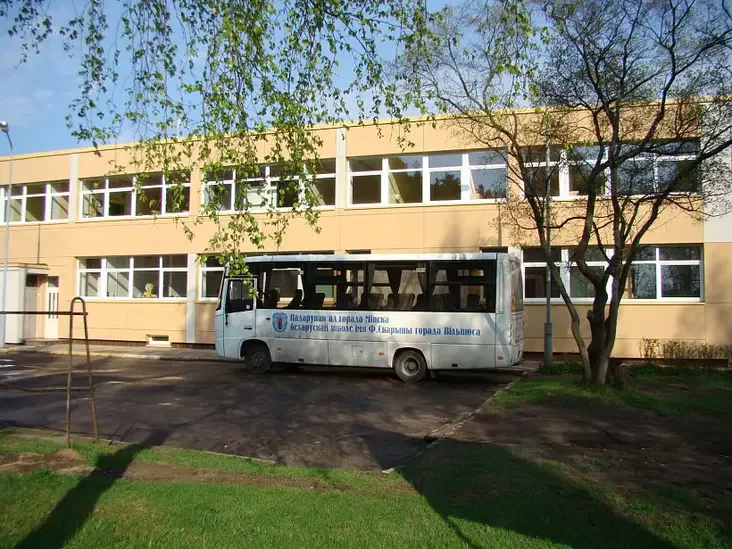
A bus near the building of the Vilnius Gymnasium. Inscription on the bus: “A gift from the city of Minsk to the F. Skaryna Belarusian School in Vilnius.” Source: wikipedia.org
Remembering the Belarusian summer vibe, Nasta decided to enter a Belarusian university. After university, a boyfriend appeared, so the desire to stay increased. The universe favored this. Nasta found a job in her specialty. Five minutes walk from home.
“The stars aligned, and I stayed.”
“Belarusians, what’s wrong with you?”
What surprised Nasta most was that Belarusians had not preserved their language. This question particularly struck her during a trip to Ukraine when she was studying at university. There, Ukrainian was heard on the city streets. People naturally spoke their language.
“Wow! In Ukraine, the language is Slavic, similar to Russian, but it has been preserved. People walk on the streets and speak Ukrainian! Belarusians, what’s wrong with you?”
She asked this question more to herself. She tried to understand why countries that were also part of the Soviet Union — Lithuania and Ukraine — had preserved their language in daily use, but Belarus had not. Nasta found no answer then, nor now.
What bothered her even more were people’s reactions in Belarus when she tried to speak Belarusian. “Ugh, no need, it doesn’t sound right,” was the reply.
“Why? It’s your language. I understood that historical events and certain individuals influenced this. But why an ordinary person treats their native language so poorly, I didn’t understand,” she recalls.
“I speak to a person in their language.”
When Nasta came to study in Belarus, she was 18 years old. She spoke like her surroundings — in Russian. She had no illusions that people would speak Belarusian with her. Speaking to people in their own language is natural for her.
“For example, in Lithuania, when I go to a hairdresser and hear Lithuanian, I switch to Lithuanian, even if it’s more comfortable for me to speak Russian. I speak to a person in their language.”
But a few times Nasta was the first to start a conversation in Belarusian. Like when she was buying threads at TsUM.
Павялічыць
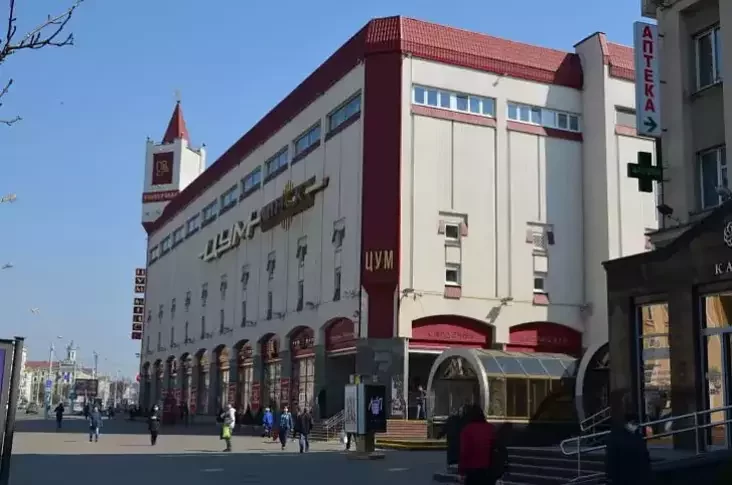
TsUM, Minsk. Source: belnovosti.by
Not to seek, but to find
Gradually, a circle of Belarusian-speaking people appeared around Nasta. She didn’t specifically look for them but met them everywhere. One day, she joined an embroidery circle based on recommendations from acquaintances. Nasta went there because she had very good reviews about the woman who organized it. And that woman spoke Belarusian with her students. And other participants, young women aged 30-40, also replied to her in Belarusian. It just happened naturally.
“It’s one thing when we choose, for example, a Belarusian-speaking kindergarten for a child — we do that consciously. But here I came to a teacher, and she speaks Belarusian, and the others support it. Some kind of underground,” Nasta marvels at her experience.
Language is respect
Nasta calls Belarus her homeland, because her children were born there:
“They are my little roots for the future.”
Her husband is Belarusian. It was important for them that their children heard the Belarusian language from an early age. So they chose a Belarusian group in kindergarten.
For Nasta, language is not just a means of communication. It is also respect for the place where you live. She is saddened that her parents know Lithuanian poorly — the language of the country they live in.
“To live in Lithuania for 60 years and not learn the language? Where is the respect for the country here? Where is the patriotism?” she asks.
Perhaps it is from this sense of respect that her own choice arises — to be between cultures, but not by chance, but consciously.