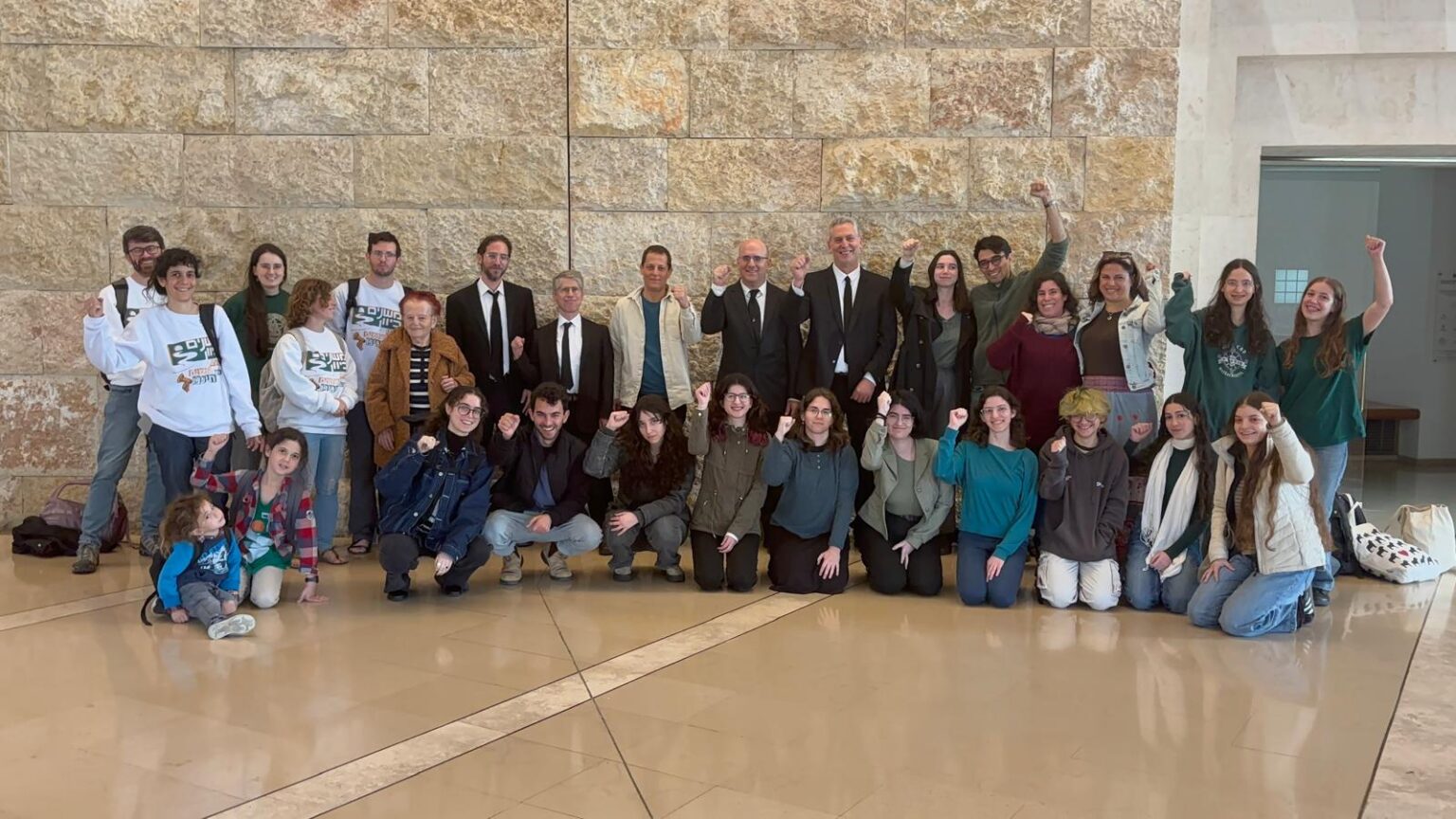
A day after hearing the first petition in Israel against the state’s climate policy, the High Court of Justice ordered the government on Tuesday to define and explain its minimum target for cutting global warming emissions, to detail what steps it was taking to reduce those emissions, and to explain what was happening with its climate bill.
The court set a June 26 deadline for responses from the government and the environmental protection, energy and health ministers.
On Monday, three High Court justices heard a petition submitted by two green organizations, Green Course and Youth for Climate, calling for an interim injunction to compel the government to explain why its 2030 emissions-cut target is 27 percent rather than 43%, as set by the UN to cap rising global temperatures.
The Sixth Assessment Report of the UN Intergovernmental Panel on Climate Change (IPCC), issued in 2022, called for a global 43% cut in emissions of carbon dioxide, methane and other gases helping to drive climate change in order to implement the Paris agreement, which seeks to cap global warming at 2 degrees Celsius (3.6˚F), preferably 1.5 degrees Celsius (2.7˚F), relative to pre-industrial levels.
Representing the petitioners, Assaf Fink argued on Monday that Israel’s ratification of the Paris Agreement did not align with the government’s decision to set a 2030 target of just 27%. In practice, he added, the state would likely cut emissions by only 19%.
Eran Tzin, who also represents the petitioners, said Tuesday that the court’s order represented “a significant milestone” and aligned with “breakthrough international rulings which establish that governmental discretion ends where science sets a minimum threshold for public protection. ”
“Meeting this standard is not a political choice, but a fundamental duty of the state to protect the lives and health of its residents,” he added.
After many drafts and attempts to pass a climate bill over the years, a controversial version passed its first reading in the Knesset in April 2024 and has been stuck at the Knesset committee stage since then.
Without a clear budget and with the flexibility to change climate goals and deadlines, the bill was attacked by environmental groups as a capitulation to the Finance Ministry.