
He clarified that any change to these rules would require unanimity among all member states, which is currently not the case.
Accession to the European Union is strictly defined by the existing treaties, which do not provide for membership without voting rights or without the right of veto.
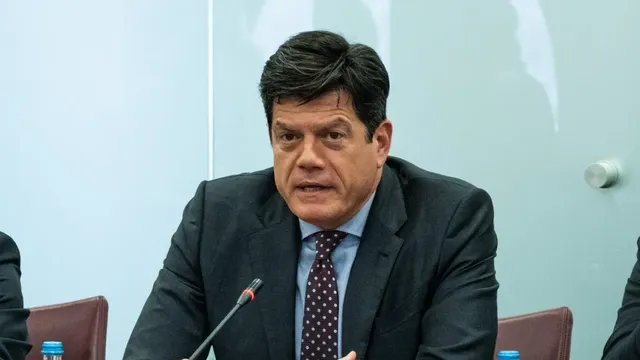
This was stated by the EU Ambassador to North Macedonia, Michalis Rokas. He clarified that any change to these rules would require unanimity among all member states, which is currently not the case.
“The EU accession process is determined by the treaties of the European Union. There is no provision in those treaties that would foresee, for example, that in a second phase a successful country that has met the conditions for membership would not have the right to vote or the right of veto. If such a change were to be introduced, it would mean amending the existing EU treaties. In order to amend them, unanimity among all member states of the Union would be required. There is currently a political debate within the EU and in the region about how the Union would proceed if there were four, five or six successful candidate countries, and what their accession would entail. At the same time, the EU is seeking to provide urgent responses to existing global challenges. Debate is taking place in all areas. However, at this moment, the EU treaties are as they stand and remain in force. A key priority for your country is to continue implementing reforms, which is the clear path forward for the Republic of North Macedonia,” Rokas said.
Rokas’ position follows a statement by Serbian President Aleksandar Vučić, who raised the possibility that countries from the region could obtain EU membership with limited rights, including without voting rights.
North Macedonian Prime Minister Hristijan Mickoski also said that “Brussels corridors” have been abuzz with talk that the country could become an EU member in 2027, participating in all institutions but without voting rights. “The process would be part of a broader package that would also include other countries in the region, depending on developments in the peace agreement for Ukraine and political consensus within the Union. In essence, this would mean membership for Macedonia, but with limited decision-making capacity, gradual and conditional integration, and strong monitoring until full alignment with the European system,” the government said. | BGNES