
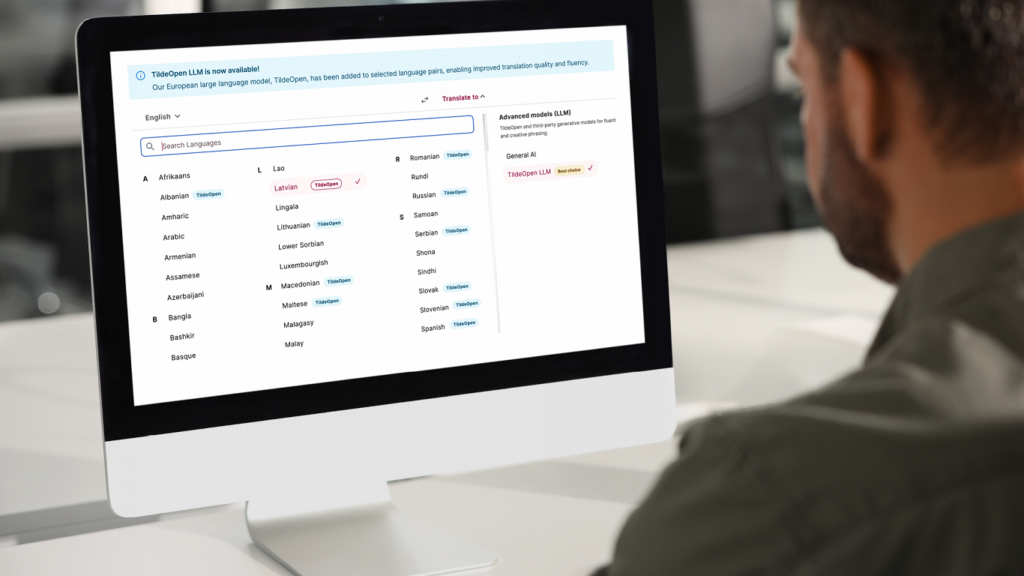
Latvian language technology company Tilde has adapted its large language model (LLM) TildeOpen for translation and integrated it into a machine translation platform that will provide translations in 34 European languages, including Latvian, the company announced.
It explained that until now, the model had been a significant scientific achievement in the development of artificial intelligence for European languages, but had not yet been adapted for everyday use by a wider audience. It is now publicly available to users for both private translation needs and work.
“Tilde” promises accurate terminology and more natural, flowing sentences, reducing the need to correct machine-translated texts. You can try out the translation here.
“The integration of TildeOpen into machine translation is a significant step forward in the practical application of artificial intelligence in European languages. Our goal is to ensure that high-quality language technologies are not only accessible but also reliable in everyday work,” said Artūrs Vasiļevskis, CEO of Tilde, in a statement to the media.
TildeOpen was published on the Hugging Face platform in the fall of 2025 as an open-source base model for European languages. It was developed by the Tilde research laboratory on behalf of the European Commission.
The model has 30 billion parameters and has been trained with hundreds of billions of words from European languages, including 29 billion Latvian text units. This is the largest known amount of data used in the development of artificial intelligence for the Latvian language. The model was developed after winning the European Commission’s Large AI Grand Challenge competition, using the LUMI supercomputer in Finland.
Select text and press Ctrl+Enter to send a suggested correction to the editor
Select text and press Report a mistake to send a suggested correction to the editor
Tell us about a mistake