
Amendments may be proposed until March 6.
The European Parliament’s Foreign Affairs Committee is today considering the draft report on North Macedonia for 2025, a BGNES reporter said.
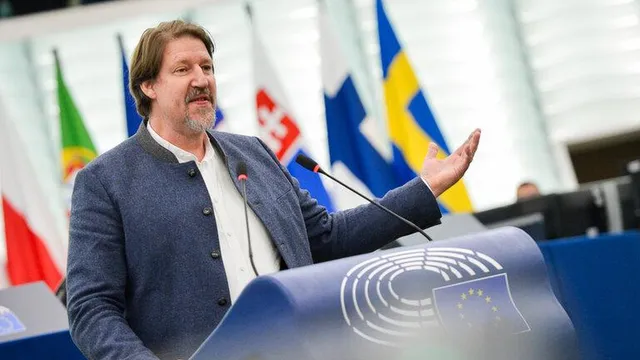
The report, prepared by Thomas Weitz, states that there is an urgent need for greater political will to overcome the current deadlock surrounding the adoption of constitutional changes.
In any case, the process will remain merit-based and firmly linked to progress on fundamental principles, in particular the rule of law, the MEP said a few days ago when the text was made public.
Amendments may be proposed until March 6.
The report calls on “the European Council to send a public and unambiguous signal that it intends to take a swift and unconditional positive decision to move to the next phase of accession negotiations with North Macedonia, once the conditions set out in its conclusions of July 18, 2022, have been met.” The Treaty on Good Neighborliness, Friendship, and Cooperation between Bulgaria and North Macedonia, signed in 2017, is also taken into account.
The next steps are: presentation of the report to the Committee on Foreign Affairs (AFET) on February 26, negotiations with all political groups in March and April, vote in the AFET Committee in May, and a subsequent vote in plenary before the EP’s summer recess.
“Despite some positive developments, progress on the EU-related reform agenda in key areas such as the rule of law, judicial reform, and the fight against corruption remains insufficient. Advancing reforms in the area of the rule of law is not only essential for moving closer to EU membership; it is also crucial for strengthening democratic institutions that effectively serve all citizens. A sustainable path to EU membership depends on restoring public trust through decisive reforms in the area of the rule of law, strong and independent media, constructive cross-party cooperation, and effective parliamentary oversight. There is an urgent need for greater political will to overcome the current deadlock on the adoption of constitutional changes. At a time of profound geopolitical change, Europe must be united,” Thomas Weitz emphasised.
“North Macedonia has my full support on its path to the EU. I look forward to building a stable, constructive, pro-European, pro-democratic and pro-enlargement majority for the report during the upcoming negotiations in the European Parliament,” he added.
In his explanation of the text of the report, Thomas Weitz says:
“No progress has been made on constitutional changes due to concerns about possible additional bilateral blockades or requests from a neighboring country. There is an urgent need for stronger political will on both sides to overcome this deadlock. At a time of serious changes in the international order familiar to Europe – in particular in relation to Russia’s aggressive war against Ukraine, the unprecedented uncertainty surrounding the future of the transatlantic alliance and the broader threats to the rules-based international order – it is essential for Europe to be united. There is no room for ambiguity. Against this geopolitical backdrop, opportunities may arise for a new impetus and acceleration of the accession process. This process will in all circumstances remain merit-based and firmly linked to progress on fundamental principles, in particular the rule of law. It is therefore essential that all political stakeholders in North Macedonia, in particular the government and the representatives of the ruling majority, to recognize this sense of urgency and, without further delay, to start delivering tangible, convincing, and real results in these key areas.
The draft report should be seen as a starting point for negotiations, but does not include all the issues that will be covered in the final report to be adopted by the European Parliament. The document emphasizes the need for “political commitment, including the necessary constitutional changes, constructive cross-party cooperation, and effective parliamentary oversight to achieve progress on the path of reforms.” It calls for a consistent commitment to dialogue and cooperation with neighboring countries. It welcomes progress on the construction of corridors 8 and 10, but points to the need for more investment in transport, energy infrastructure, and environmental legislation.
The report calls for the implementation of outstanding recommendations from the OSCE/ODIHR and the Venice Commission. It also calls for greater transparency regarding the financing of political parties and political advertising.
It notes with concern the growing concentration of media ownership. It expresses concern about disinformation campaigns that undermine democratic values and the country’s goal of EU membership.
It stresses the need to continue working to improve the situation of non-majority communities, including with regard to the use of languages, as well as to combat discrimination and promote diversity.
Concern is expressed that the judicial system, the independence of the courts and the prosecution service, as well as efforts to strengthen the rule of law and the framework for combating corruption, have not progressed sufficiently.
It notes with concern that no progress has been made in preventing and combating corruption and that corruption remains widespread in many areas.
It stresses the importance of cross-border links, such as corridors 8 and 10 of the Trans-European Transport Network (TEN-T).
It calls for a consistent commitment to dialogue and cooperation with neighbouring countries in order to strengthen regional stability and promote mutual trust. | BGNES