
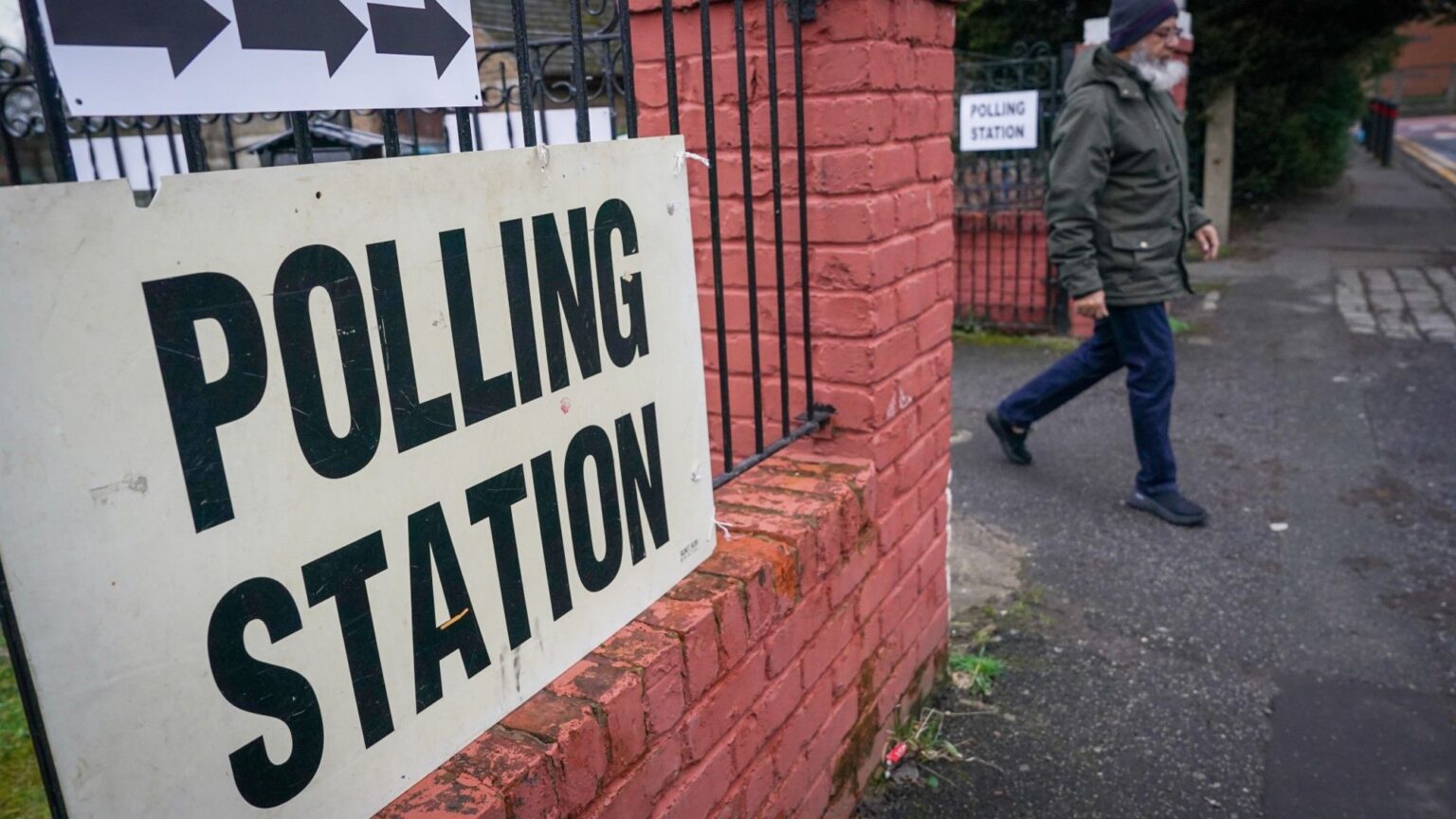
The outcome of today’s by-election in Gorton and Denton, one of the most unpredictable in years, will be closely scrutinised as a political bellwether.
The southeast Manchester constituency was a Labour stronghold with a 13,400-vote majority until former MP Andrew Gwynne resigned. Now, polls have it as a three-way contest between Reform UK, Labour and the Green Party, whose candidate Hannah Spencer is a local councillor and plumber. Reform’s candidate, GB News presenter Matt Goodwin, has also painted the by-election as a referendum on Keir Starmer’s leadership. The prime minister blocked Greater Manchester Mayor Andy Burnham from standing as Labour’s candidate, selecting city councillor Angeliki Stogia instead.
You may like
From our morning news briefing to a weekly Good News Newsletter, get the best of The Week delivered directly to your inbox.
From our morning news briefing to a weekly Good News Newsletter, get the best of The Week delivered directly to your inbox.
It can be “unwise to extrapolate from by-election results”, said The Economist in 2023. Turnout is poor and half the seats gained at by-elections between 1992 and 2019 were lost at the next general election. Some parties, like the Liberal Democrats, can “outperform” in them.
They are “awkward beasts and don’t necessarily follow the usual rules”, said Louise Thompson, politics lecturer at the University of Manchester, on The Conversation. Gorton and Denton is a new constituency, formed from parts of three others in 2024. There are “huge socio-demographic differences” between its predominantly white, working-class wards and areas with a “much higher student and Muslim population”.
The “likeliest split outcome is straightforward”, said Ben Walker in The New Statesman: Denton votes Reform; Gorton and its neighbours go Green. Yet that would “reveal little about the overall winner”. Forecasting site Britain Predicts has it as a “strikingly tight” race: Green on 31%, Reform on 30% and Labour on 29%. Based on expected turn-out, only “a few hundred votes separate first from third”.
There might also be a “squeeze” effect. In such contests, smaller parties “often underperform” because voters gravitate towards “perceived frontrunners, where their vote seems more likely to make a difference”. If the Greens are seen as the tactical voting preference, “they should win the seat emphatically”. If Labour is seen as the way to beat Reform, “they should eke out a narrow win”.
It’s therefore the system, not the outcome, that should be “receiving more attention”, said Ian Simpson of the Electoral Reform Society. First past the post is “not designed with more than two candidates in mind”. Where three or more parties are contesting a seat, candidates are increasingly elected with “fewer than a third of voters in their area”. More than two-thirds of ballots cast are “simply ignored”.
In a multi-party contest, the debate becomes dominated by tactical voting, around “which party is best placed to stop another party from winning”. In this case, both Labour and the Green Party tried to persuade voters that they were the only option to “stop Reform”.
But these claims have been “unsubstantiated”, said The Independent’s John Rentoul. To vote tactically, “you need to know how other people are planning to vote”. That hasn’t been possible here; people have already been voting by post. Stronger Green wards may have also been “over-represented” in polls.
What to read next
Normally, this wouldn’t matter. By-elections exist to “register protest against the government”. Their history is “littered with sensational upsets” that nevertheless “left the governing party untouched and were reversed at the subsequent general election”.
But “Gorton and Denton feels different”. The government is “fragile”; MPs are “panicky”. Parliamentary politics is split five ways. “Will Reform or the Conservatives lead the right at the next election? Will Labour, the Greens or the Lib Dems lead the left?” Any outcome will “shape politics for months”. It could influence tactical voting calculations in the May local elections and even the general election. “Most by-elections do not matter. This one does.”
What next?
The results are due at 4am tomorrow. A Labour win would “embolden Starmer and prompt a thousand think-pieces about a corner turned”, said Rentoul.
A victory for Reform’s “divisive, hyper-online” Goodwin would be “the biggest sign yet” that Reform’s poll lead “represents real voter intentions” rather than just “dissatisfaction with the government”, said The Guardian’s Jessica Elgot.
But a Green victory might be “the most catastrophic result for Starmer’s leadership”. It would show that the Greens are “a serious progressive force, not a protest vote”.
Whatever the result, there are “big implications” for Starmer ahead of what are widely expected to be “disastrous results” for Labour in the local elections. But if this by-election has barely 1,000 votes between the top three parties, “each would be wise not to overanalyse the results – but that won’t stop anyone”.
Explore More