
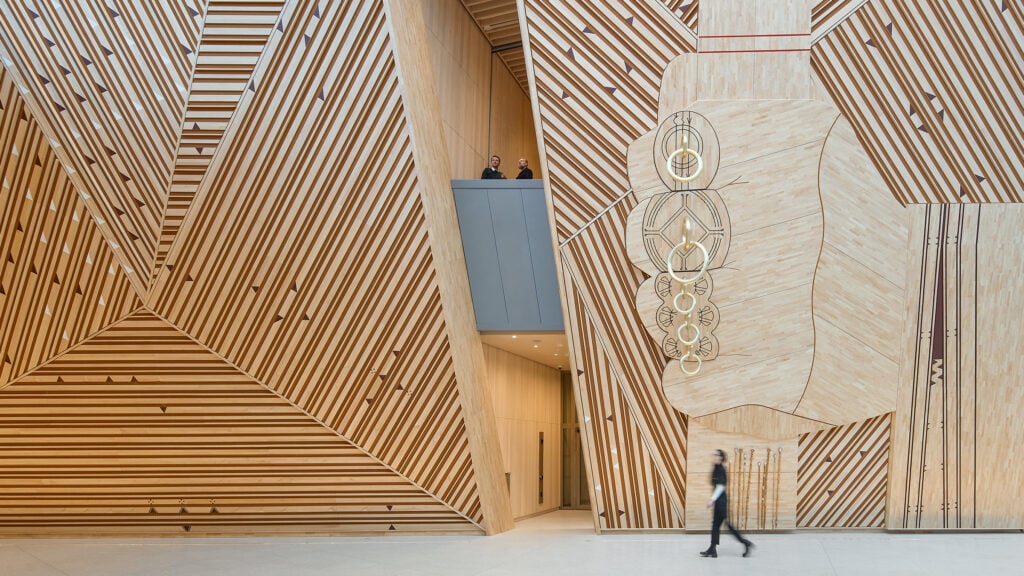
All the buildings are linked by internal bridges and sightlines, with the aim of fostering collaboration between the 4,000 people who will work there. For the first time, all but one government department (the Ministry of Defense will remain elsewhere for security and practical reasons) will be located on the same campus, with communal areas, common meeting rooms and canteens. “We live in a complex world, and the problems we face are not sorted into ministries,” Stokke says. “Here people can gather easily from any area in minutes.” While doing so, staff will be encouraged to take the healthy option and walk—by staircases placed more prominently than lifts.
Inside, all the furniture was made by Norwegian designers, including 20 percent that was reclaimed and restored from previous government buildings. Crafted details, from ribbed concrete walls to an undulating wooden balcony, add warmth and atmosphere—the latter created in collaboration with skilled boatbuilders. The light timber used throughout the various buildings is designed to be emotive—the smell of wood, the architects say, triggers nostalgia among Norwegians. The use of local materials—alongside seawater-based heating and cooling and planting of native trees—also helped achieve the country’s highest environmental building standard.
The notion of nostalgia hints at both the ambition and contradiction embedded in this project. In engineering openness and appealing to emotional attachments, the architecture acknowledges the politics is always, to an extent, theatrical. Buildings cannot erase trauma, transform ideologies, eliminate violence, or heal divisions. But they do model values—whether in forcing interpersonal encounters, designing in visibility, or rebalancing power. The impact of this development on political culture remains to be seen, but at a time when many governments are constructing barriers and stoking animosity, it’s a welcome tonic.
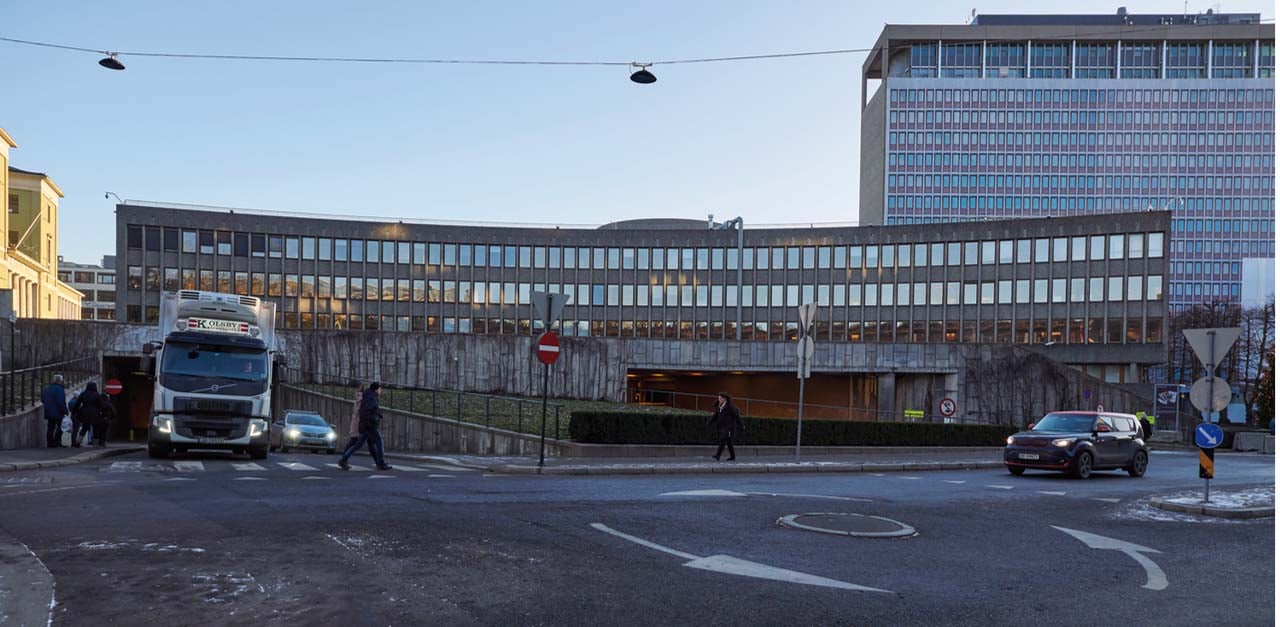 Y-Block, Archival Image. Courtesy Nordic Office of Architecture.