
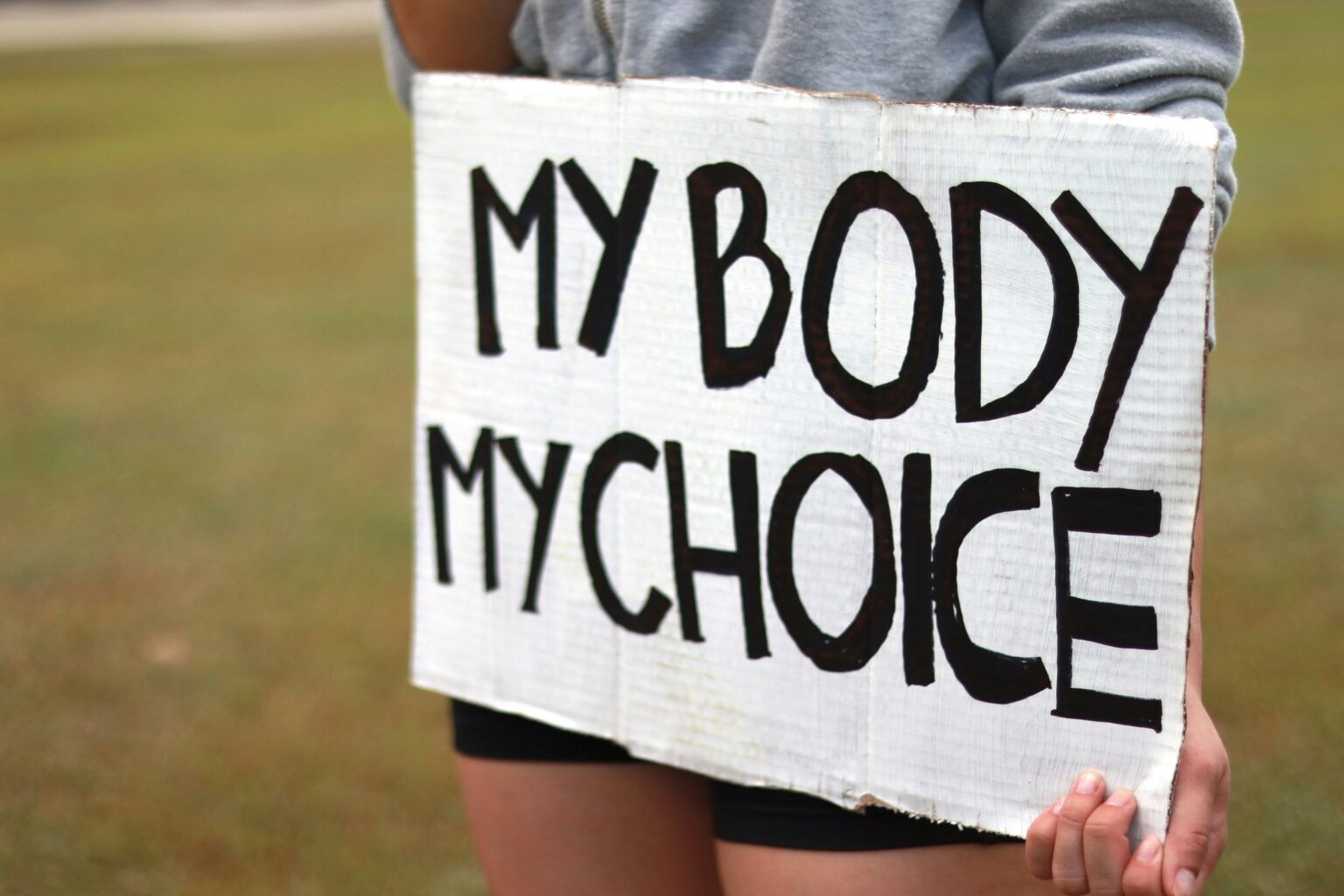
The EU Commission backed on Thursday (26 February) the ‘My Voice, My Choice’ campaign by guaranteeing that member states can use EU funds to finance safe abortions — but it fell short of ensuring access across the bloc.
The campaign, which has gathered the support of more than 1.2m Europeans, seeks to guarantee access to safe abortion for every woman in Europe. It has also been backed by the European Parliament.
The EU executive had concluded that “it is possible to use EU funds to support member states’ efforts for better access to safe and legal abortion care and thereby reduce the number of unsafe abortions,” commission vice president Roxana Minzatu told reporters on Thursday.
On a voluntary basis, EU governments will be able to reprogramme or use their national European Social Fund Plus (ESF+) envelopes to improve access to abortion.
Although health policy lies in the hands of national governments, meaning that the commission’s stance will have no impact in countries that do not want to ease access to abortion, it is a major political signal.
The commission does not plan to introduce a new law on the issue.
For her part, EU equality commissioner Hadja Lahbib said that the commission would ensure that EU money would be made available to national capitals to “enhance access to affordable abortion, while member states ensure the funds reach women seeking safe and accessible abortion.”
Activists had expressed concern earlier this week that the EU executive would not endorse their campaign.
‘My Voice, My Choice’ says that more than 20 million women in the EU do not have access to safe abortions.
Two countries in the European Union, Poland and Malta, still don’t allow abortion for women except in very critical circumstances.
“Even though the Commission didn’t allocate specific funds for it, today’s decision shows that EU funds can be used to provide subsidised abortions for women from countries where the right is restricted. It is now up to the Member States. Thanks to citizens, women’s rights can no longer be ignored by EU countries,” said Green MEP Alice Bah Kuhnke, a leading member of the parliament’s women’s rights committee,
Legacy of Lisbon Treaty
The European Citizens’ Initiative was one of the innovations created by the Lisbon Treaty, the last reform of the EU treaties, which came into force back in 2009.
It requires the commission to respond if a policy proposal gains at least one million signatures from across the bloc.
“Today is a victory for women in Europe. And today is a good day for European democracy,” said campaign coordinator Nika Kovač.
She added that the commission had “for the first time” confirmed “unequivocally that EU funds can be used to guarantee access to safe abortion care ー particularly for women in vulnerable situations, regardless of where they come from in Europe.”
Kovač also welcomed that the commission had guaranteed that cash from the European Social Fund, one of the bloc’s main budget instruments, could be used not just for funding of the medical services, but also the cost of travel in circumstances that would be needed.
“This is especially important in life-threatening situations where urgent assistance and transportation is needed,” she said.