
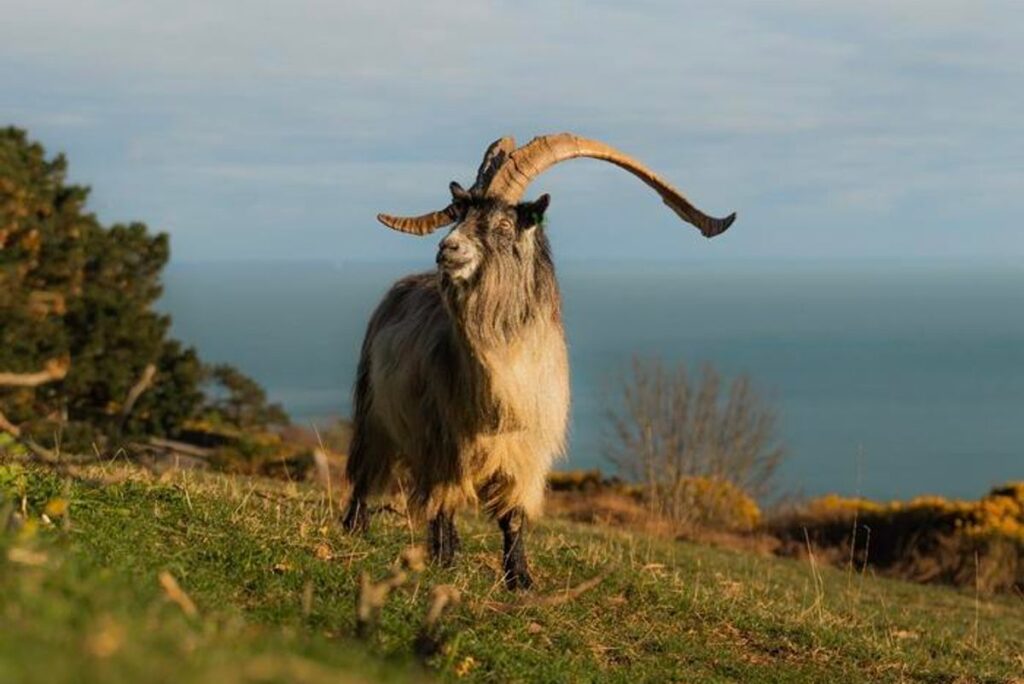
In the wilds of Ireland live a fascinating yet dwindling breed of goats known as Old Irish Goats. The species is the only indigenous breed to the Emerald Isle, and new research may have uncovered the origins of the goat’s genetic lineage.
Writing in the Journal of Archaeological Science, researchers from University College Dublin, Queen’s University Belfast, and other international partners have identified a genetic link to goats living 3,000 years ago during the Late Bronze Age.
These findings suggest that Old Irish Goats have a continuous lineage that stretches back thousands of years, a rare and living link to ancient farming in Ireland.
“This research is a huge milestone for the Old Irish Goat, and provides powerful scientific validation of what local communities and conservationists have long believed — that the Old Irish Goat represents a living piece of our ancient heritage. It also underscores the urgency of protecting this critically endangered breed, which carries within it a living genetic record of Ireland’s ancient past,” said Sinead Keane from The Old Irish Goat Society, in a press release.
Read More: Global Feta Cheese Supply Threatened as Virus Kills Almost 500,000 Goats and Sheep in Greece
Dating Old Irish Goat Remains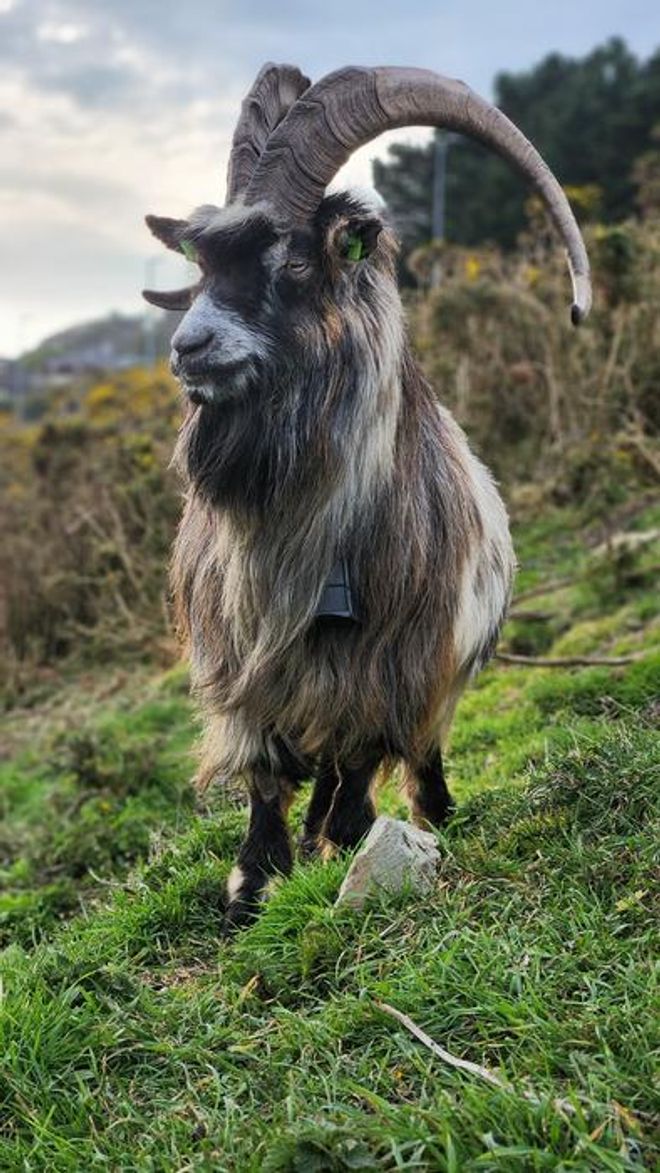
(Image Credit: Old Irish Goat Society)
For this study, the research team used radiocarbon dating along with genetic and protein analysis on goat remains from 1100 B.C.E. to 900 B.C.E. The remains had been found around Haughey’s Fort in County Armagh.
The dating confirmed that the goat remains were from the Late Bronze Age and were the oldest goat remains identified in Ireland so far.
“Combining genetics, proteomics, and archaeological science has allowed us a glimpse of our animals hundreds and thousands of years ago — and how their descendants likely still live with us, as part of our biocultural heritage,” said the study’s co-lead author, Kevin Daly, assistant professor in the School of Agriculture and Food Science, in a press release.
According to co-lead author Professor Eileen Murphy of Queen’s University Belfast, “Goats tend to get overlooked compared to sheep in the archaeological record because it is notoriously difficult to distinguish between their bones.”
What the DNA Reveals About Today’s Old Irish Goats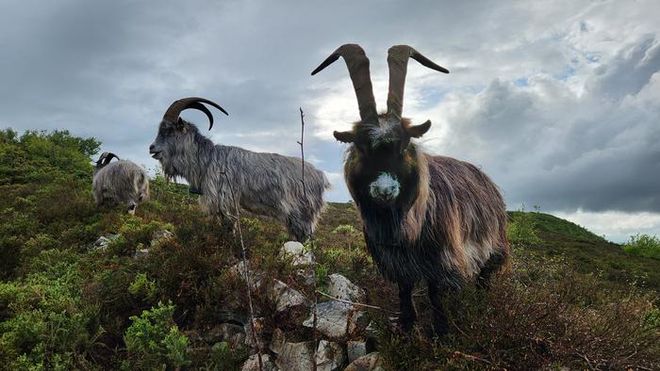
(Image Credit: Old Irish Goat Society)
To determine that the remains were from goats, the research team used a technique known as protein fingerprinting, which identifies a species based on microscopic traces of collagen. The team then extracted ancient DNA and sequenced it against the genomes of the Late Bronze Age and medieval goats, as well as modern-day goat breeds.
The results found that both the Bronze Age and medieval Irish goats shared DNA with the few surviving modern-day herds of Old Irish Goats. A remarkable continuation of this species that spans over 3,000 years.
From their analysis, the research team also found that, though today’s Old Irish Goat populations date back thousands of years, the breed has changed, including inbreeding, which is linked to a dramatic population collapse over the last few decades.
The team explains that this genetic bottleneck isn’t a traditional feature of this species, but rather a modern phenomenon.
A Legendary Goat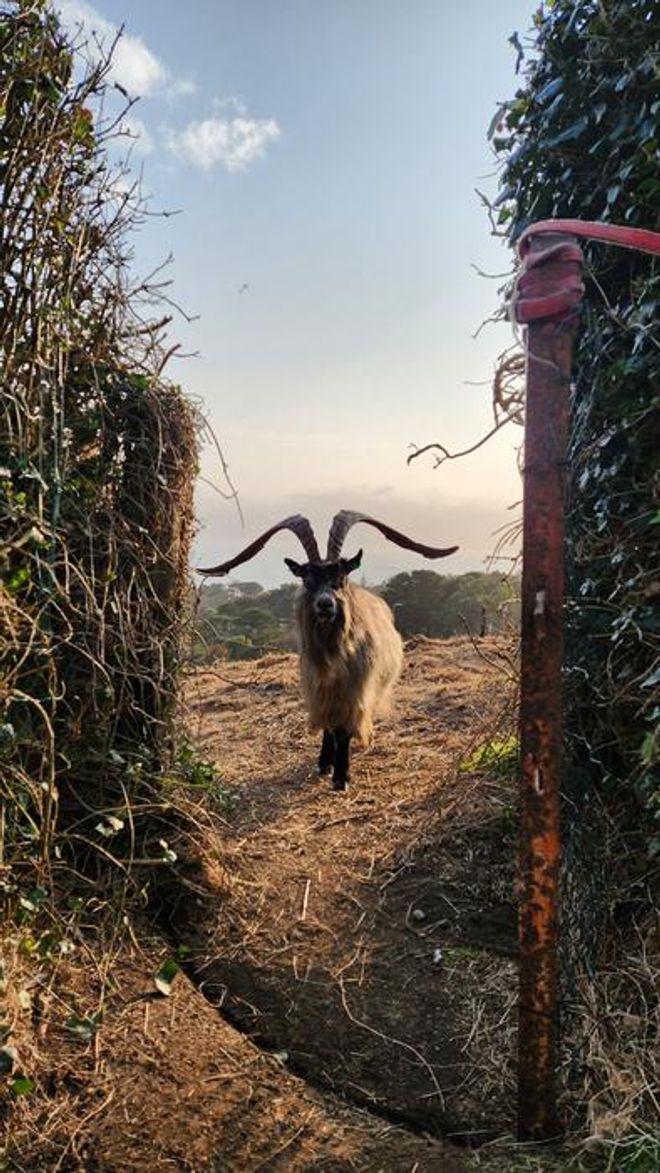
(Image Credit: Old Irish Goat Society)
The Old Irish Goat is an important breed in Ireland’s rich history, including its folklore. According to the study, known as ‘an Gabhar Fiáin’ or the wild goat, these animals are symbolic of wisdom, resistance, and rural life. These goats are hardy and can survive on marginal land, making them invaluable to small farms.
While cows may feature prominently in Irish myths, these goats appear in many local legends and traditions, including the Puck Fair in Killorglin, County Kerry — one of Ireland’s oldest festivals. Traditionally, during the festival — which happens in August — someone would catch one of the goats from the mountains, bring it back, and crown it “King Puck.” The goat would remain king for the entire three-day festival before being returned to the mountain.
There isn’t any concrete proof for why the festival was started; however, according to the Puck Fair, one of the many theories suggests that a goat alerted locals to Oliver Cromwell and his men’s approach, and now they pay tribute to the goat that alerted them to danger.
Read More: Meet the Firefighting Goats of Dublin
Article Sources
Our writers at Discovermagazine.com use peer-reviewed studies and high-quality sources for our articles, and our editors review for scientific accuracy and editorial standards. Review the sources used below for this article: