
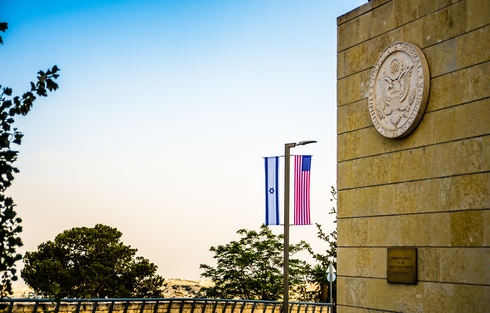
The U.S. State Department on Friday issued an updated travel advisory authorizing the departure of nonessential government employees and their family members from the United States mission in Israel, citing security risks.
In a statement, the department said the decision was made in light of recent security incidents and an updated assessment of the situation.
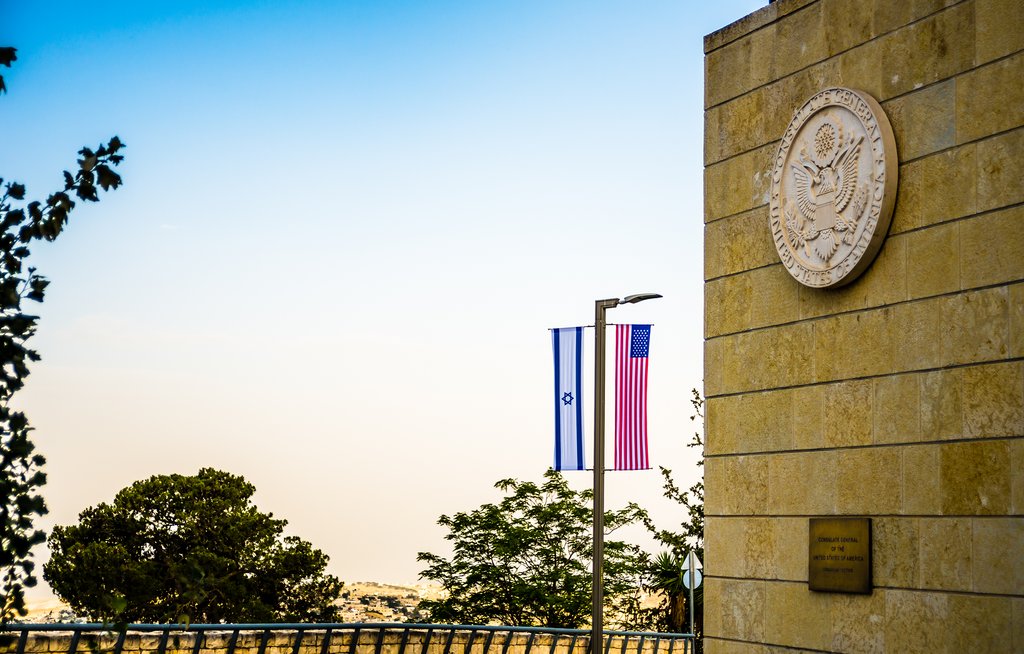
The statement added that the U.S. Embassy in Jerusalem may impose additional restrictions or prohibit travel by American personnel and their family members to certain areas of Israel, the Old City of Jerusalem and the West Bank, sometimes without prior notice.
U.S. citizens currently in Israel were urged to consider departing the country while commercial flights continue to operate.
Meanwhile, U.S. President Donald Trump ordered an unprecedented concentration of forces in the Middle East, including aircraft carriers and submarines. The White House warned that if no agreement is reached, a military strike could occur in the immediate term.
Vice President JD Vance said overnight that “the idea that we’re going to be at war in the Middle East for years with no end in sight — there’s no chance that’s going to happen.” He added, “I think we need to avoid repeating the mistakes of the past. I also think we need to avoid overlearning the lessons of the past. Just because one president messed up in a military conflict doesn’t mean we can never engage in a military conflict again. We need to be careful about it, but I think the president is being careful.”
A U.S. official said Thursday night, after the conclusion of the Geneva negotiations, that “the talks were positive.” According to the official, “some details became clearer in the second round of talks, and at the moment the plan is for a technical-level round next Wednesday in Vienna — without Steve Witkoff, Jared Kushner and Abbas Araghchi.” The official said the Americans “continue working to produce an agreement.”
Iranian Foreign Minister Abbas Araghchi said Thursday evening, “We managed to achieve some positive things on sanctions and nuclear issues.” He said technical discussions at the expert level would begin as early as Monday and that negotiations on an agreement may continue next week. “Holding the technical round on Monday demonstrates the seriousness of both sides regarding the diplomatic process. There are documents to prepare before the next round, consultations will be held, and then we will hold the fourth round of talks,” he said. The round that concluded Thursday evening “was the best and most serious,” he added, claiming that “on certain issues we came very close to understanding. There are other issues that remain in dispute.”
Oman’s foreign minister, بدر al-Busaidi, whose country is mediating the indirect talks, said Thursday: “We concluded the day after significant progress in the negotiations between the United States and Iran. We will resume soon after consultations. Technical-level discussions will take place next week in Vienna. I am grateful to all concerned for their efforts — to the participants, to the IAEA and to Switzerland.”