
 Photo by Landsmann, Unsplash.com
Malta’s most vulnerable families are falling €4,638 short of the income needed for a basic dignified life, the National Audit Office has found, a deficit that has nearly doubled since 2020 even as the government expanded eligibility thresholds that the same auditors had urged it to tighten.
The follow-up report, tabled in parliament this week, delivers a damning assessment of the state’s management of non-contributory social benefits, a system costing taxpayers €326 million annually.
Of the 13 recommendations made by the NAO in its original 2023 audit, not one has been fully or even partially implemented. Eight were found to have registered only insignificant progress – defined by the auditors as little more than meetings and informal plans – while five had not been implemented at all.
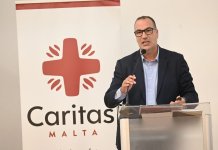
The central finding concerns what the NAO describes as a widening dignity gap. A family of four relying exclusively on non-contributory benefits receives €14,717 per year. The minimum budget required to live with dignity, calculated using the latest Caritas Malta research and adjusted for inflation, stands at €19,355.
The shortfall of €4,638 represents an almost twofold increase on the €2,707 gap recorded in 2020, a period during which benefits rose by 18% but living costs surged by 27%.
Equally troubling, in the auditors’ assessment, is the government’s response to recommendations that eligibility criteria be tightened to prevent individuals with significant assets – including summer residences, high-end vehicles and jewellery – from drawing on funds intended for the genuinely destitute.
But rather than acting on that advice, the 2025 budget raised financial savings thresholds for eligibility, increasing the ceiling for single applicants from €14,000 to €16,000 and for couples from €23,300 to €26,000. The NAO noted the contradiction without ambiguity.
Enforcement, the report makes clear, remains critically dysfunctional. The Benefits Compliance Directorate, responsible for policing the entire system, employs just three inspectors, half the minimum six it has itself identified as necessary.
Inspections occur almost entirely in response to tip-offs rather than systematic risk assessment. Of 573 inspections carried out in 2024, a mere 1.22% could be classified as genuinely proactive. Inspectors also work exclusively during standard office hours, making it structurally impossible to detect beneficiaries working informally in evenings or at weekends.
Information-sharing arrangements with banks and other government bodies – Transport Malta, the tax authority, JobsPlus – remain informal and undocumented despite the auditors having pressed for formalised agreements two years ago. The NAO warned that the state’s €326 million annual expenditure remains dangerously exposed as a consequence.
The Nationalist Party moved swiftly to exploit the findings, with shadow ministers Graham Bencini, Ivan Castillo and Ivan Bartolo jointly highlighted that the shortfall affects thousands of families and noted that parliamentary data recently provided by finance minister Clyde Caruana confirmed that 45% of full-time workers – some 134,500 people – earn less than €19,000 annually, itself below the minimum dignified living threshold identified by the Caritas report.
Unsurprisingly, the ministry for social policy and children’s rights responded with visible irritation, taking considerable umbrage at the framing of the NAO’s analysis and contesting its scope.
The ministry argued the auditors had examined only a narrow slice of total social expenditure, focusing exclusively on non-contributory assistance rather than the full spectrum of benefits covering pensioners, people with disabilities, carers and working families with children. Had the NAO cast its net more widely, the ministry maintained, it would have found that recipients of the broader system now receive substantially more than the minimum required level.
Moreover, the ministry insisted that social assistance had always been designed to provide a basic minimum income to bridge periods of unemployment, not to deliver a comprehensive living wage, and pointed to a 65% increase in family benefit income since 2013. It also cited a reduction by two-thirds in the number of people dependent on assistance since that year, attributing this to free childcare, benefit tapering and in-work benefit policies.
The NAO was unmoved by such contextual arguments in its conclusions. It reiterated all 13 recommendations as essential, and, given the near-total absence of implementation, committed to conducting a further follow-up audit within approximately two years.
The auditors acknowledged that some measures required more time, but the overall picture they painted was of a system in which the state’s most vulnerable citizens are being asked to wait while the machinery of reform sits largely idle.