
BRAINERD — Currently, there’s a moratorium on building new nuclear power plants in Minnesota. But to meet future power demands, experts say that rule should be reconsidered.
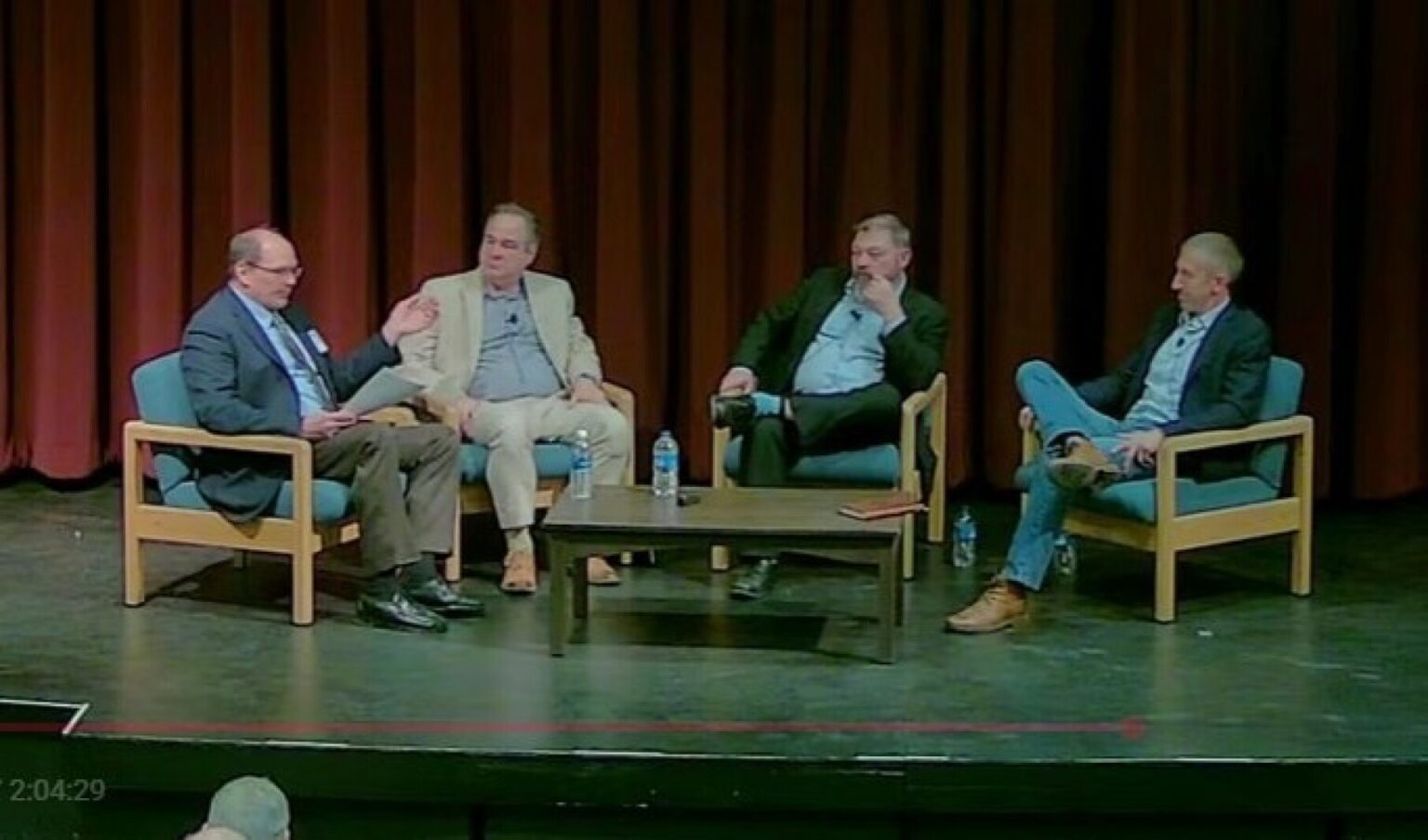
Nuclear power was the subject of a Monday, Feb. 23, Rosenmeier Forum at Central Lakes College in Brainerd.
The forum featured a panel of industry leaders and experts, including Darrick Moe, president and CEO of the Minnesota Rural Electric Association; Philip Hult, development manager and nuclear engineer at University of Cambridge; and Michael Brasel, chief operating officer at Deep Fission.
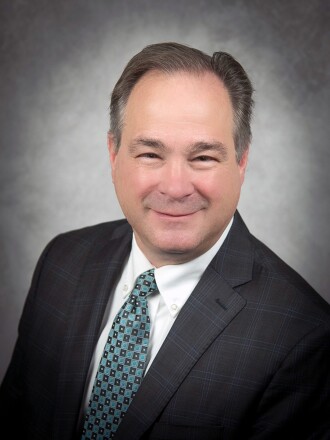
After an introduction from Steve Wenzel, executive director of the Gordon Rosenmeier Center for State and Local Government, Crow Wing Power President and CEO Tim Thompson gave a brief presentation about the co-op and its stance on nuclear energy.
Thompson noted Crow Wing Power’s board of directors adopted a resolution in support of lifting a state law, in effect since 1994, that prohibits the state’s Public Utilities Commission from issuing a certificate of need for a new nuclear power plant.
“So let me ask you a question, why is nuclear energy and the lifting of the moratorium on new nuclear power such an important topic in our state and to growing power? Well, the short answer is, as the demand for electricity continues to increase, we need to make sure the supply of electricity keeps pace, including the opportunity to have new nuclear power that is a reliable 24/7 source of electricity,” Thompson said. “And nuclear power is a carbon free source of electricity, which will help utilities achieve the Minnesota 100% carbon free electricity requirement by the year 2040.”
The panelists were introduced by Jeff Meyer, president of the Gordon Rosenmeier Board of State and Local Government, and their discussion was led by Greg Blaine, Rosenmeier board member, current Morrison County commissioner and former state legislator.
If we look at what is going to be the most cost effective, stable, reliable system by 2040 that is also carbon free, such a system would include more nuclear.
Philip Hult, development manager and nuclear engineer at University of Cambridge
Currently, Minnesota has three nuclear power plants, all owned by Xcel Energy — one in Monticello and two at Prairie Island near Red Wing.
Moe noted nuclear plants produce about 40-50% of all carbon free power generation. Wind and solar are the other primary sources of energy that don’t produce carbon, he noted, but those two are not available all the time like nuclear power.
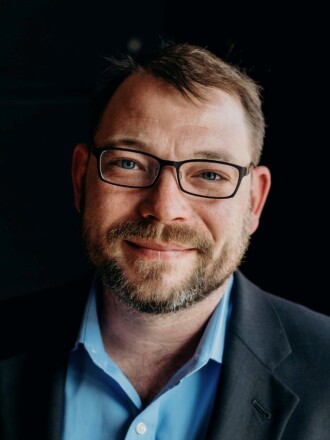
“Essentially, if you want to talk about producing electricity without carbon involved for everybody’s needs and you want to have a resource that’s there under all weather conditions, nuclear is really the only answer to that, so it’s a critical part of our energy mix,” Moe said. “Our energy needs also continue to grow into the future and those plants continue to get older, so having nuclear energy available as a resource, as an alternative, into the future in the state becomes more and more important as time goes on.”
Brasel added nuclear power plants run 90% of the time, compared to 60-70% of the time for coal power plants, 30-40% for wind power generators and even less for solar.
“It’s really, undeniably one of the most reliable energy sources out there,” Brasel said.
Blaine asked whether the mandate to be 100% clean energy by 2040, signed into law by Gov. Tim Walz in February of 2023, would be possible without nuclear energy. Hult said it was theoretically possible but in reality it would be a stretch to reach that goal.
“If we look at what is going to be the most cost effective, stable, reliable system by 2040 that is also carbon free, such a system would include more nuclear,” Hult said.
Moe added even if there wasn’t a moratorium in the state on the construction of new nuclear power plants, it will still be a stretch to meet a 100% clean energy goal by 2040.
“2040 is not very far away in the industry,” Moe said. “And as you get further out into time, whether 2040 happens to be the metric for the carbon free bill, the load is going to continue to grow. We see forecasts now … about pretty significant increased uses of electricity for a whole variety of reasons, and in order to meet those societal challenges, 2040 or not, either you’re going to need to have nuclear as part of that resource mix, or you’re going to need to see some big breakthrough that certainly I can’t predict.”
Contributed
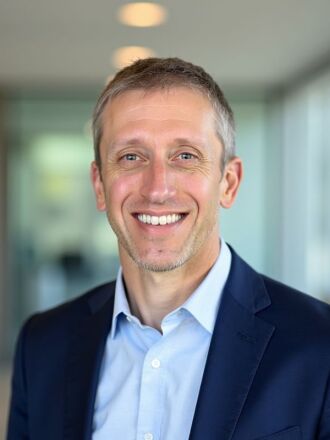
Blaine said an exciting development in the nuclear energy industry has been the advancement of technologies such as small modular reactors. Hult said small modular reactors are cleaner, have less waste, they’re faster to build and use different technologies to operate.
Hult said in the 1960s there was experimentation with all sorts of different types of nuclear reactors but the market by the 1970s pushed the idea of one type and size of reactor for the growing electrical demands.
“Our electrical needs now have changed,” Hult said. “We have a more diverse set of generations. We have wind and solar. We have different types of peaking. We have different environmental concerns about carbon or about placement of things. And so the idea to go back and look at some of these ideas from the 1960s that were pushed out of the market, and re-examine them as possibilities, I think is really where I see the excitement in these so-called (small modular reactors).”
Small modular reactors are in use in submarines and ocean-going ships, Hult said, but he didn’t think there were any such commercially operating reactors in use, though at one time Elk River had a small modular reactor. Brasel added China and Russia also have small modular reactors, though none are being used commercially.
Another challenge, Moe said, was what to do with spent fuel from nuclear power plants. He said there are no energy sources that don’t have spent fuel problems, but noted an upside with the nuclear energy industry is all the spent fuel ever used in the U.S. would all fit in the footprint of a football stadium.
An additional challenge, according to Moe, is the regulatory side of nuclear energy.
“In order to adapt to all of these new technologies that we’ve talked about you have to have policies at the federal level, especially to some degree the federal and the state level, that define what’s going to be the safe operating practices, safe building and construction practices with these various technologies,” Moe said. “And it’s pretty early days in figuring all of that out on the regulatory side. There’s been some work done. There’s been some progress on that, but there’s a lot of work that needs to be done in order to make sure that we can get those policies in place and operate under them effectively.”
With the mandate to be 100% clean energy by 2040, Moe said now is the time for the Legislature to reconsider its moratorium on new nuclear power plants. Brasel noted moratoriums have already been overturned in Illinois, Indiana, West Virginia and Virginia. Other states are studying the nuclear question more and promoting its use.
“So there’s a lot happening out there,” Brasel said. “Minnesota is starting to get there, and we’d like to see more action going forward so we have all the above choices to meet this carbon free standard.”
If the moratorium were overturned, Brasel figured it would be the early 2030s at the earliest for a commercial reactor to go online.
Hult said the amount of time it takes to build the plant is only one part of the equation. The other part is changing the fundamental infrastructure of our power grid and how we create power.
“That requires planning and policy and agreement between people who have a history of not agreeing with one another and all these sorts of things,” Hult said. “I think about 14 years is a reasonable timeline to do that, which is what I’ve been telling people, which is why we should lift the moratorium now, because if we want to be in a position where we can realistically say, ‘I think there’s a real chance we can build new nuclear and have them online and help us meet our 2040 carbon goals,’ we want to do it this year.
“(But) 2040 isn’t a magical date by which, if we don’t hit carbon free, something bad happens or good happens, and it’s not a date after which we can go keep doing whatever we were doing before that. We have to stay carbon free after 2040 so if the goal is we want to be carbon free by 2040 and we don’t make it until 2041, I feel like that’s still a win on the effort of what we’re trying to accomplish.”
Blaine said the number one concern for Minnesotans and Americans is reliability — they want the power to be there when they need it.
Hult concurred with Blaine’s assessment.
“The province of Ontario, which has gone basically 80% nuclear power for all their electricity, and they have the most, some of the most reliable power at the lowest cost, with the happiest customers, right?” Hult said. “You know good rate payers just want it to work, and they want it to be cheap and they want good, smart people to worry about that and they don’t want to worry about it, right?”
Moe pointed out a recent Pew poll found 59% of Americans approve of building new nuclear power plants and only 6% strongly disagree with it. He said it was the 6% that were directing the conversation on nuclear energy in a negative light, and he encouraged people to learn more about it.
“Have the conversation,” Moe said. “I think what you’ll find is that a lot of people around there will be willing to have that, and when that happens, then we talk to our elected officials, then we talk to our legislators, and then they know that they have the support from their communities to do what the community needs. I think that’s an important way to make these changes.”