
From https://atlas.cancer.org.au/atlas
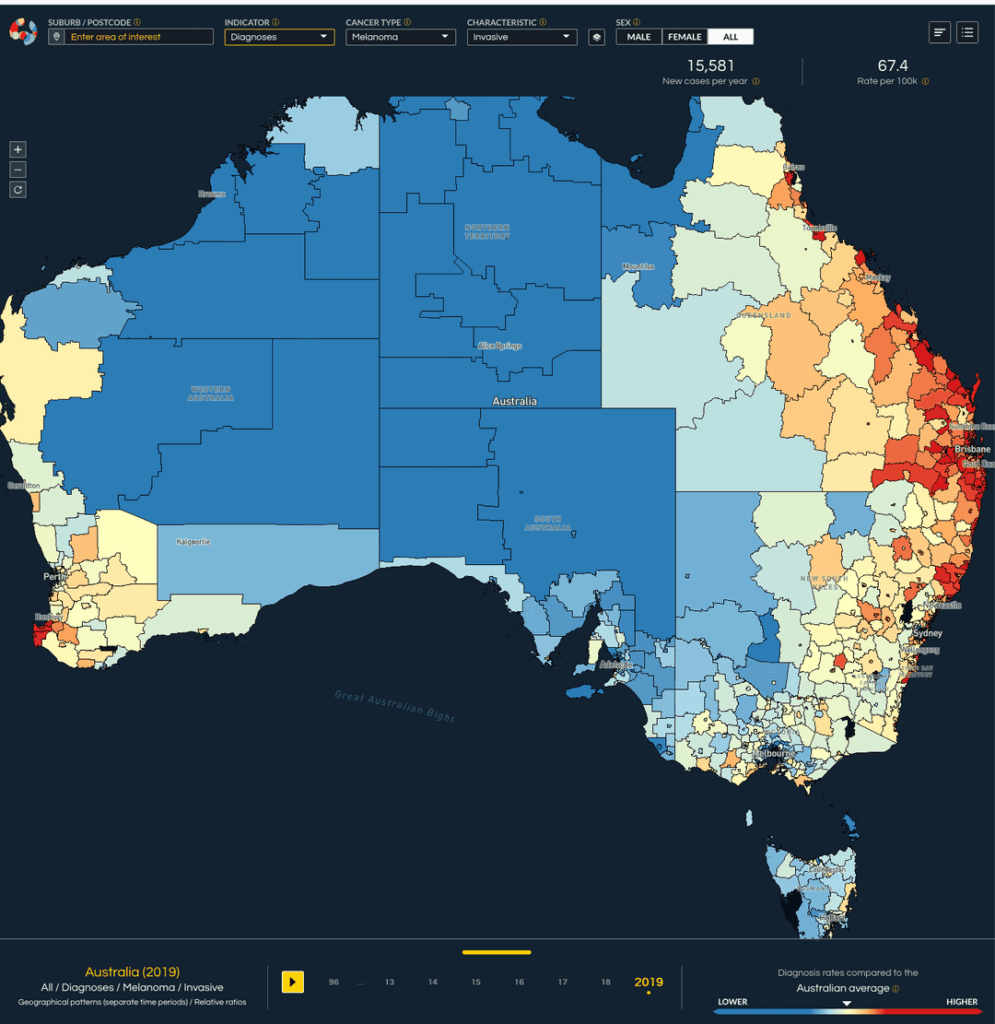
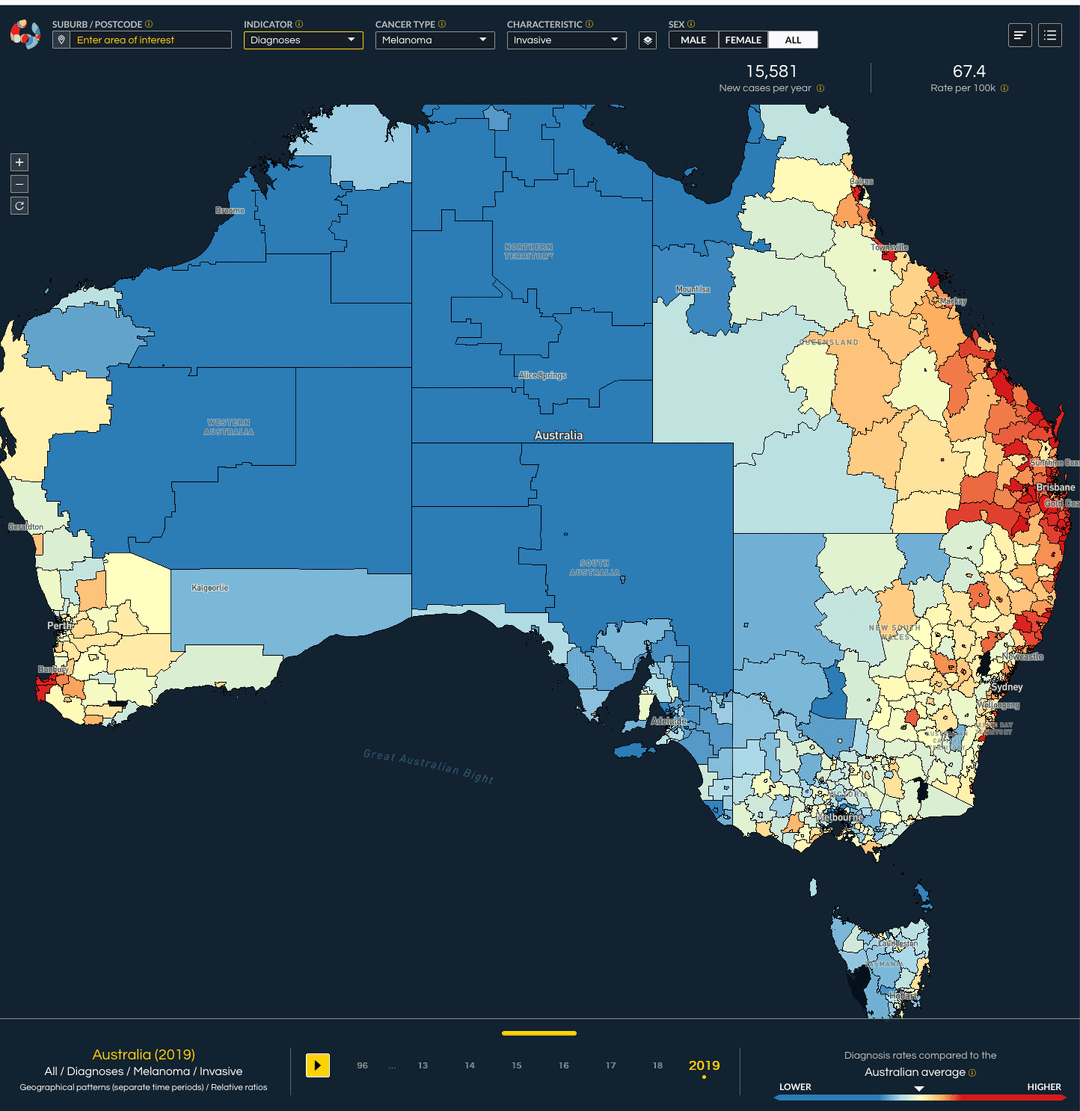
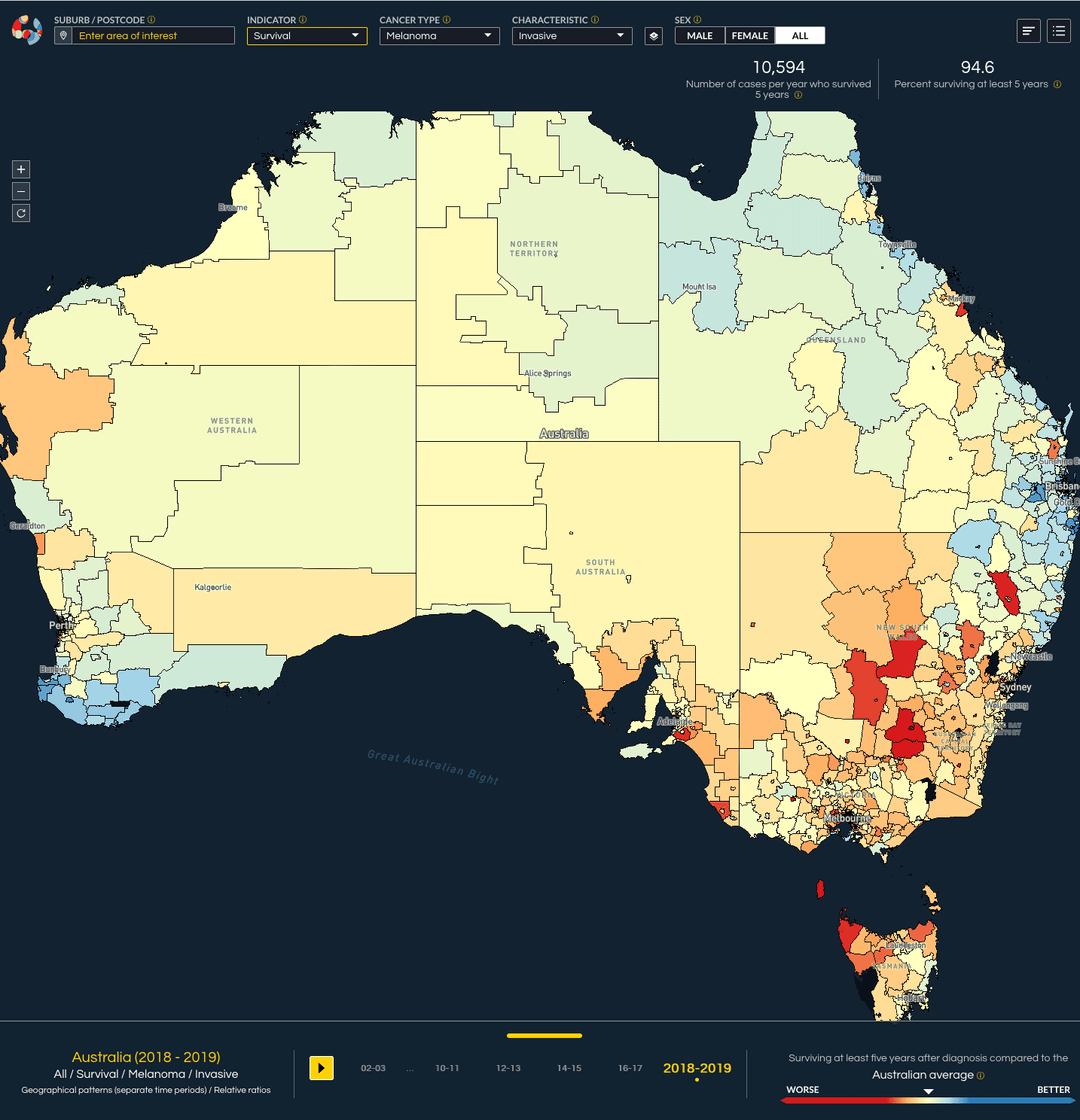
A lot of potential interesting aspects, but I am fascinated by the the high survival rates in the South East Queensland area, which has very high diagnosis rate. Is that all just awareness and early intervention? Southern NSW, Victoria and Tasmania have the inverse pattern.
https://www.reddit.com/gallery/1rg2khd
28 Comments
r/PeopleLiveInCities
I’m a ranga. You be scaring me on this here friday night
A down vote for clipping the map.
Wow. Tassie does have a thinner ozone layer though and it’s easier to get sunburned there (lived there for 14 years)
Being brown may get me hate from some racists, but at least I got natural SPF 50 skin.
I had a mole grow on my cheek, so I got an appointment with a skin specialist.
The skin doctor took one look and I was on the table getting it cut out.
After the biopsy confirmed it was a melanoma, and he had got all of it, he told me there was a 3% chance it had already killed me.
Second scariest thing a doctor has ever told me…
The best doctors are going to cluster around the higher incidence zone. Gps in these areas know what to look for and check for so earlier referral and diagonosis equals better outcomes.
My indian friend just got two melanomas cut out of his back. Australian sun doesn’t discriminate.
Diagnosis likely to be more proportional to availability of services that can diagnose and record the diagnosis rather than diagnosis itself
My geography sucks, are the poor survival rates in farming areas? Farmers are known for being out in the sun all day and only going to a doctor if a limb actively falls off.
I’m not sure how it works in other states, but at a few jobs in Brisbane that I had the employer organised annual skin checks at the office. The State government department I worked at did that. Plus yes I think people are very aware of it, a lot of people do an annual skin check at a clinic
UV is higher in northern NSW and QLD, combine this with cities being population hotspots and regional hubs having access to fewer medical services. While visually interesting this doesn’t actually provide any novel insights. Per 100k population scaling might not be as effective as you’d like because it reinforces the population hotspot bias.
You could look into a diagnosis per checkup method and sample for regions within a given year, confidence scoring each region with their ability to successfully screen for cancer – how many repeated visits with some time delay between visits resulted in an increase in mortality
e.g., in 2025 if you walked into a clinic on the south side of Brisbane what were the odds you would get correctly diagnosed with melanoma filtering by repeating patients with delayed diagnosis and mortality as heuristic markers
I think you should look at the colour coding on both maps and reconsider what you’re attempting to infer by said maps
Soooo Darwin doesn’t exist?
My mum died from it a few years ago. Four years from diagnosis till she passed.
Don’t fuck around with melanoma.
I work in healthcare, operating theatres specifically & i see so many people come in for Melanoma excisions & an alarming amount around 30… please guys be sun safe.
It’s really not great seeing so many people around my age with melanoma, one of the cancers you have such a large variety of options to reduce the rate of developing still be a problem.
Tan from a can, wear sunscreens & just be smart about what you wear in th sun.
As someone from Melbourne, we as a family with van and basic Ford Territory did a trip up the guts, then across to WA and down a few decades back. I recall it was somwhat remarkable and notable to me that we only started getting sunburnt, after a lot of time spent up north, once we hit lower WA locations such as Geralton.
I wonder if demographics getting frequent exposure to the sun mainly from a tan, living in warmer weather and/or work outside with very little sun protection actually also has high survival rates thanks from the belief that their frequent sun exposure meant the need to checkup and assess the risk? Whereas I also think lot of those that didn’t survive probably have a higher proportion being individuals that somehow got diagnosed despite have less sun exposure meaning probably not related the sun. This might explain the higher survival rates in Queensland compared to Victoria.
I would not be surprised if some of the Tasmanian ones are diagnosed too late – how many people think they don’t need “sunscreen” because it ain’t hot but many days in summer will still get up to 9-11UV
Wife has a few moles on her back, been there for years. I’d always watched them and noticed one was a little…different?…than normal. Convinced her to go see the Dr and he agreed- bad. We went back together a day later and they removed it. Tested it. Called back in- go deeper! Result- got it all BUT…27 internal stitches and about 35 external stitches. I took photos of the procedure. Happy to say that story and those photos have convinced half of my wife’s work colleagues to go get checked and a couple have had things removed too. Scary stuff when I think now about the hours we all spent as kids baking in the sun through the 80’s & 90’s.
I have a lot of moles on my body, so I should probably check them. Can I just visit a GP?
Age ! the people in Queensland getting it younger,so they survive….
My dad passed away from melanoma in 2024. It was fucking awful. It started as a mole on his neck that I think was a combination of him failing to get it checked and then doctors dismissing it. Which is frustrating to hear as he has fair skin and freckles and had had skin cancers cut out before.. He should have known better, or pushed more for a diagnosis. I’m not sure if that’s unfair of me to say.
He lived with it for quite a few years and was part of a trial drug program but eventually it mestastised and was in his lungs and brain. It was the brain tumour that killed him. It was really hard seeing how it affected his personality and quality of life in the end.
I try and get checked annually. I’ve had precancerous spots on my forehead removed. I’m still so paranoid about it.
Cries in Brisbane
>but I am fascinated by the the high survival rates in the South East Queensland area, which has very high diagnosis rate
Survival rates will be independent of diagnosis rates. And I would guess anywhere close to a big city will have better survival rates due to better services in the city. Perhaps also awareness/education.
The more cancer patients you have in a location the better the services are and the more experienced the doctors are at dealing with it.
Love how Darwin is just chopped off 🙁
Important to note that a big part of those regional blue zones would be a lack of essential services to diagnose in the first place