
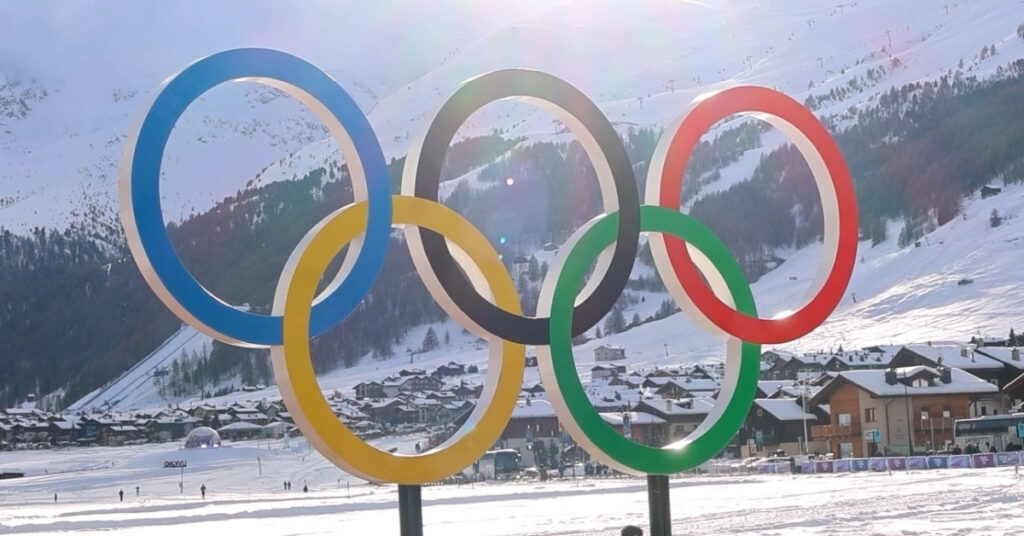
MILAN, ITALY — Unlike past Olympics centered around a single host city, the 2026 Milan–Cortina Winter Games took place across a wide network of cities, making them among the most regionally distributed Games to date.
Events were spread across northern Italy, including Milan, Cortina d’Ampezzo, Bormio, Livigno, Predazzo and Tesero, relying largely on existing venues rather than newly built facilities. This regional model of the Milan–Cortina Olympics created travel challenges and long commute times for spectators, workers and organizers.
For many, the widespread nature of the Games brought uncertainty and added financial pressure. “I would love to attend snowboarding, but the travel and cost that comes with attending an event in Bormio doesn’t fit into my budget,” said a college student studying in Milan, describing her frustration with the inconvenience of the 2026 Games.
Still, the regional approach reduced the construction of facilities with limited post-Olympic use, lowered carbon emissions, and helped preserve the surrounding environment.
Assuming responsibility for the Games gives cities an opportunity to showcase themselves on a global stage. However, that tradition often comes with significant costs, requiring substantial financial commitments and producing lasting environmental consequences.
Matthew Andrews, a history professor at the University of North Carolina at Chapel Hill who studies the intersection of sports and politics, said “to host the Games you have to go on architectural steroids and build a brand-new everything,” describing traditional Olympic hosting standards.
This phenomenon, known as Olympic “gigantism,” has faced sustained criticism since the 1976 Summer Olympics in Montreal, which left the city with long-term debt and underused facilities. “The mayor wanted brand-new shiny stadiums everywhere, and he guaranteed the Games would make money. They didn’t,” Andrews said.
Andrews pointed to a more recent example at the 2014 Winter Olympics in Sochi, Russia. “They built a brand-new sports infrastructure for these games. It cost $51 billion,” he said. Andrews argued that such spending represents a major economic tradeoff, noting the funds could instead support public subsidies such as hospitals, roads and schools.
As Olympic budgets have grown, environmental concerns have followed. Large-scale construction has often required reshaping natural landscapes, particularly for the Winter Games. “You’re talking about the beautiful Rocky Mountains or the Dolomites and tearing things down to build an Olympic-ready infrastructure,” Andrews said. Hosting specific events in cities that match their unique needs diminishes unnecessary damage to surrounding landscapes and the creation of venues that are rarely used after the Games.