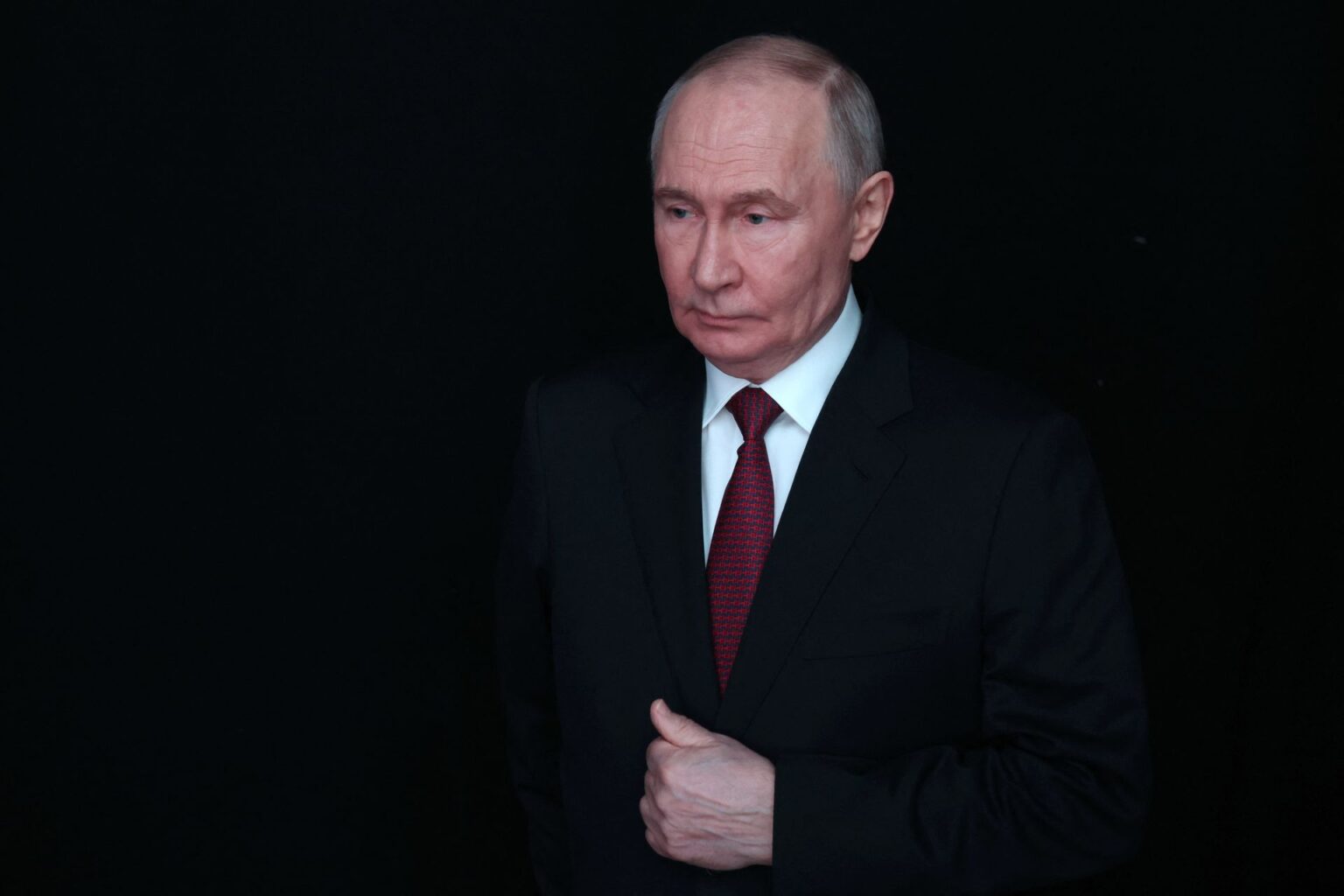
Russian President Vladimir Putin in Moscow, Russia, on Feb. 5, 2026. (Vyacheslav Prokofyev / Pool / AFP via Getty Images)
The recent anniversary of Russia’s expanded invasion, which is now stretching into its fifth year, is as good a time as any to take stock of the state of the war itself.
For Ukraine, the fighting remains existential, and it is Ukrainians themselves who continue to suffer and to sacrifice not just on behalf of their own defense, but on behalf of broader stability in Europe. Somehow, though, many Western partners still fail to see one clear fact: that it is Russia, and not Ukraine, who has suffered a staggering strategic failure because of this war.
This perception is perhaps understandable. The steady, day-to-day drip of news from the front line paints a picture of a war of attrition, with a larger Russia and its supposed manpower reserves at a natural advantage.
But this daily snapshot masks a far broader, far more striking reality, which observers in Washington (and elsewhere) would do well to recognize.
Not only has Ukraine seen a remarkable string of strategic successes — whether in assuring Ukrainian sovereignty and nationhood, or in creating the most innovative and most lethal military force in Europe — but it is instead Russia that has seen a breathtaking, even historic string of strategic defeats.
Indeed, it’s not too much to argue that Russia’s invasion, and especially its most recent offensive campaign beginning in 2024, deserves a place among the most blinkered, most disastrous military efforts not just of the past decade, but even of the past century.
Start at the top-level. At the outset of the war, Putin laid out a series of strategic goals, ranging from “denazifying Ukraine” to returning Ukraine to its place as a subaltern for Russia. As a now-infamous article in the state outlet RIA Novosti wrote, Ukraine “will be reorganized, re-established and returned to its natural state as part of the Russian world.”
These goals are no closer to fruition now than they were four years ago. If anything, they are far further than they’ve perhaps ever been.
Not only has Russia’s invasion consolidated Ukrainian nationhood, but it has revealed to outside observers that the claims of some kind of inseparable “brotherhood” between Ukraine and Russia were always a falsity, a fiction of Russian propaganda excusing Russian brutality, Russian revanchism, and Russian colonialism.
After it became clear that Russia’s initial goals would fail, Putin pivoted.
Following its initial failure, Moscow restructured its aims to focus on conquering the Donbas and all of the four Ukrainian oblasts that Putin claimed to annex in 2022. Leaning further into claims of Russia’s “historic right” to control the region — and that the war was, in reality, simply about protecting the ethnic Russians and Russian-speakers in the region — Moscow launched an ongoing offensive dedicated to snatching Ukraine’s easternmost provinces, regardless of the cost.
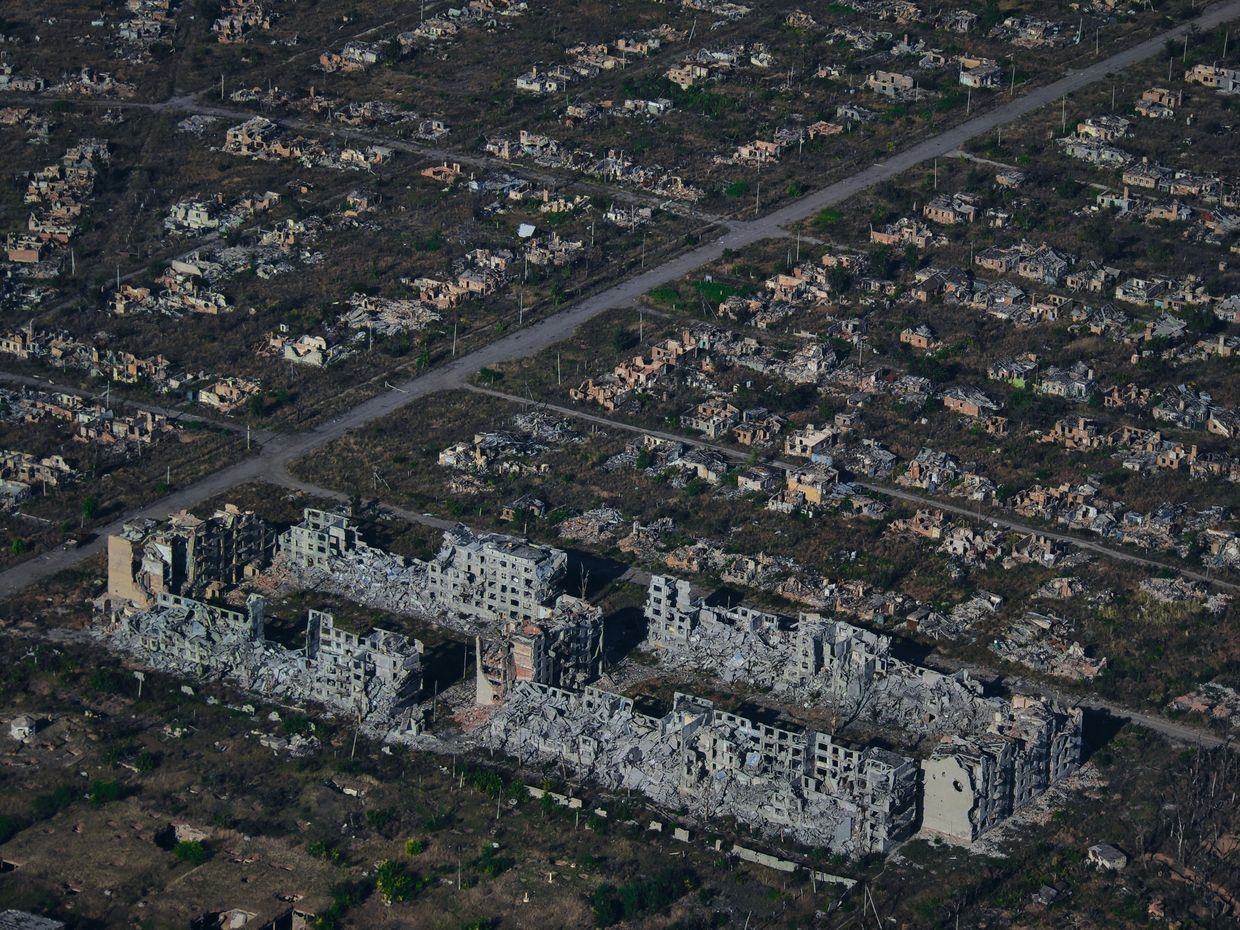
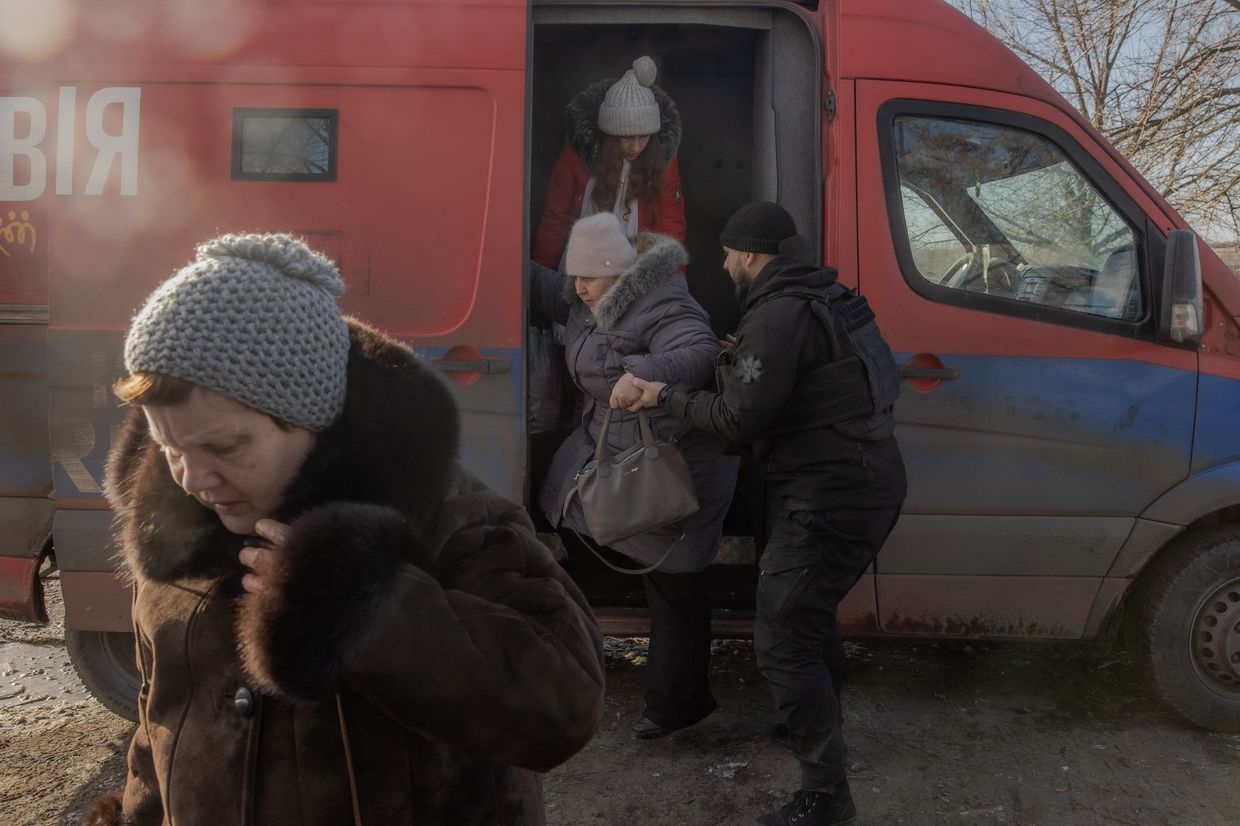
Yet even then, such an offensive has been nothing short of a strategic calamity, on par not only with the failures of Russia’s initial campaign in 2022, but even on par with things like Saddam Hussein’s bungled 1990 invasion of Kuwait, the disastrous French attempts to retain sovereignty over Algeria in 1950s, or even Adolf Hitler’s invasion of the Soviet Union in 1941.
It has been, as analyst Lawrence Freedman recently said, a “massive failure,” a rolling catastrophe whose contours still aren’t fully appreciated.
Pick any metric you’d like. Thanks to Moscow’s stupendous failures, Russia has now likely lost more men than the U.S. did during the Second World War, with tens of thousands of casualties now piling by the month — all in the war that has now lasted longer than the Soviet fight against the Nazis ran.
All the while, Russia’s economy has careened toward stagnation, with galloping interest rates and food prices once more “surging,” as the BBC recently reported. Economically, Putin has sacrificed a successful Russian future for a successful Russian present — and ended up with neither.
Geopolitically, Russia’s war has proven more suicidal than anything since at least the Soviet collapse, and perhaps even since imperial Japan launched a surprise attack on the U.S. nearly a century ago.
Instead of a rising regional hegemon, the war has exposed Russia as little more than a vassal state for China, a country that has its own revanchist designs on Russian territory. Moscow’s influence in places like the Caucasus, Europe, and the Middle East has collapsed, with the Kremlin able to do little to aid former allies like Bashar al-Assad or Nicolas Maduro.
At this point, Russia’s ability to ride to the rescue of places like Transnistria or Aleksandr Lukashenko’s Belarus is an open question — as is, increasingly, the future stability of the Russian Federation writ large.
All of it, while Russia has proceeded on the frontline in Ukraine at a “snail’s pace.” As one recent analysis found, Russia’s most recent offensive has proceeded “slower than almost any major offensive campaign in any war in the last century” — slower than even the Battle of the Somme during World War I.
This, then, is the state of play as Russia’s expanded invasion reaches into its fifth year. Ukraine stands largely independent, largely sovereign, and, perhaps for the first time ever, as the most powerful military on the European continent. And Russia now stands as the principal architect of the greatest strategic failure of the 21st century — one that, with Putin remaining in power, shows no signs of ending anytime soon.
It is a reality that Western policymakers should well recognize and do everything they can to accelerate.
Editor’s note: The opinions expressed in the op-ed section are those of the authors and do not purport to reflect the views of the Kyiv Independent.