
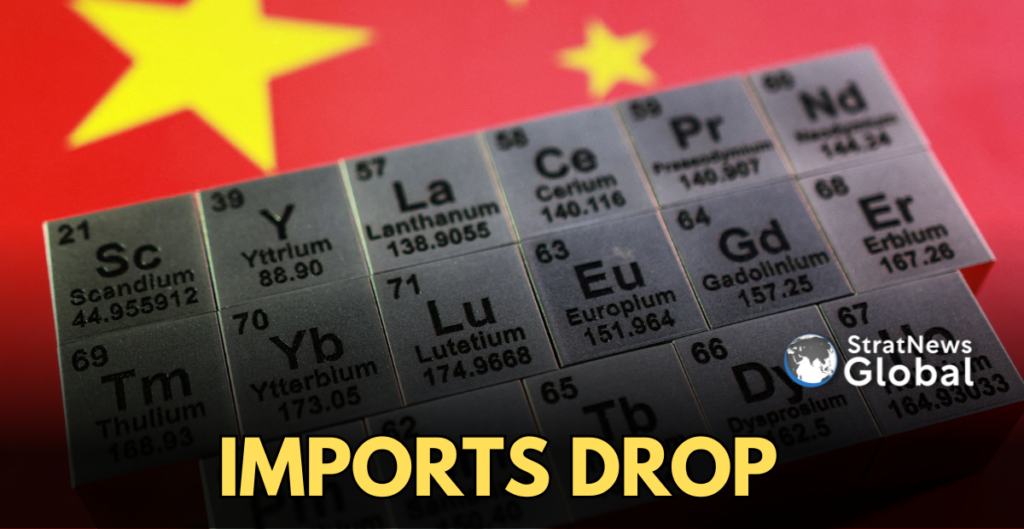

Japanese imports of rare earths from China fell 5.7% from a year earlier in January, according to calculations from the think tank of Mizuho Research & Technologies, based on trade data released by the Ministry of Finance.
It was not immediately clear whether the decline was related to the diplomatic dispute between the countries. Prime Minister Sanae Takaichi said in November that Japan could use military force to respond to any attack on Taiwan that also threatened Japanese territory.
Last month, China unveiled a ban on the export to Japan of so-called dual-use goods with potential military applications. The Wall Street Journal reported that exports of rare earths and powerful magnets containing them were also affected.
Based on the trade data that was released on Thursday, Mizuho Research & Technologies calculated the net equivalent of eight rare-earth-related items, including cerium oxide and cerium compounds used in the automotive and metallurgy industries, among other sectors.
An official at the Japan Organisation for Metals and Energy Security, a state-backed agency that supports the country’s rare earths development, said monthly figures tend to fluctuate and it is necessary to carefully assess whether the January fall in imports was directly linked to the China export curbs.
Japan’s gross domestic product could fall by 0.1% to 0.2% if rare earth exports from China are curbed by half for six months, according to Takeshi Higashifukasawa, a senior economist at Mizuho Research & Technologies.
This week, China has prohibited the export of dual-use items to 20 Japanese entities that it said supply Japan’s military, the Commerce Ministry said on Tuesday.
The rules effectively cut companies off from the seven rare earths and associated materials currently on China’s dual-use control list, along with a range of other controlled critical minerals. The new rules bar exports of rare earths like dysprosium, yttrium or samarium, which play tiny but vital roles in cars, planes, weapons and consumer electronics.
(With inputs from Reuters)