
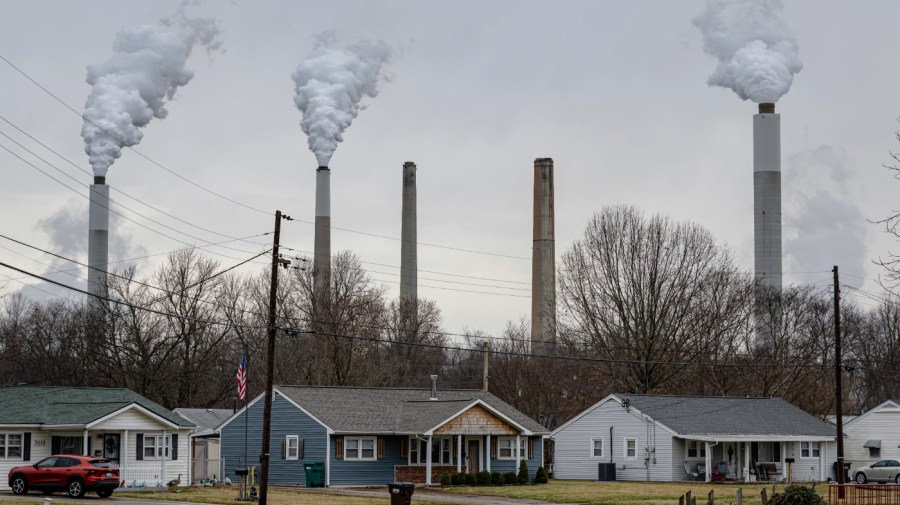
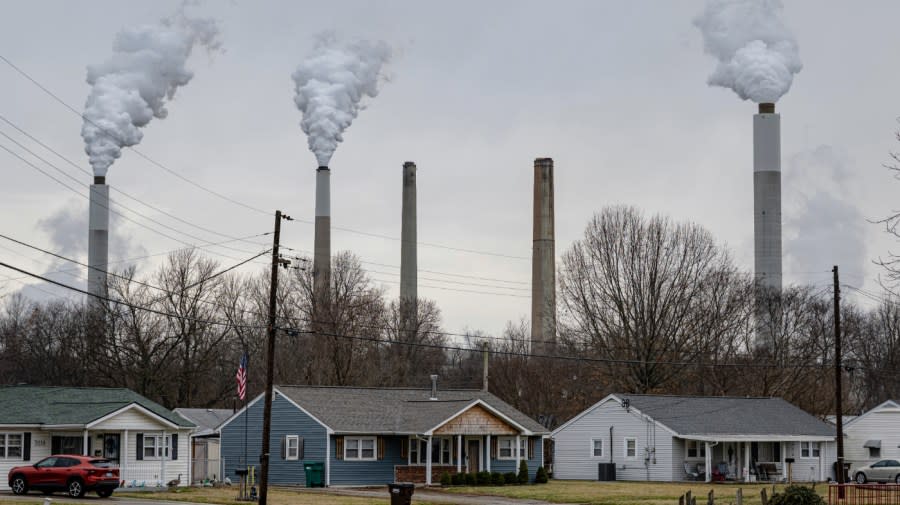
On Feb. 12, the Trump administration repealed the landmark 2009 Greenhouse Gas Endangerment Finding, flouting decades of scientific consensus. This doesn’t just gut the EPA’s ability to regulate greenhouse gas emissions — it also blocks our ability to know anything about cars’ and companies’ emissions. It thus ensures that automakers “no longer have any future obligations for the measurement, control, and reporting of greenhouse gas emissions for any highway engine and vehicle.”
The Trump administration’s efforts to block data are not isolated. Between the repeal of the Endangerment Finding and the proposed repeal of the Greenhouse Gas Reporting Program — expected to be finalized any day — the Trump administration has entirely turned out the lights on greenhouse gas emissions data. That may sound like the administration doesn’t care about data, but its extensive efforts to hide and halt federal data actually show how critically important they are.
The Greenhouse Gas Reporting Program was just that — a program to gather and publicly report data about greenhouse gas emissions in the U.S. But the EPA is reconsidering a rule that calls for an end to gathering greenhouse gas emissions data for 46 of 47 industries — and it would suspend data collection for the 47th industry until 2034.
The Greenhouse Gas Reporting Program didn’t require facilities to lower their emissions. It didn’t require expensive emissions reductions technologies. All the program did was produce data, and it cost next to nothing. But the program was axed because, as it turns out, data is powerful.
It’s no wonder that the EPA decided to do away with greenhouse gas emissions data for the public and policymakers alike. The Trump administration wants to “DRILL, BABY, DRILL” while the world teeters on the edge of multiple climate tipping points and other world leaders widely recognize the need to curb carbon emissions immediately. So, data about our role in climate change must go.
It is hard to say climate change is caused solely by natural variation when the data show otherwise. It is hard to say there’s nothing we can do about it when the data show otherwise. It is hard to convince people of a lie when there is data that shows the truth. And the Trump administration knows this.
Our country relies on federal data to understand and address issues in our environment, health and society. Without data, we cannot assess current or anticipate future conditions. Without data, we cannot effectively identify or measure, let alone mitigate problems.
For the last year, the federal government has threatened the existence, accessibility and integrity of federal data. It has pulled down critical data, like the EPA’s Risk Management Plans (preserved here) that provided communities with information about the hazardous chemicals stored and used in nearby facilities. It has discontinued data collections such as the National Oceanic and Atmospheric Administration’s Billion Dollar Disasters, which helped show the economic impact of climate disasters.
The federal government has also removed ways of accessing and using data, like taking down federal tools to quantify or visualize disproportionate environmental impacts on certain groups of people, with a court ordering one of them to be restored. The federal government has even manipulated data and misrepresented scientific findings in consequential reports.
The Trump administration employs three methods to hide data from the public: deregulation such as gutting the Greenhouse Gas Report Program, defunding in the manner of EPA’s drastic staff cuts, and outright deletion, like in the case of the Federal Emergency Management Agency’s Future Risk Index.
We in civil society need to push back and intervene in each of these mechanisms. We need to push back on deregulation through effective public comments, which give litigators a strong official record to challenge agencies’ deregulatory moves. We need to advocate Congress to fund our agencies and their critical programs and assert public pressure on agencies to lift hiring freezes and rebuild staff. And we need to protect our existing data by preserving it in public repositories with civil society stewards. And that’s just the work we need to do to defend what we’ve had in the past, let alone the imperative of building a more robust and resilient data ecosystem for the future.
Protecting data is about more than data. It’s about protecting the public’s right to data, our right to information, our right to knowledge. Protecting data is about preserving a fundamental pillar of democracy.
Gretchen Gehrke, Ph.D., is co-founder of the Environmental Data and Governance Initiative and of the Public Environmental Data Partners coalition.
Copyright 2026 Nexstar Media, Inc. All rights reserved. This material may not be published, broadcast, rewritten, or redistributed.
For the latest news, weather, sports, and streaming video, head to The Hill.