
A new analysis from the state’s clean energy authority is fueling debate over the cost of New York’s climate policies.
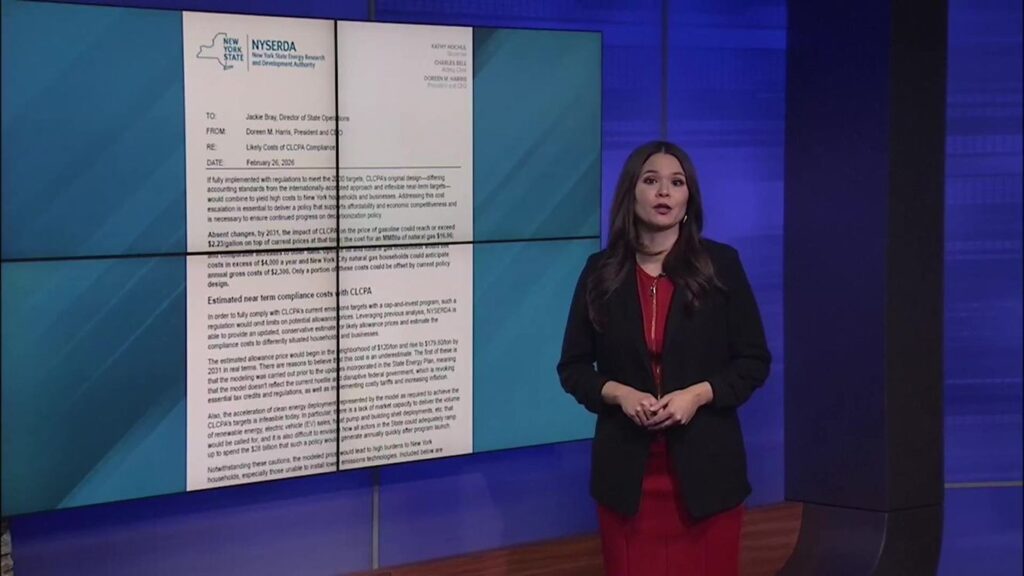
CBS6 has obtained a memo from the New York State Energy Research and Development Authority, or NYSERDA. It says some households could see energy costs increase by thousands of dollars a year as the state works to meet its climate goals.
However, environmental advocates say focusing on those numbers misses a bigger point — that renewable energy could actually help lower electricity costs over time.
New York’s clean energy transition is meant to cut emissions, but according to a memo from NYSERDA, it could raise energy costs significantly in the years ahead.
The way the Climate Leadership and Community Protection Act — known as the CLCPA — is currently structured could make fossil fuels more expensive as it aims to cut greenhouse gas emissions by 2030.
The analysis estimates that by 2031, some upstate households relying on fossil fuels for heating and transportation could see gross energy costs increase by more than $4,000 a year.
Those estimates are tied to the proposed capandinvest program, which would require companies that sell fossil fuels to pay for the pollution those fuels create.
For some lawmakers, the findings confirm concerns they’ve been raising for years.
“My initial reaction when I saw the memo was, well, this is why they didn’t put down a fiscal impact for the bill. Shifting the focus to sources of energy that create a disparity in their ability to provide said energy, right? It doesn’t meet reality,” said Republican State Senator Jake Ashby.
However, environmental groups say the memo focuses on shortterm costs without fully considering what’s driving energy prices today.
They point to the volatility of fossil fuel markets — especially natural gas — as a major reason electricity bills fluctuate.
“A lot of our electricity is powered by gas and gas infrastructure, and those costs are off the charts this year. It’s not our climate law that’s causing these problems. Failing to address what’s happening with our gas system and continuing to try to prop that old dirty system up, makes things more expensive and harder to deal with. Every single day we delay,” said Katherine Nadeau, Deputy Executive Director of Environmental Advocates of New York.
Supporters of the clean energy transition argue expanding renewable energy sources could reduce that exposure over time.
However, state energy officials also say that reducing fossil fuel supply when clean energy infrastructure isn’t fully operational could drive up prices.
This debate now faces state leaders, with Governor Kathy Hochul acknowledging that changes may be necessary.
“You can ask me as many times as you want between now and the end of the budget. I’m not going to telegraph what we’re talking about in our negotiations, but I think everybody knows that we have a real problem on our hands,” said Hochul.
State leaders are still working out details of the capandinvest program, including how much revenue would be returned to consumers through rebates and programs.