
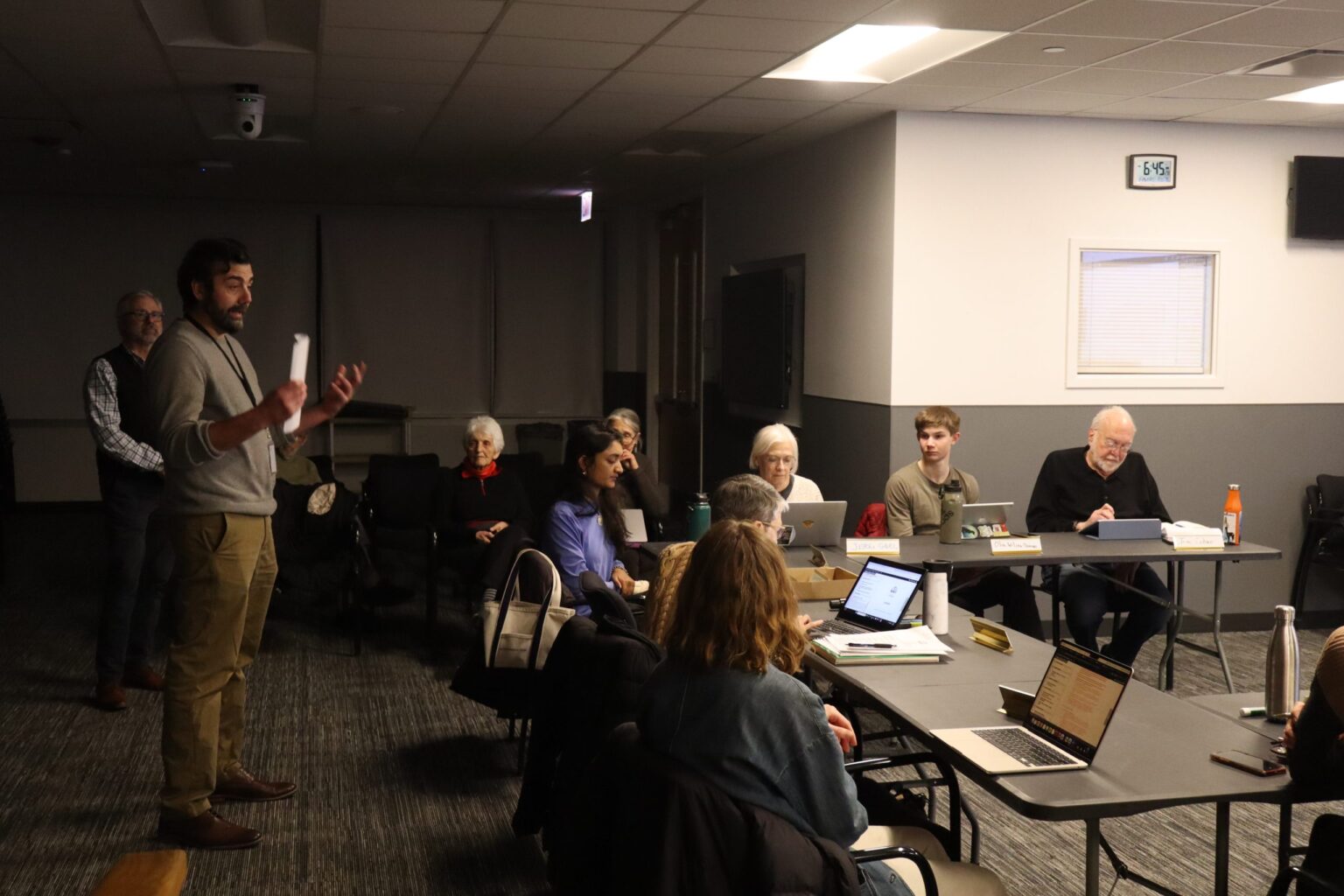
Evanston’s Environment Board unanimously approved an update to the city’s natural space ordinance on Thursday, which removes legal ambiguities from the previous ordinance, clearly identifies current natural areas, defines the roles of volunteer stewards versus city employees and better aligns with the city’s climate action goals, among other changes.
The vote took place during the board’s Feb. 26 meeting at City Council chambers and follows a similar vote Feb. 20 by the Parks and Recreation Board. The ordinance now goes to the city council’s referrals committee, with a full council vote expected in April.
At the start of the meeting, the Environment Board announced that member Gennifer Geer, who was appointed last summer, resigned due to scheduling conflicts. Rachel Fleishman, who joined the Environment Board’s Climate Action Resilience Plan Implementation (CARP) Task Force in January, officially took her seat on the board. That still leaves the 11-member board one member short.
Fleishman said she was “really pleased and honored to be with you all” and “excited by the opportunity to be here.”
Natural space ordinance
The updated ordinance was developed by the Natural Areas Task Force. Formed in November 2025, the task force comprised two Public Works staff members, two Parks and Recreation Department staff members, four natural area stewards and Environment Board member Libby Shafer. Parks and Recreation Department Deputy Director Matt Poole noted that a Parks and Recreation Board member was also involved but did not specify which one.
“So, we met seven times in late 2025 and once in early 2026 to come up with details that are in your packet,” he said.
The updated natural space ordinance follows language in the city’s Climate Action Resilience Plan passed by the city in 2018.
It calls for the city to “conserve, restore, and expand Evanston’s urban forest, native vegetation, and green space in order to maintain and increase regionally native habitat, reduce greenhouse gas pollution, and improve stormwater runoff retention, air quality, energy efficiency, and livability,” according to the ordinance language.
The ordinance expands the definition of “natural areas” as “public lands that are managed to protect, create and/or establish habitats that prioritize native flora and fauna” that exist to “conserve, restore, and expand Evanston’s urban forest, native vegetation, and green space in order to maintain and increase regionally native habitat, reduce greenhouse gas pollution, and improve stormwater runoff retention, air quality, energy efficiency, and livability. “
Six existing natural areas explicitly defined and grandfathered in. Any new natural areas must be approved by both the Parks and Recreation board and the Environment Board.
Natural area stewards
The ordinance not only defines natural areas stewards as “volunteers who are responsible for the ecological management,” but creates “liaison stewards” who are “responsible for ensuring a Natural Area remains in communication and collaboration” with the Natural Areas Officer. Poole said that this would be “a city manager of their designee.” Under the ordinance, the city will provide support and help identify potential new natural spaces.
One of the stewards on the task force is Wendy Pollock, who is a steward at Ladd Arboretum Natural Area. She also sits on the CARP Implementation Task Force and serves as the RoundTable’s Environment Editor. Pollock, along with Libby Hill, a steward for the Clark Street Beach Bird Sanctuary, attended the board meeting.
“First of all, I want to make sure: Are you guys happy with this? Are you comfortable?” asked the Environment Board co-chair Paula Scholl.
“Yes,” responded Pollock, adding that the ordinance affirms “that the work we [stewards] have been doing is valued and viable.” She also said she appreciated having the existing natural areas officially described.
Scholl also wondered how the liaison stewards would be chosen.
“We figure things out, each [natural area] has a different way of work,” Pollock said.
Poole said that if, hypothetically speaking, a natural area wouldn’t have any stewards, the city will take over caring for that area until there are. The natural area officer, he explained, is to help recruit new stewards.
“I think that’s a significant change, too,” Pollock said. “It commits the city to carrying for naturalized landscaping.”
Hill encouraged the Environment Board members and Evanstonians in general to visit the natural areas and see what they offer.
“At some point, we want to arrange a tour, and get people to come, get people to volunteer,” she said.
Shafer encourage other board memebrs to take Hill up on that effort.
“I’ll echo that,” she said. “They are the hidden gems of Evanston. [The stewards] put so much love in those places.”
Related Stories