
WKU neurodivergence center to make big impact in Romania
Published 5:00 am Sunday, March 1, 2026
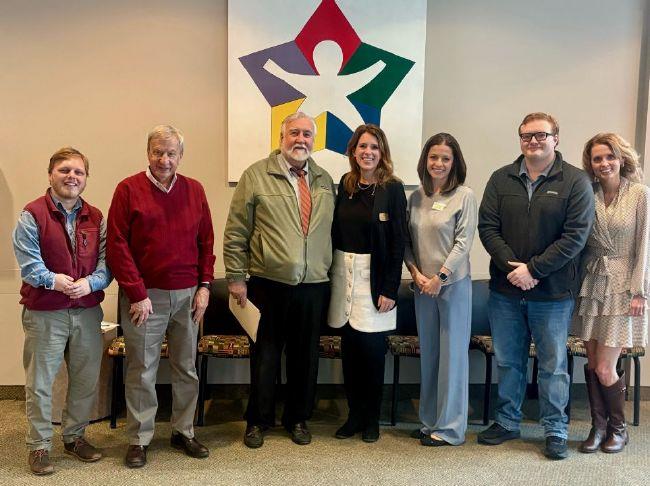
An upcoming center in Romania will support autistic adults like no other in the country — and Western Kentucky University’s clinical education complex holds a key role in bringing decades of expertise there for dissemination nationwide.
Numerous Romanian stakeholders described there being nearly no sustained supports for autistic adults in the country. The new center — Campus Lumya — will be the only one nationwide to be developed on the concept of integrating numerous services, according to Steluta Moisescu, who’s spearheading the project.
Leading the training is WKU’s Suzanne Vitale Clinical Education Complex, which runs several programs supporting neurodivergent people —and where, in March, six center members will fly over to hold six days of autism support training. Moisescu said WKU’s training will have a huge impact, as enrollees — Romanian professors, physicians, public ministry representatives, and other stakeholders — will further disseminate the information.
Campus Lumya will span more than 231,400 square feet to provide supports for autistic Romanians, especially those over 14 years old. The completed project, slated for 2027, will have 135-140 employees and provide numerous services for about 400 people monthly.
“It’s going to change a lot of things here in Romania,” said Alexander Ené, an autistic Romanian resident and ambassador for Campus Lumya, about the center.
“This could be a milestone.”
Autism in Romania
For Moisescu, the idea was inspired by her autistic son and his experience growing up in Romania.
He’s extremely empathetic and able to anticipate her wants and words. When he was younger, he had severe epilepsy, a condition known to co-occur with autism. And he has a need for stability, predictability and routine, and unfamiliar situations can cause anxiety and behaviors others have found challenging — and that people didn’t understand how to help with as he grew up in Romania.
There was the time his primary school teacher told Moisescu he would pass classes if she kept him at home. The times that doctors incorrectly said he would never talk, because his first words were at 5. The time they went to one of the capital’s largest hospitals for his stomach pain, only for medical personnel to supply pain pills in the car with no consultation, as they couldn’t help her son calm down.
“When the system is unprepared to accommodate a group of people, you cannot just stay and wait,” Moisescu said.
When phase one of construction, slated for the final quarter of the year, is completed, the center will have a multifunctional center with therapeutic and inclusion workshops, a medical and recovery clinic especially targeting issues associated with autism such as gut problems and an assisted living area. It’ll also have areas for a canteen and dining, a greenhouse and horticulture, a chapel and reflection space, and animal-assisted therapy. The second, final phase will feature a vocational school alongside student dormitories, a multifunctional sports field, outdoor recreational activities area, multifunctional hall for sports and events, sensory garden, gazebo and event space, art and recreational expression gardens, and an extended animal-assisted therapy area.
An absence of support systems leaves autistic adults and their families without viable paths toward inclusion or autonomy in Romania, said Alina Amza, who created a documentary on the subject — making points echoed by Moisescu and other interviewees in Romania. But also, run by Moisescu, this is additionally a project with mothers in mind, as Amza and Moisescu pointed to there being numerous single mothers of autistic adults who have little support to turn to.
Ené said he most looks forward to participating in its animal-assisted therapy, sports field, greenhouse, and outdoor recreational activities — as well as any art therapeutic workshops.
Ené added that he’s eager to volunteer to support the children at Campus Lumya — and hopes to share his love for art.
Ené, who grew up in Germany and lives in Romania, said he felt limited by the jobs available with an emphasis on socializing and navigating new situations. Loud noises, too — traffic in Bucharest, for example — are overwhelming.
It’s also enabled him to go hours on end as he hyperfocuses on pursuing his passion: art.
“I forget everything — I’m only there,” Ené said. “It also is like therapy for me, because maybe in other things in life, I’m not good in socializing, and even relationships were very difficult for me.”
Support from family has helped greatly in communications and life. And for Ené, who grew up in Germany, the Romanian life experience brought him into more social community where he could steadily practice communicating with others and, in time, form friendships.
He eventually helped co-found the small nonprofit Roxy & Kids Art, where they organize collaborative art workshops, art therapy and volunteering for people from all walks of life — but especially children.
As Campus Lumya becomes a reality, he most looks forward to participating in its animal-assisted therapy, sports field, greenhouse, and outdoor recreational activities — as well as any art therapeutic workshops.
Ené added that he’s proud of the project: “It will help to give a little bit of awareness to the people about what autism is … and (as) people find out more about (autism, they’ll) have much more tolerance and acceptance for it than they had before.”
WKU’s part
The largest aim, Noel said, is to share the center’s understanding that to offer comprehensive support, different professionals must be able to collaborate.
Peyton Collins, KAP’s mental health services director and a licensed clinical social worker, will focus on disability, inclusion and mental health in community and workforce contexts. Caroline Hudson, a speech pathologist who heads the Kelly Autism Program and AAC library, will lead training on communication supports and AAC in the workforce.
Kim Link, co-director at WKU’s Institute for Rural Health and a psychiatric-mental health nurse practitioner, will do medication management in disability and workforce contexts. Corinne Murphy, dean of the College of Behavioral Sciences and a special education professor, will hold training for building effective interdisciplinary teams for work and community transitions.
WKU student Alexander Bentley, a peer coordinator at the center, will speak on his experiences as an autistic adult in work and community life.
For Bentley, autism hasn’t felt like a disability or a disorder. More so, it feels like a unique way to behave, process and facilitate information compared to the typical person — with an often outside-the-box understanding that some describe as quirky, and a lifestyle that can be unusual, but nothing too deliberating or intense with the right support and accommodations.
He’ll remind himself to inflect his voice to avoid sounding monotone. It takes practice to maintain eye contact in a way people might expect. It means more effort reading how someone may feel when they lean against a wall or inflect a certain way or make a certain expression. He can hyperfocus on what he’s interested in— numerous hours on end with no interruptions. Earlier in the day, he worked statistics for six or seven hours nonstop — measuring the center’s graduation rate, retention rate, and all the key milestones of success. He’ll also instantly decipher vast quantities of data for irregularities, unique viewpoints and predictions — such as at Western’s former Big Red Rocketry association, where he could glimpse tubes, fins, wings and cones with their measurements, and estimate overall rocket ability.
For him, at Western, accessing a private dorm was a game-changer — one that prevented potential disruptions because of roommate incompatibility. Bringing his own pet, a support lizard, has also helped.
Pets are one of the interventions he may recommend at the training, along with more counseling and therapeutic interventions such as facial recognition practice with cards, or interpretations of video displaying people’s body language.
Following a talk about his experience, he’ll lead a reflective listening activity where participants discuss helpful, harmful and missing supports for autistic students and clients, and then a group discussion on cultural attitudes, expectations and stigma surrounding autism.
His hope, he said, is to establish an intake and support system where participants can listen to their students’ perspectives and viewpoints — a foundation for communicating with and supporting autistic students and clients. For example, a student with difficulty focusing may ask for more study time — and it could be that — but there could be other more effective supports, too, such as different study strategies, and Bentley hopes to provide a system for facilitating that conversation.
“We’re going there with open minds, just going to teach and better the world,” Bentley said.
Noel’s focus will be behavior and how people use it to communicate.
This, she said, means focusing on core behavioral ideas such as the function of behavior, and how what happens after a behavior can make it more or less likely. So, it likely wouldn’t include a single modality such as Applied Behavior Analysis, but rather, take principles behind it — such as behavioral functions and how what happens after a behavior can make it more or less likely — and use those principles to help a client work with different professions.
It must also be mediated by the person being supported — who must also have a say in what the intervention is, Noel said. For example, when someone bangs their head, they could be indicating they want to be left alone, and would otherwise have difficulty communicating it, she said.
So, the science of behavior may look at that to determine what the person is trying to say — and then, finding a professional with an appropriate skill set. WKU’s Hudson, for example, could then work with the person to find an alternative, augmentative communication device to help them communicate.
“The most important to me is that we have this group of people who are kind of consistently develop(ing) our training and our support with a lot of input from neurodivergent voices, a lot of autistic individuals that say, ‘This is how we should do it.’ ‘Have you considered that?’
And to be able to spread that to Romania feels really important to me.”