
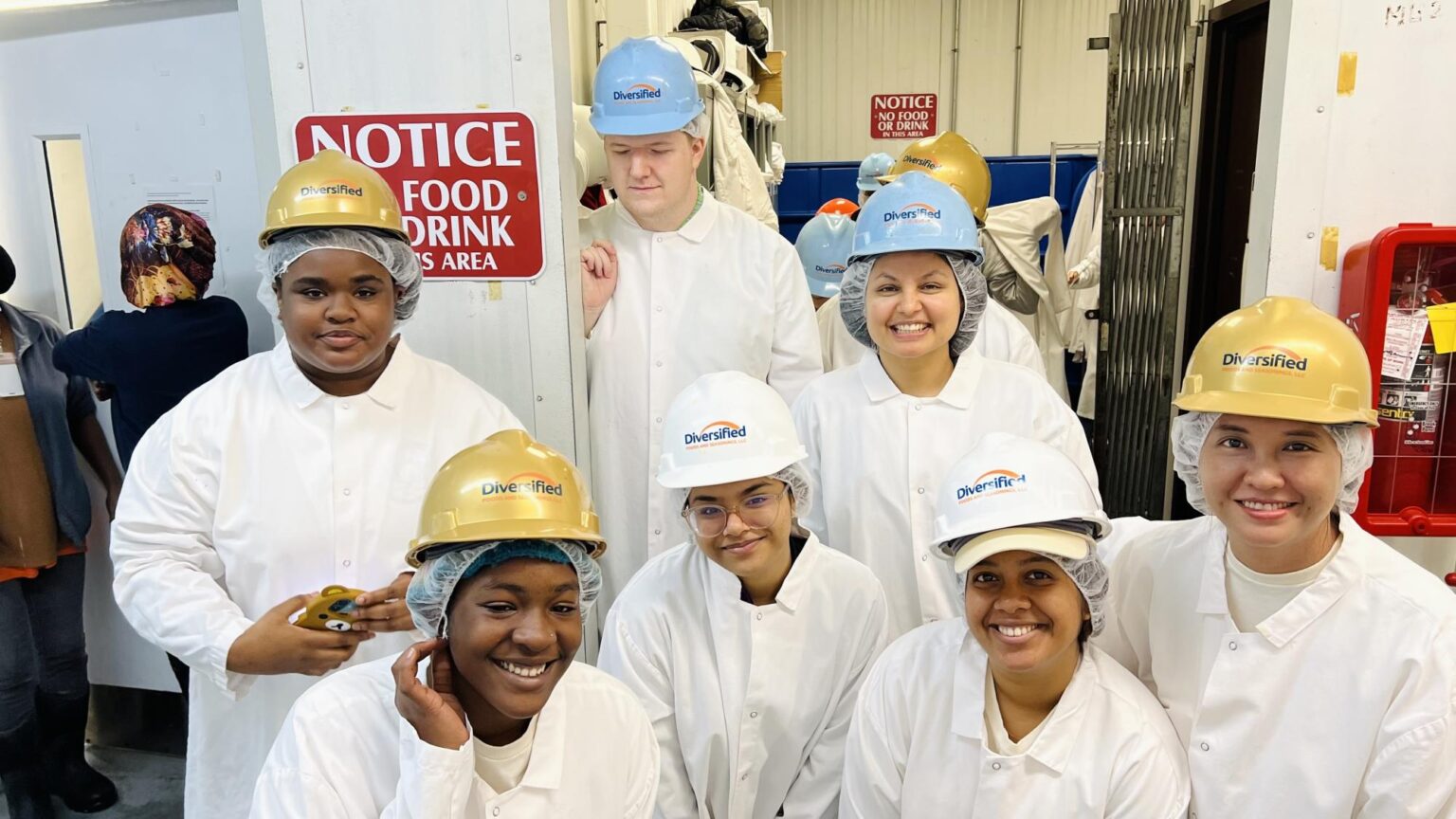
LSU’s Food Science Club took an industrial tour of Diversified Foods and Seasonings manufacturing plant Friday in Madisonville, La.
The club applied Good Manufacturing Practices in a working food plant and learned about the processes that go into food production.
Diversified Foods and Seasonings specializes in batters, breadings, sauces and gravies as well as side dishes like macaroni and cheese and red beans.
Other than the manufacturer in Madisonville, there is one other Diversified Foods and Seasonings in Theodore, Ala. These two facilities mostly supply restaurants.
Melody Anderson is the director of food technology at the Madisonville plant. She said the facilities’ number one customer is Popeyes; Diversified Foods and Seasonings supplies every Popeyes in the country.
First, the FSC signed a GMP and visitor agreement. Then, the tour started in the test kitchen.
Anderson said the test kitchen works with customers to develop products. She explained that restaurants look for marketing trends like what flavors are popular at the time.
Then, they send those trends to Diversified Foods and Seasonings where the test kitchen chefs figure out how to incorporate the flavor ideas into a sandwich, shrimp or sauce, for example.
“They’re the creators. They’re the ones who make it taste good,” Anderson said.
Anderson and the chefs explained how working with the pH and water activity is where the food science part of their job comes in.
For example, the chefs are working on making a coffee creamer out of a girl scout cookie sauce a customer gave them. The sauce has been kept in its container unrefrigerated for months but is still in good quality.
Anderson said the chefs formulated it to a water activity low enough to where even if pathogens got introduced, there is not enough available water for anything to grow.
Next, the FSC toured the industrial plant area of the facility. To enter, the LSU students wore hair nets, hard hats and long coats. The students observed processes like blanching macaroni and packaging on a large scale.
The plant also has a lab where products are tested before being distributed to customers. The lab employees have to test everything from salt content to thickness.
To end the tour, the students ate catfish the chefs made.
FSC member Drew Puckett is a first year graduate student studying food science and technology. He said he plans to pursue research and development work or health and safety.
“I enjoyed seeing the facility’s hands-on work because you learn a lot about how this stuff works in class, but you don’t get to see how it all gets put together,” Puckett said.
Kay Gaines, club member and food science and technology junior, said the tour was helpful for her. She said she might want to work at a similar facility or go into either research and development or quality assurance.
“It kind of gave me a glimpse into my future,” Gaines said.
Gaines added that when touring food manufacturing plants, she notices loose product on the floor and the drastic differences in temperature levels. Gaines thinks food plants could work on minimizing waste and maintaining temperature levels.
However, she knows a big part of food science is combating microbes and creating an environment where they cannot grow, which explains the different temperatures in the areas of the food plant.
“I really enjoyed seeing the processes behind the foods we eat and how intricate it is,” Gaines said. “I’ve always been fascinated with that type of stuff.”