
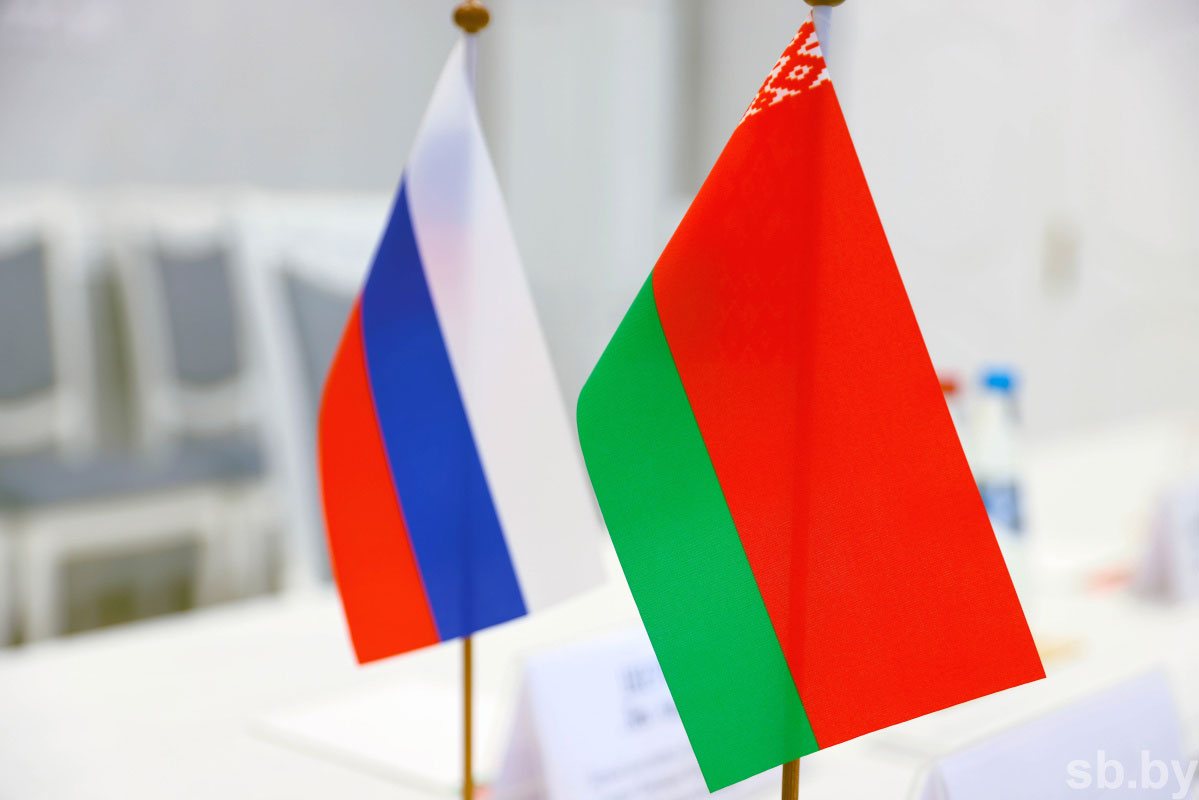
In his talk with the First News TV channel, Dmitry Krutoi, the Head of the Belarus President Administration, revealed the main subjects addressed at the Union State Supreme State Council meeting. These included the record trade turnover between Belarus and Russia, the advancement of deeper economic integration between the two countries and issues related to the agricultural sector.
Mr. Krutoi noted that during the recent Supreme State Council meeting held in Moscow, there was a very businesslike atmosphere. “It was a very constructive and professional environment. This year, there weren’t any particularly sharp issues that caused tension or led to heated debates. A significant amount of preparatory work was done before the Supreme State Council meeting, and the presidents essentially made decisions on certain options that had been developed at the level of the Union State Council of Ministers or specific sector regulators. There were few such options, but the leaders of our countries have been reported on the most critical issues and further instructions have been received from them on how to proceed throughout 2026. Naturally, a lot of time was devoted to trade turnover, which is a key economic indicator. Last year saw a 5.5 percent increase, adding nearly $3bn. The total figure reached $55bn, marking another historic record high. Over five years, trade grew by 37 percent, almost $16bn. There was an interesting comparison with the People’s Republic of China: while Belarus and China differ in population by a factor of 140, their trade with Russia differs by only four times. Russian colleagues noted that Belarus consistently ranks among the top five most important trading partners of the Russian Federation, which is also a very important aspect for us,” the Head of the Presidential Administration emphasised.
During the Supreme State Council meeting, the presidents of Belarus and Russia discussed the directions for integrating the two countries’ economies. “The main focus and the majority of the discussion time were dedicated to the areas that, as our presidents metaphorically described, form the layers of our integration, aimed at increasing the seamlessness of our economies. Primarily, this relates to automation systems. The key one is the integrated system for administering indirect taxes, namely VAT and excise taxes. Essentially, this is the essence of our integration, the economic core, and the main purpose for which this supranational tax committee was established. This system is intended to demonstrate the highest level of trust in the economic and foreign trade operations conducted between our countries and among our specific business entities,” Mr. Krutoi noted.
The second important topic of discussion was the tracking system. “It was agreed that on May 1sr, 2026, it will be launched for a pilot batch of products. Primarily, this includes household appliances: refrigerators, freezers, washing machines. Household appliances are a segment prone to opaque grey schemes that have emerged within the framework of parallel imports — a forced measure following the events of 2022. And as one of the tools to gradually phase out this parallel import and transition it onto more regulated tracks, we are launching this tracking system together with the Russians. Of course, the list and range of products will expand. Similarly, the third system is the labelling system. Last year, our system operators experienced certain delays and failures in the timely transmission of these codes. Thankfully, all these issues have been resolved. And so, as the third tool, the labelling system is also being put into operation,” the Head of the Belarus President Administration pointed out.
At the Supreme State Council meeting, the leaders of the two countries reviewed reports related to the agricultural sector. “There are two key components — the veterinary part and the phytosanitary part. The integration of the phytosanitary systems of both countries last year helped remove the contentious issue of quarantine-restricted products from our agenda. Previously, there were mutual accusations because the lists of products prohibited for import into either the Republic of Belarus or the Russian Federation did not match. The electronic integration of Russia’s Argus-Fito system and our BELFITO system allowed us to eliminate this quarantine product issue from the agenda. The presidents noted that this is a good example of how to proceed further,” Mr. Krutoi explained.
He added that the heads of state set a goal for this year to resolve a similar issue regarding the veterinary sector, specifically concerning the supply of dairy and meat products. “I believe that if the veterinary part is fully implemented this year, this problem will also be resolved. Essentially, six key information systems have been developed and launched — some in pilot mode, others fully operational. These systems will serve as a framework that will completely streamline export-import flows between our countries,” the Head of the Belarus President Administration highlighted.