
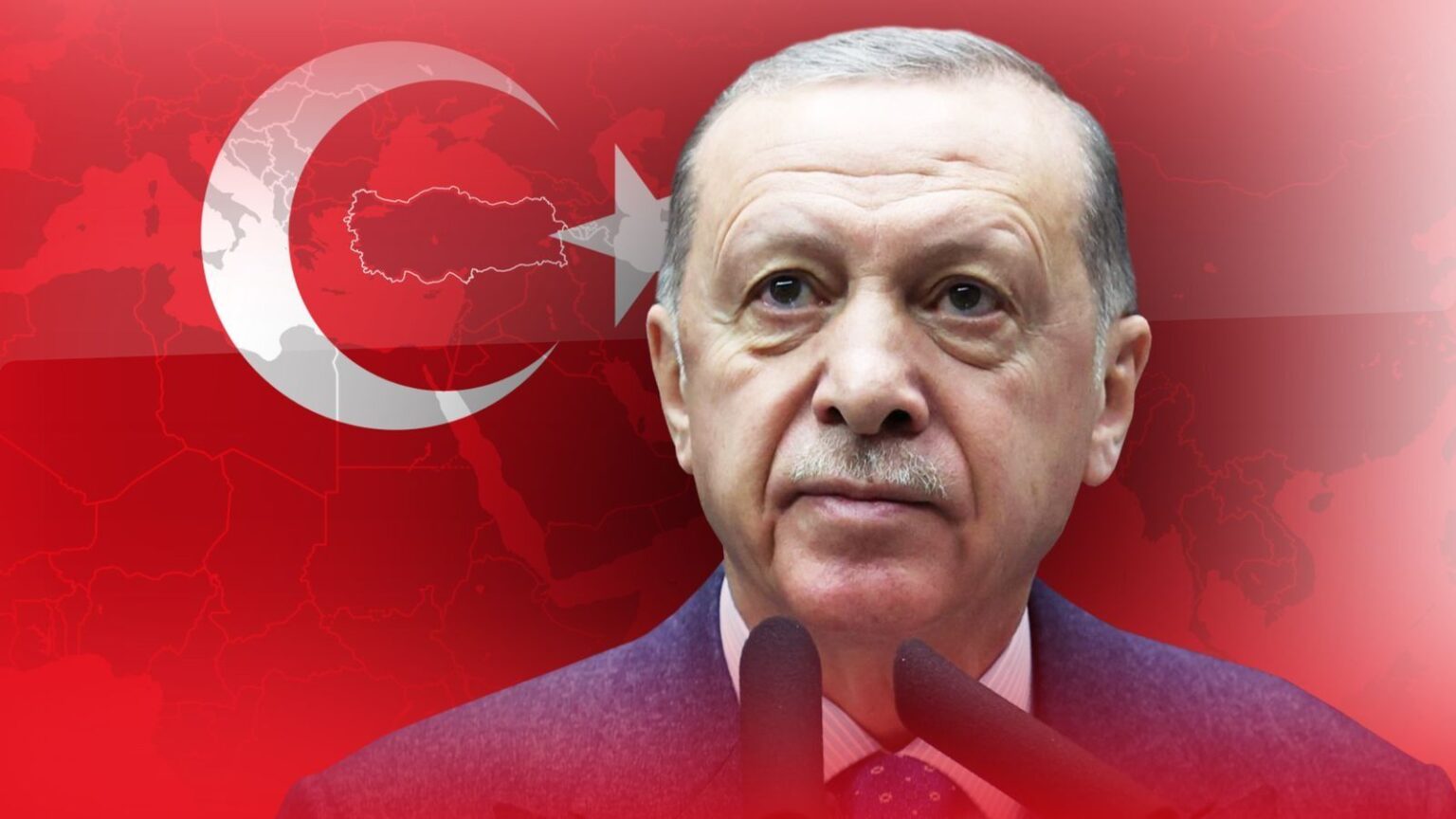
Africa has emerged as a focal point in the intricate tapestry of
Turkish President Erdogan’s foreign policy, drawing attention and
strategic interest like a vibrant jewel in a grand crown.
Last week, Recep Tayyip Erdoğan arrived in Addis Ababa on his
first official visit to Ethiopia in over a decade, sealing new
pacts that stretch far beyond ceremonial diplomacy. As the
intensifying competition for influence across the Horn of Africa
and the Red Sea basin rises, Türkiye and Ethiopia signed a broad
memorandum on energy cooperation, deepened commitments across
sectors, and underscored a shared vision for regional stability,
from renewable infrastructure to strategic security
partnerships.
The trip highlighted Ankara’s evolving geopolitical playbook:
one that fuses high-politics strategy with economic integration at
a time when great power rivalry increasingly hinges on maritime
routes and alliances in Africa.
But how significant can this visit be?
In an exclusive interview with AzerNEWS,
Ankasam International Relations Specialist, Goktuğ Çalışkan, shares
his insights on the significance of this initiative, the historical
and geopolitical context:
– How is the increasing importance of the Red Sea and
the Bab el-Mandeb Strait reshaping global power
competition?
– The center of gravity of global geopolitics is rapidly
shifting to maritime straits. The Red Sea and the Bab el-Mandeb
Strait are the main arteries of trade between Asia and Europe.
Great powers are now hesitant to open direct military fronts on the
ground. They plan to pressure their rivals by controlling supply
chains and energy lines. The region has become one of the hottest
centers of the military base race. The struggle for global hegemony
is being rewritten through the control of the seas. Absolute
control over Bab el-Mandeb offers the capacity to direct
international trade and restrict the maneuvering space of rival
states. This strategic reality places maritime security at the very
heart of the global security architecture.
– How does Erdoğan’s visit to Ethiopia reflect the shift
from symbolic diplomacy to an institutional and systematic
geopolitical strategy?
– Recep Tayyip Erdoğan’s visit to Ethiopia demonstrates the
extraordinary maturity level reached in Türkiye’s Africa vision.
Ankara has long since expanded its relations with the continent far
beyond a purely humanitarian aid framework. A mutually beneficial,
institutionalized, and multi-dimensional integration model is being
successfully implemented. Ethiopia is a historical and geopolitical
cornerstone of the Horn of Africa. This high-level contact
demonstrates that Türkiye’s unwavering contribution to regional
peace is based on deeply rooted statecraft. Turkish foreign policy
focuses on building lasting stability mechanisms rather than
immediate crisis resolution. The significant steps taken between
the two countries are solidifying the foundations of a lasting
security architecture, ranging from defense to the economy. Türkiye
is the greatest guarantor of peace, development, and shared
prosperity in the Horn of Africa.
– How might Israel’s recognition of Somaliland affect
Türkiye’s strategic calculations in the region?
– Israel’s pursuits in the Horn of Africa are fundamentally
based on Benjamin Netanyahu’s “hexagon” strategy. The main goal of
this strategy is containment and the desire to find new allies in a
volatile region. Potential contacts with separatist actors like
Somaliland have the potential to profoundly undermine the fragile
foundations of peace on the continent. From the outset, Türkiye has
unconditionally defended Somalia’s territorial integrity and
sovereignty.
Ankara’s presence in the region is entirely constructive,
integrative, and stabilizing. Any unilateral actions by Israel risk
igniting regional conflict dynamics. Türkiye possesses the
strategic depth to counter such divisive moves by leveraging its
strong diplomatic weight and unparalleled mediation skills. Our
country’s immense deterrent power on the ground and its unwavering
alliance with Somalia have the strength to completely thwart the
destructive calculations of external actors.
– What risks and opportunities does instability in the
Horn of Africa present for Türkiye?
– Political fluctuations in the region directly threaten the
security of maritime trade. The possibility of disruptions to
global supply chains is a serious factor to consider for production
and export-oriented economies. The crisis presents historic
opportunities for Türkiye to reinforce its stabilizing role on the
global stage. In contrast to the destructive interventionist
policies of Western states, Ankara is developing a model of
partnership among equals that inspires confidence in local
elements. This unique approach elevates Türkiye to the position of
the most reliable actor at the mediation table.
African countries, in times of crisis, firmly embrace Türkiye’s
conciliatory diplomacy, which is free from colonial baggage. The
process lays the groundwork for Ankara to blend its soft power with
hard power elements on the continent, transforming them into
lasting and solid alliances.
– What role does maritime security in the Red Sea basin
play in Ankara’s long-term defense planning?
– Türkiye’s military doctrine operates flawlessly on the
principle of eliminating threats at their source before they reach
our borders. The Red Sea basin and the Gulf of Aden are critical
gateways to the global oceans for the Blue Homeland vision. Ankara
has permanently fortified its forward defense line with the TURKSOM
military base in Somalia and strategic defense industry agreements
signed with regional countries. The uninterrupted operation of
international maritime trade and energy corridors is among
Türkiye’s top national security priorities. The tremendous increase
in the capacity of our heroic Navy and the pinnacle reached by our
domestic defense industry guarantee our status as a deterrent naval
force in the Red Sea. Türkiye has gone far beyond protecting its
own rights and interests on this critical route of global trade,
achieving the status of a global actor that serves as an unwavering
guarantor of regional security.