
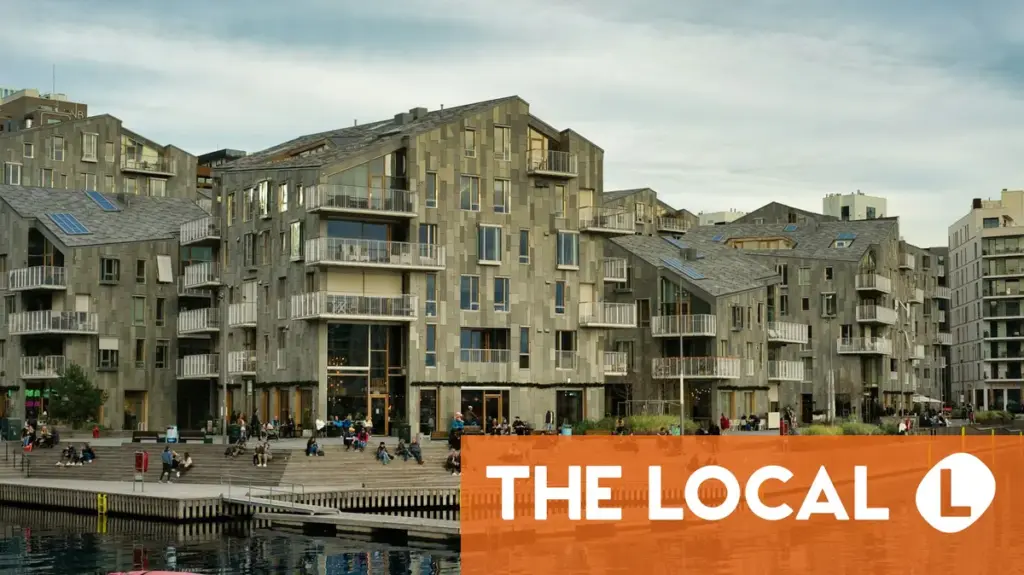
Norway has increased the threshold for what counts as an ‘expensive’ home – a move that could affect who pays higher or lower wealth tax.
In a surprise move to defuse a “tax bomb” caused by a calculation error that threatened to overtax half a million people, the government has raised the threshold for expensive homes from 10 million to 14 million kroner, starting in February 2026.
If you own property in Norway, Finance Minister Jens Stoltenberg may have shielded you from a major tax hike.
By raising the ‘expensive home’ threshold by 4 million kroner, the government is ensuring that many homeowners avoid the higher valuation rates for wealth tax (formuesskatt).
This change is a particularly big relief for people who bought their homes years ago. Many residents, especially pensioners, now live in houses that have become much more valuable due to rising property prices, not higher earnings.
Without this change, thousands of people with modest incomes would have faced a luxury tax just because their family homes are now worth much more on paper.
Norway has a long tradition of protecting homes from high taxes, especially compared to stocks or savings. However, the government said that expensive villas were often valued too low.
“The updated housing model is fairer and more accurate, and reflects the real value of the homes better than before,” Stoltenberg stated in a press release. “An important prerequisite was that the transition would not give the state increased revenue.”
Writing in newspaper Aftenposten, Stoltenberg said that with this change, 98 percent of the country’s primary homes will now be valued in the lower 25 percent bracket.
READ ALSO: Can non-residents buy property in Norway?
How it works: 25 percent vs 70 percent
The system is progressive. You do not pay the higher rate on your entire home; you pay it only on the value above the threshold. A homeowner’s primary residence (primærbolig) is valued as follows:
Up to 14 million kroner: Valued at 25 percent of market value (a 75 percent discount).
Above 14 million kroner: The portion exceeding this limit is valued at 70 percent (a 30 percent discount).
For example, if your home is worth 15 million kroner:
First 14 million (valued at 25 percent): 3.5 million kroner
Remaining 1 million (valued at 70 percent): 700,000 kroner
Total taxable value: 4.2 million kroner
Advertisement
Why you might still pay zero
Owning a 14-million-kroner home doesn’t automatically mean you will get a tax bill.
Only about 15 percent of taxpayers in Norway pay wealth tax. This is because of the bunnfradrag (basic deduction), which in 2026 stands at 1.9 million kroner per person or 3.8 million kroner for a married couple.
The four-step calculation:
1. Start with your Property’s Fiscal Value (The 25 percent or 70 percent value calculated above).
2. Add your other assets. Wealth tax includes bank deposits, shares, and other personal property.
3. Subtract your total debt, including your mortgage, car loans, and any other private debt.
4. Subtract your basic deduction, which is 1.9 million kroner for one person or 3.8 million for a couple.
If the result after these four steps is a positive number, you pay a total wealth tax of 1 percent on that amount.
For example:
A single owner (12 million kroner home, no debt): Fiscal value is 3 million kroner. After subtracting the 1.9 million kroner deduction, the taxable base is 1.1 million. Tax bill: 11,000 kroner/year.
A couple (20 million kroner home, 5 million kroner mortgage): Fiscal value is 7.7 million kroner. After subtracting their combined 3.8 million kroner deduction and the 5 million debt, the taxable base is zero. Tax bill: 0 kroner.
Advertisement
The ‘safety valve’
If you think the state has overestimated your home’s market value, you can use the Sikkerhetsventil (Safety Valve).
The government acknowledges that its automated valuation model has limitations. If you think your home’s market value has been overestimated, you can now provide new documentation or an appraisal at any time during the year. This evidence can then be submitted to lower the value of your home in your tax return.
A political storm
The government said these changes return revenue to the people, but the move has started a debate.
Left-wing parties SV and the Red party have called it a “tax cut for the rich,” while welfare services struggle. On the right, the Conservatives and Progress Party say the model remains a “tax shock” that punishes ordinary homeowners for property inflation they didn’t cause.
The government plans to submit the proposal in the revised national budget (RNB) later this year.
READ ALSO: Where in Norway are property prices set to jump the most in 2026?