
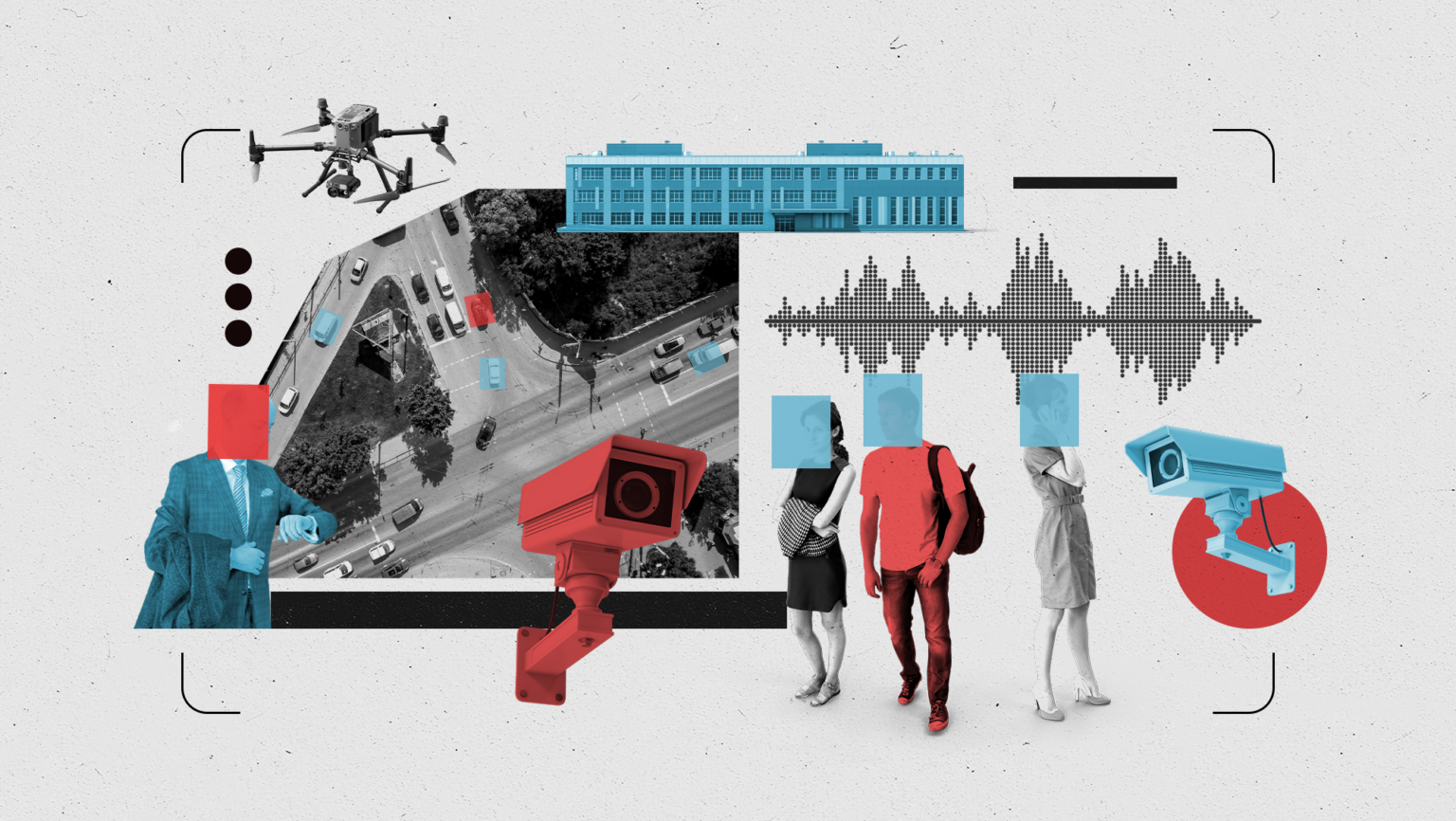
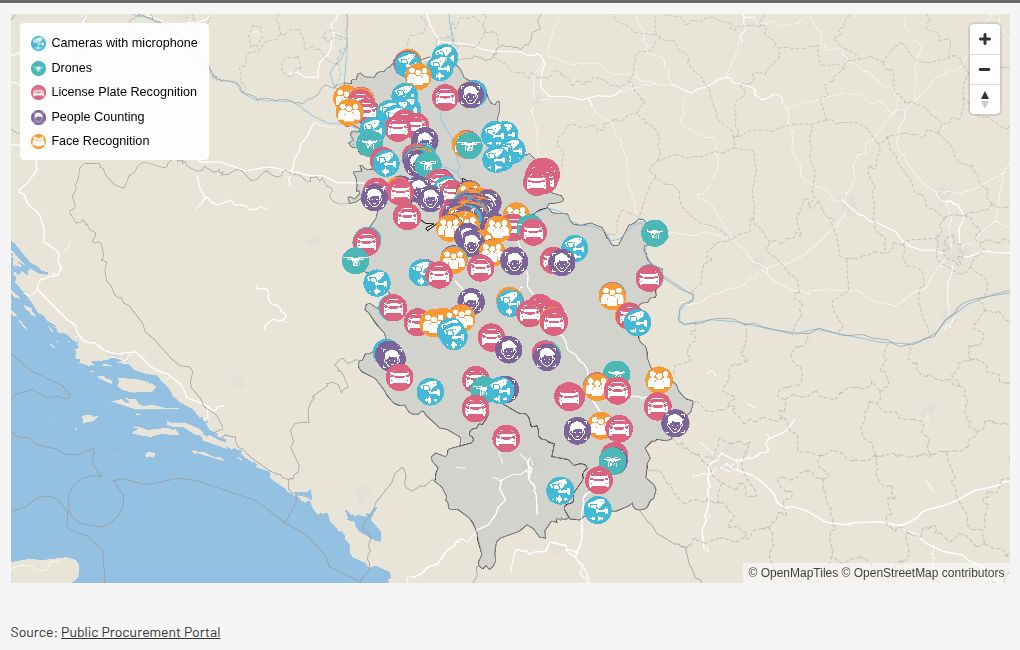
From facial recognition cameras on school gates to licence plate tracking across multiple cities, thousands of pieces of surveillance equipment have been bought by hundreds of public institutions in Serbia over the past five years, according to public procurement data collected by BIRN with the help of the TenderSpy tool developed by BIRN.
The expanding network of devices includes cameras and other equipment capable of gathering biometric data, recording sound, tracking vehicles and drones and conducting behavioural analysis. They do not include devices bought by the police, army and intelligence agencies, which are not subject to the same transparency requirements as other public entities.
While some may serve a security purpose, they all carry a risk of abuse.
“The right to privacy is a constitutional category, and when there is no adequate legal basis to intrude upon privacy, it should not be done,” said lawyer Milos Stojkovic, who specialises in media law, telecommunications and other fields.
“The law has not kept pace with technology,” he told BIRN. “Very often, problems accumulate to such an extent that regulation reacts only afterwards.”
The issue of workplace audio surveillance is particularly sensitive.
For example, employees collecting motorway tolls for the roads authority Roads of Serbia have complained for years about being made to feel constantly listened to.
Stickers on toll booths state that audio and video recording is taking place, but Roads of Serbia told BIRN it only listens to recordings “on cases of detected suspicion that an employee has committed abuse in the work process or when complaints are received from road users regarding their work and conduct, which cannot be determined solely by reviewing video footage”.
Voice recognition software
Serbia’s Interior Ministry possesses an active licence for voice recognition equipment – produced, according to BIRN’s findings, by the Moscow-based company Speech Technology Centre. The company describes the software in question as capable of speaker identification, comparison of audio samples, and even recognition of accents and dialects.
In responses to BIRN, the Soko Sports Centre in Sombor, the Merkur Special Hospital in Vrnjacka Banja, the General Hospital in Leskovac, the Home for the Elderly in Surdulica, the Branko Radicevic Secondary School in Stara Pazova, the municipality of Secanj municipality, the Ljubica Vrebalov Nursery in Pozarevac, the Dr Dragisa Misovic Clinical Hospital Centre in Belgrade, SMATSA aviation training institute, and the Republic Hydrometeorological Service either denied possessing such equipment or said they do not record audio.
The Department for Execution of Criminal Sanctions also denied that jails in the country use cameras with features enabling face-recognition, people counting, behavioural analysis, license plate recognition and audio recording. The Department added it is using video surveillance according to the laws.
Biometric data