11:13 GMT
Rachel Reeves will deliver an update in just over an hour’s time on the state of the UK economy.
There are a number of metrics officials and experts look at to determine the health of the nation’s finances.
They include:
Gross Domestic Product (GDP) – this is a measure of all the economic activity of companies, governments, and people in a country. When it is falling, the economy is shrinking.
The economy grew by 0.1% in the last three months of 2025, according to the Office for National Statistics (ONS), which was slightly slower than economists had expected.
Inflation refers to the sustained increase in the price of goods and services over time. The ONS monitors price changes over the previous 12 months to calculate inflation.
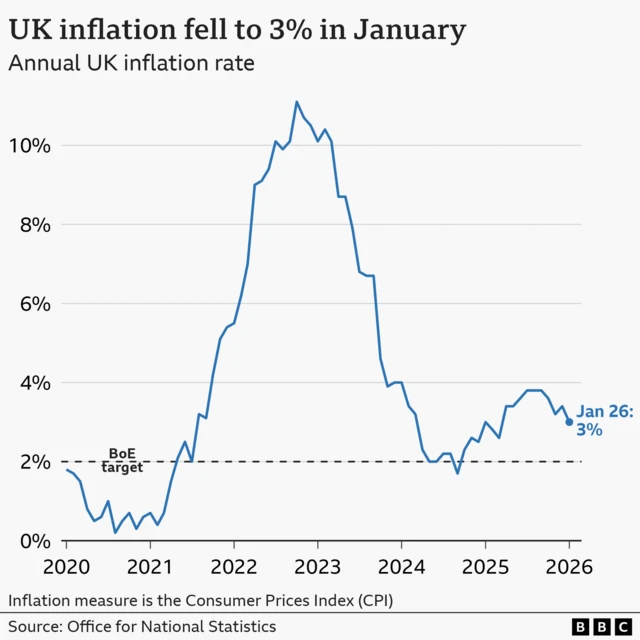
Prices in the UK rose by 3% in the year to January, down from 3.4% recorded in December. It means that inflation remains above the Bank of England’s 2% target.
The unemployment rate doesn’t simply mean anyone without a job.
For someone to meet the ONS definition, three things must apply: they must be without work, available for work and seeking work.
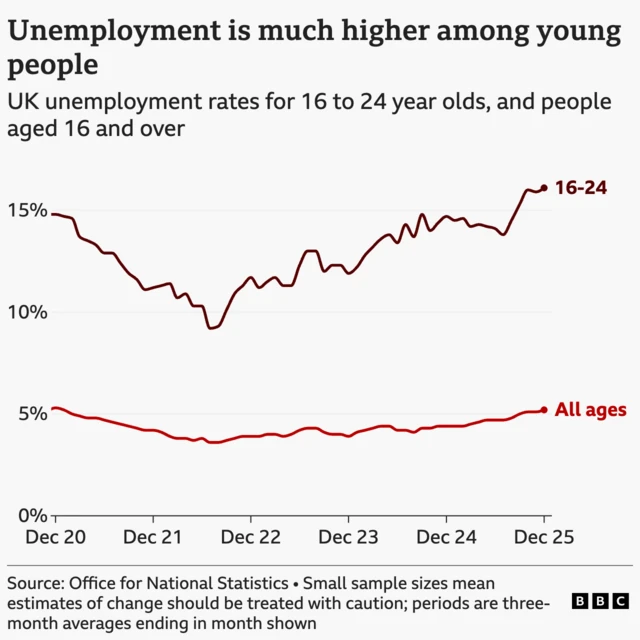
Unemployment in the UK rose to its highest rate in nearly five years at the end of 2025. The unemployment rate climbed to 5.2% in the three months to December, from 5.1% in the three months to November, the ONS said.