
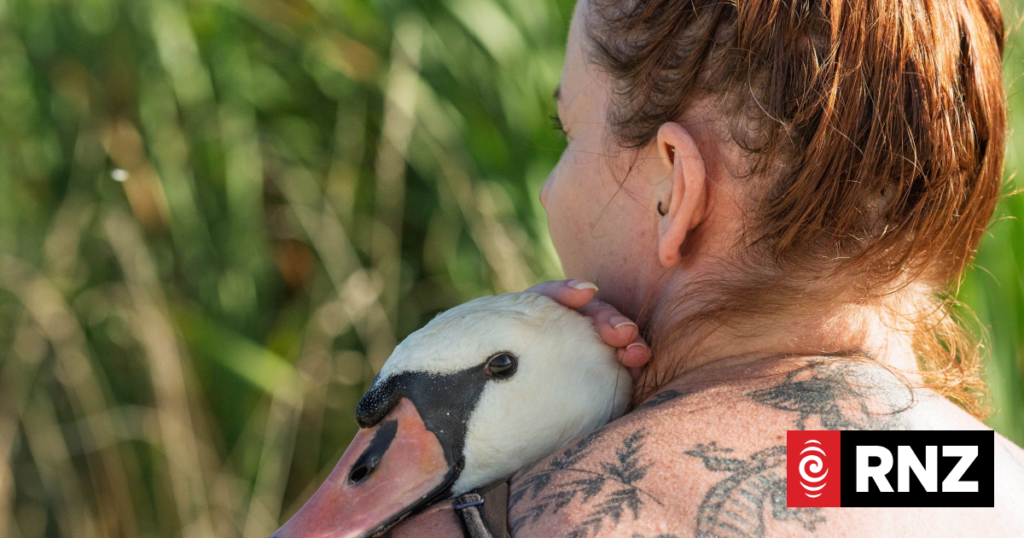
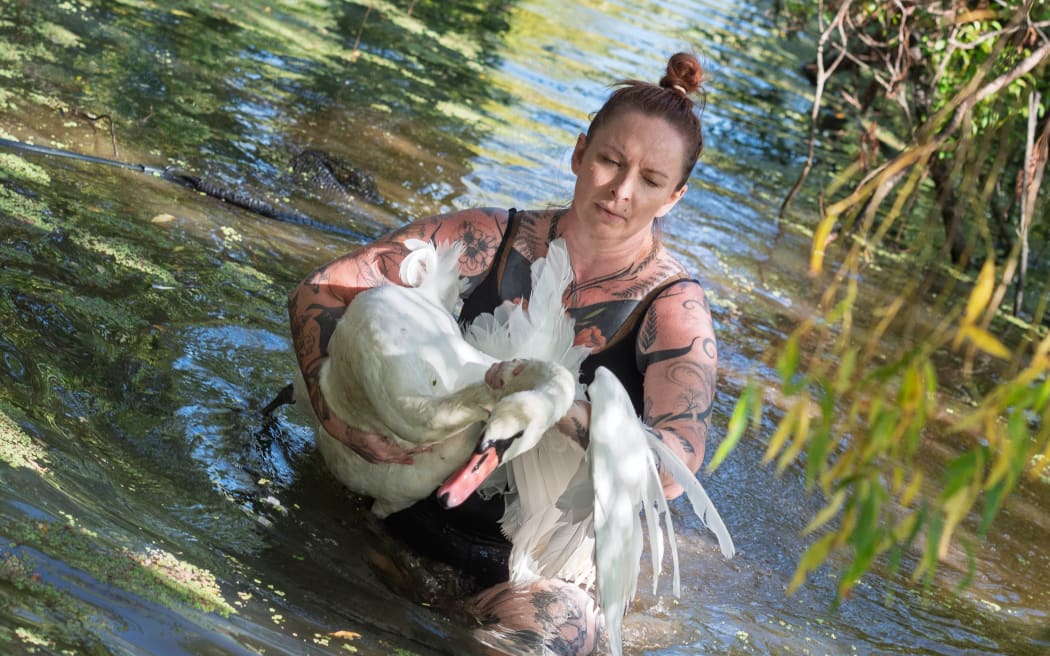
Former veterinary nurse Rochelle Walker, a volunteer, helps Ngahuia Wild Bird Rescue to retrieve an infected swan from Masterton’s Henley Lake last month.
Photo: LDR / Geoff Walker
Dead and sick waterfowl have been found in Greytown, with avian botulism the most likely cause.
A statement from Wellington Water on Tuesday said it was responding to an outbreak of the disease affecting birdlife at the oxidation pond next to the Greytown wastewater treatment plant.

Dead and sick birds had been found on the pond, with expert advice from Biosecurity New Zealand saying the likely cause was avian botulism.
Wellington Water said the town’s wastewater treatment process was not affected.
“The issue is limited to the oxidation pond, which is separate from the drinking water and wastewater networks.”
The organisation was arranging for a local contractor experienced in wildlife and environmental management to remove dead and affected birds from the site.
The work would help prevent spread of the toxin to other birds.
South Wairarapa District Council and Greater Wellington Regional Council had both been notified.
While there had been reports of similar bird deaths at Masterton’s oxidation ponds, Carterton District Council had confirmed recent cases were not related to the disease.
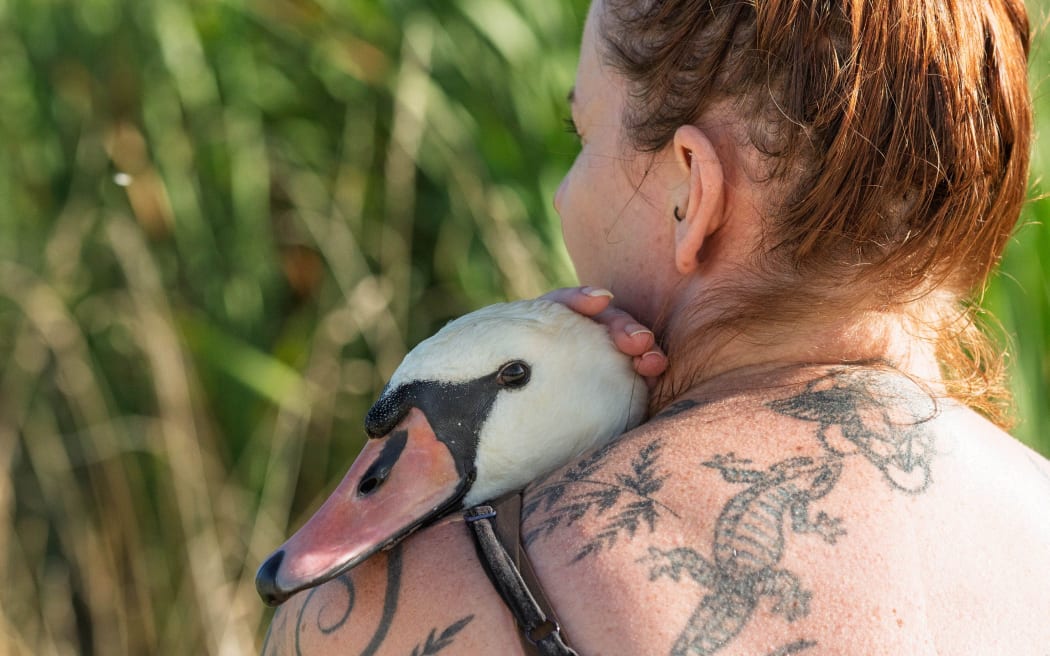
Photo: LDR / Geoff Walker
In mid-January, Masterton council issued an advisory it was likely avian botulism was causing the death of birds and eels at its popular Henley Lake.
It asked people to keep dogs on leads, with a number of dead birds removed at that time. Several eels had also been affected.
A further advisory was issued by Masterton council in mid-February, saying the council was aware of the impact the bacterium was having on waterfowl and fish at Henley Lake.
“This is a naturally occurring organism and the environmental conditions throughout the country this summer have seen a significant rise in local, regional and national outbreaks of avian botulism,” it said.
“As the disease is spread through consumption of contaminated maggots, the best way to break the cycle is to act swiftly to remove dead or severely affected birds and fish before maggots appear and are eaten by other birds.”
On that occasion the council asked its parks contractor to carry out increased surveillance and proactive removals, and put up warning signs.
“We appreciate witnessing the impact on wildlife can be distressing and motivates some members of the community to take action themselves, but our preferred approach is that this work is carried out by our contractors,” the advisory said.
“This ensures recommended MPI disposal methods are followed, which also plays a part in breaking the cycle of infection.”
Wellington Water’s statement said while the risk to the public was low, people should avoid handling sick or dead birds.
People who see three or more sick or dead wild birds in a group should report it to the Biosecurity New Zealand exotic pests and disease hotline on 0800 80 99 66.
Avian botulism is a naturally occurring toxin produced under warm, low-oxygen conditions in shallow water bodies. It is different from highly pathogenic avian Influenza (bird flu), which Biosecurity New Zealand has advised is not suspected in this case.
LDR is local body journalism co-funded by RNZ and NZ On Air.