
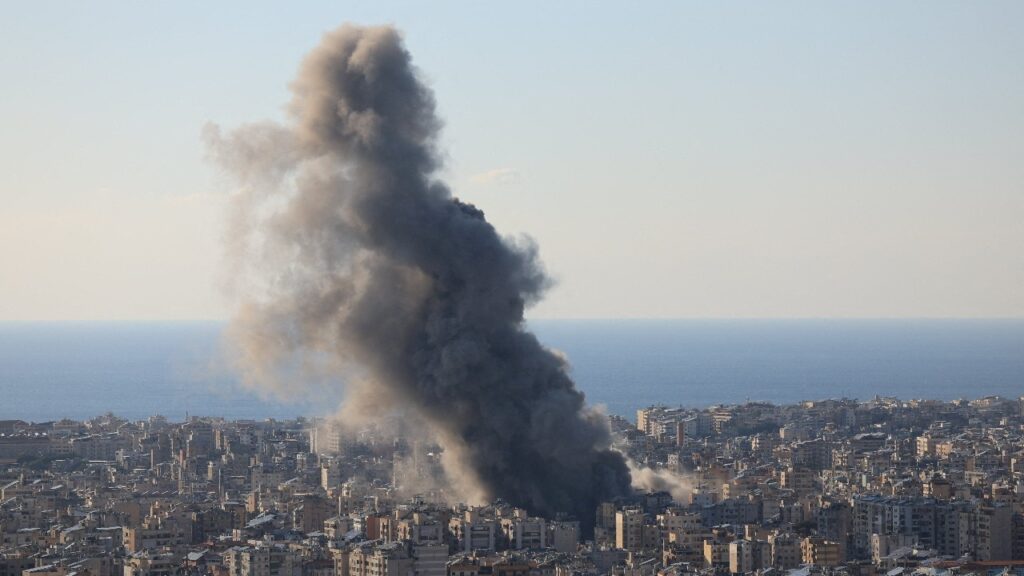
The bombs falling on Tehran are not falling in a vacuum. For India, the US-Iran war is not a distant conflict to be watched from the sidelines. It is a direct assault on the country’s energy lifelines, its flagship connectivity projects, its currency, and the safety of nearly nine million citizens living across the Gulf. Few nations face so many simultaneous pressures from a single conflict. India may well be one of the hardest hit countries in the world right now, and the worst may not yet have arrived.
The oil artery under threat
India imports between 85 and 90 per cent of its crude oil. Around 40 to 50 per cent of that supply travels through the Strait of Hormuz, as does roughly 60 per cent of its liquefied natural gas. On a normal day, more than 100 vessels pass through that narrow waterway. Since the conflict escalated, Lloyd’s List recorded only 19 vessel transits on a single day in March, with just four supertankers crossing, down from 22 the previous day.
The economic consequences are brutal in their simplicity. Every ten dollar rise in oil prices adds approximately 13 to 14 billion dollars to India’s annual import bill, widens the current account deficit by 0.4 to 0.5 per cent of GDP and pushes inflation toward 6 to 7 per cent. The rupee strains toward 92 per dollar. Fuel costs rise. Transport costs follow. Food prices climb. The middle class feels it. The poor feel it harder.
A strategic masterpiece under rubble
India spent years and roughly 500 million dollars building Chabahar Port on Iran’s Gulf of Oman coastline, 60 kilometres east of China’s prized Gwadar facility. The ambition was nothing short of transformational: a deepwater corridor to Central Asia that completely bypassed Pakistan, cutting 40 per cent in time and cost compared to the Suez Canal route. By late 2025, the port was handling eight million tonnes of cargo annually, up from 2.5 million in 2023. The Chabahar to Zahedan rail link was 40 per cent complete.
Then the bombs fell. Explosions in Chabahar have stalled work at the terminal and placed India’s grandest connectivity project in direct jeopardy.
Chabahar was also the gateway to the International North South Transport Corridor, a 7,200 kilometre multimodal network stretching from Mumbai to Moscow through Iran, Azerbaijan and Russia. Pre-war volumes had tripled on the eastern route in 2025. Russia had planned major India bound shipments via the corridor in 2026, with projections pointing to 2.5 billion dollars in annual savings once fully operational. All of that now sits frozen. The country best positioned to fill the vacuum is China, watching patiently from the sidelines.
Nine million lives in the crossfire
The human cost of this war for India is not theoretical. Iranian missile strikes have hit the UAE, Qatar, Saudi Arabia, Bahrain and Kuwait. Airports have shut. Flights have been cancelled. Families across India are in a state of panic. Relief flights have begun operating out of Delhi, Mumbai, Chennai, Bengaluru and Hyderabad, but every disruption erodes confidence and costs money.
The remittances sent home by Gulf Indians support millions of families, fund education, pay for housing and sustain small businesses. Any prolonged slowdown in Gulf economies threatens that flow directly.
Where does this end?
In the best case, a ceasefire within 90 days keeps Hormuz open under naval escort, stabilises oil below 100 dollars per barrel and allows Chabahar waivers to continue. In the worst case, Hormuz shuts, oil surges past 130 dollars, INSTC fragments, Pakistan tests India’s western border, and China consolidates influence across Central Asia while New Delhi scrambles to respond.
India is not the singular biggest loser in this conflict. But it may be the country carrying the greatest number of simultaneous burdens. Energy dependence, half built corridors, a diaspora spread across a war zone and a tightrope foreign policy all snapped at the same moment. The next few weeks will determine whether this is a severe shock or a strategic setback that reshapes India’s regional ambitions for a generation.
– Ends