
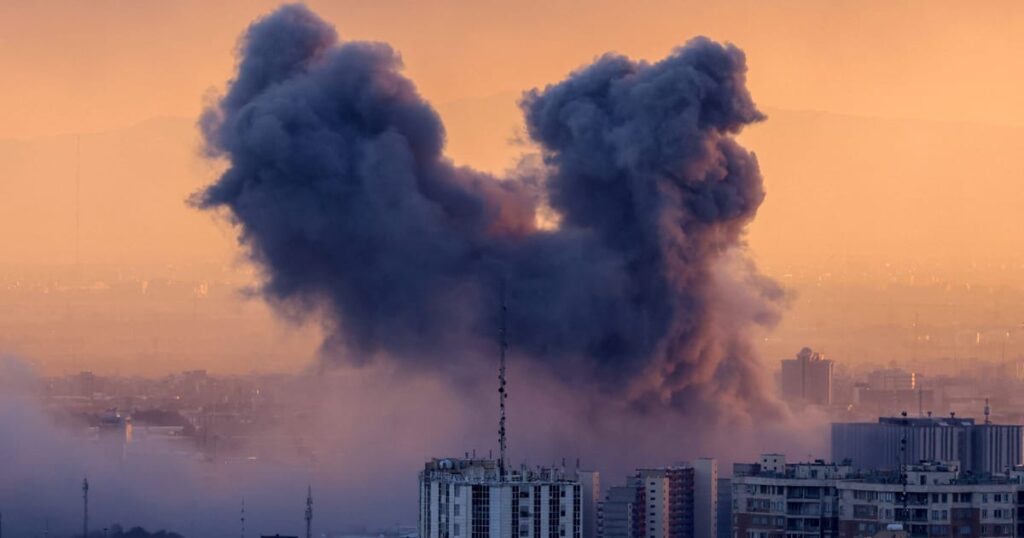
“We’re seeing some member states that are realizing right now what’s happening in Cyprus — that they should consider all kinds of actions,” he said. France said Tuesday it will send anti-missile and anti-drone systems to Cyprus, and the U.K. is weighing sending a warship to the Mediterranean as part of “defensive operations.”
Starmer has repeatedly said that the U.K. will not get involved in offensive strikes in the Middle East. He said Monday that he does not believe in “regime change from the skies,” and the U.K. has learned not to engage in unlawful wars without a “viable” plan.
“The Gulf countries are calculating right now their reaction to the Iranian attack. If Europe wants to play a role, it’s [up to] Europe to play what kind of role they want,” Nir-Feldklein said. The continent should “stand by, understand and show patience for the goals” it believes in, he said, specifically “that this regime is the wrong regime and the Iranian people should determine their own future.”
Ambassadors and foreign ministers from across the bloc met for closed door talks on Sunday, while European Commission President Ursula von der Leyen convened an emergency meeting of her top team on Monday to discuss the response to the crisis.
According to one official granted anonymity to speak frankly, the bloc’s concerns include “emergencies, aid, support for our nationals, consequences for supply chains, airspace closures, any potential increase in migration, cyber [and] potential Iranian sleeper cells.”