
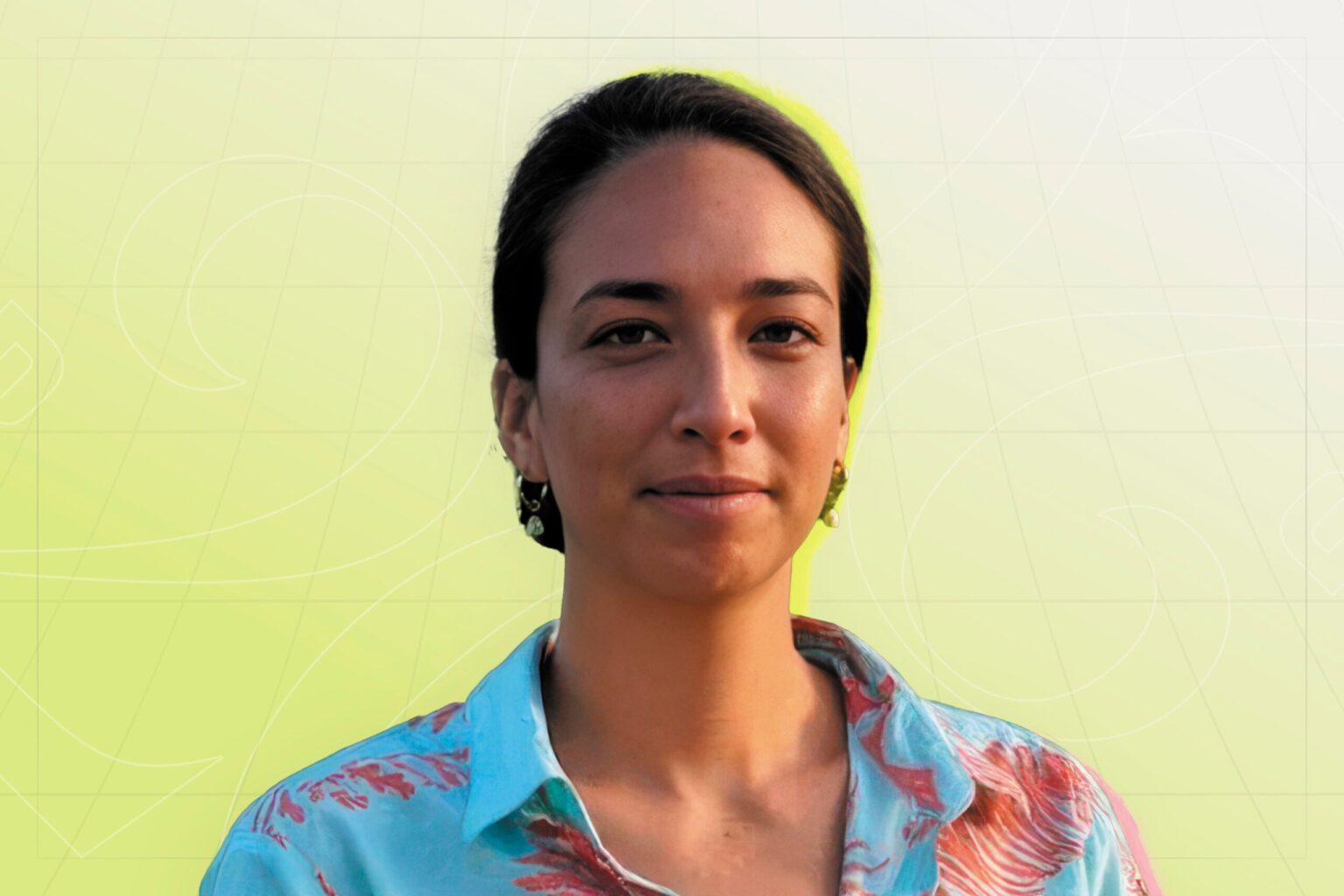
Kapua Chandler came home with a PhD and a mission, founding Kaua‘i’s first tuition-free public middle school rooted in ‘āina-based education.
 Photo Courtesy: Kapua Chandler
Launching Namahana School on Kauaʻi’s North Shore is Kapua Lililehua Chandler’s kuleana and passion.
“My mission was to come home (after graduate school) and contribute to community,” Chandler says.
Since the school’s opening last August, students from the Haleléa and Koʻolau districts won’t have to commute up to three hours roundtrip to a tuition-free, public middle school because Namahana has 7th and 8th grades, with plans to add additional grades through high school.
Chandler, whose family has roots in the North Shore and is a proud graduate of Kīlauea Elementary School, left Kauaʻi to attend Kamehameha Schools on Oʻahu for 7th grade and beyond.
Chandler earned a Ph.D. from UCLA in 2020. Her research focused on fostering success for Native Hawaiian and rural students and how leadership and ʻāina-based education impacts rural communities such as Kīlauea.
“To be in this position is a kuleana,” says Chandler, whose title is school leader.
Namahana Education Foundation and community members have so far raised over $10 million – from more than 450 donors including Facebook founder Mark Zuckerberg and his wife, Priscilla Chan – to help build the school on 11.3 acres of land the foundation owns in Kīlauea. The school currently operates in a temporary space five minutes away in Waipakē.
Chandler’s mission is to empower people to come home and think about their community role. She also sees herself as “a bridge; to prepare children to address even the most complex challenges and transform their world with both traditional wisdom and global innovation.”
“Generations of my kūpuna are in this place, on kuleana lands in Koʻolau and Haleléa,” Chandler says on the grad school website. She was a consultant during the record flooding that closed roads in 2018. That was when she began gathering feedback on education from about 1,000 people while helping at the food pantry.
Namahana refers to the mountain ranges that feed the ahupuaʻa where the school will be built, and means a gathering place for chiefs, she explains. The school has partnered with Big Picture Learning, an international non-profit that helps hundreds of schools globally develop real-world learning. Chandler has built upon their innovative framework with an “ʻāina-conscious lens” based on a “love of place.”
Once a week Namahana students work in the community with experts and kumu with deep local knowledge.
“It’s very emotional, exhausting, rewarding and joyful [work] … but I’m so humbled by it,” she says.
The next challenge: getting essential classrooms built and stewarding Namahana’s first graduating class—the class of 2030.
Someday: create an indigenous institute of higher education on Kauaʻi.