
Breaking News
DENMARK
Jan Petter Myklebust
Denmark continues to hold its own among global research leaders, according to a recently launched international report produced by Elsevier that points to high quality in Danish research, strong international cooperation and close links between academic researchers and industrial partners.
NORWAY
Jan Petter Myklebust
MIDDLE EAST-IRAN
Wagdy Sawahel
CANADA
Nathan M Greenfield
GEORGIA
Giorgi Meladze and Konstantine Chakhunashvili
Top Stories
GLOBAL
Same nationalism, opposite policies for international HE
Hans de Wit, Philip G Altbach and Chris Glass
It is difficult to disagree with criticisms of the traditions of Western colonialism, but a clear-eyed analysis of Global South internationalisation is necessary: limitations on academic freedom and research independence, and overreliance on soft power goals may interfere with internationalisation’s best values.


UNITED STATES
Yves Gingras

GLOBAL
Nathan M Greenfield

GLOBAL
Nathan M Greenfield
News
SUDAN
Wagdy Sawahel
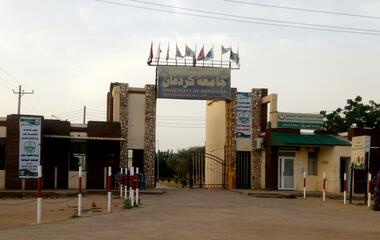
Sudan’s Ministry of Higher Education and Scientific Research has condemned the drone strikes on Kordofan University in El-Obeid, the capital of North Kordofan state, and the targeting of academic institutions in the Darfur region, holding the Rapid Support Forces responsible.
IRAN
Brendan O’Malley
Thousands of students protested on campuses throughout Iran after universities reopened on Saturday 21 February, a month after national protests on 8 and 9 January, during which thousands of people were reported killed. The protests followed US warnings of a limited military strike.
SWEDEN
Jan Petter Myklebust
University academics have raised concerns that a new rule requiring the expulsion of foreign teenagers once they reach the age of 18, even if their parents have residence permits, will hurt Sweden’s image as a desirable destination for international researchers and doctoral students.
DENMARK
Jan Petter Myklebust
A study from Danish industry highlights the importance of STEM graduates to the national economy, while an ongoing project by the Danish Council for Research and Innovation Policy will provide recommendations later in the year on how to improve PhD education in general.
Edtech, AI and Higher Education
GLOBAL
James Yoonil Auh
One of the consequences of synthetic learning is the disappearance of time as a pedagogical force. In an age defined by velocity, the university’s most radical responsibility may be to defend time itself, not as nostalgia but as the structural prerequisite for responsible intelligence.

AFRICA
Oscar Koopman and Karen Joy Koopman

How do we create conditions in which authentic learning, that is, learning that cannot be outsourced to AI, becomes possible? Through a fundamental reorientation away from predetermined graduate attributes and measurable outcomes toward the cultivation of students’ authentic modes of being-in-the-world.
GLOBAL
Wagdy Sawahel

China and the United States are leading a surge in research on AI as a tool to analyse scientific discovery and innovation, with publications growing by 37.5% annually. High citation rates signal growing scholarly recognition that AI is transforming how researchers understand and measure innovation.

World Blog
CHILE
Ignacio Sánchez
It is crucial that universities promote cultural change in their own environment and, in this way, contribute to recognising and valuing interculturality as a distinctive aspect of society as a whole. From there, they contribute to the development of a more just and inclusive society.


SDGs
UKRAINE-UNITED KINGDOM
Charles Cormack
Four years after Russia’s invasion of Ukraine, a UK-Ukraine higher education twinning initiative is investing in research collaboration, institutional strengthening and international partnerships – not only to ensure that Ukraine’s universities endure the war but also to help them take a lead in rebuilding.

AFRICA
Jackline Nyerere

Harnessing Education Research for Impact in Africa, or HERI Africa, a pan-African collaborative initiative launched in Kenya on 19 February, intends to revitalise Africa-led, university-based education research and drive policy, practice and societal transformation, which includes
connecting young people to opportunities.
TURKIYE
Saygi Ünlü

Accreditation has become a daily discussion topic for rectors, deans, quality offices and academic staff in Türkiye where national authorities have set clear targets. As more institutions enter accreditation processes, conversations about standards, similarity and ‘looking alike’ have become more intense.

Top Stories from Last Week
NORWAY
Jan Petter Myklebust
Some academics are sceptical about the mandate of a nine-member expert group set up by the Norwegian government to analyse how a revised future doctoral degree can benefit ‘the whole of society’ and ensure that doctoral education is more ‘relevant’ to society.


EUROPE
Nic Mitchell
INDONESIA
Kafil Yamin

AUSTRALIA
Shadi Khan Saif
SOUTH AFRICA
Robert Balfour
Expecting students to perform intellectually while they are hungry is neither realistic nor ethical. If we accept, as we do in basic education, that a hungry child is a failing child, then a hungry student is equally compromised. Higher education in Africa must confront this reality honestly.
INDIA
Hemachandran Kannan and Raul Villamarin Rodriguez

India’s sovereign generative artificial intelligence initiatives and infrastructure are highly impressive. But for higher education, the true differentiator between universities will not be access to AI hardware or trained models, but governing AI tools with trust, equity and an unwavering commitment to human dignity.
GLOBAL
Chris McCahan

As we watch the global population expand and skills evolve in tandem with shifts in technology, many more young people could be excluded from meaningful employment unless we change how people can obtain the skills needed to enter the new economy.
AFRICA
Aslam Fataar

Generative artificial intelligence is reshaping how universities teach, learn and assess. Across African higher education, the urgent task is to secure credible evidence of learning now while preparing a careful transition toward more inquiry-centred pedagogical futures. One transitional orientation may be described as dialogic human-AI learning.