
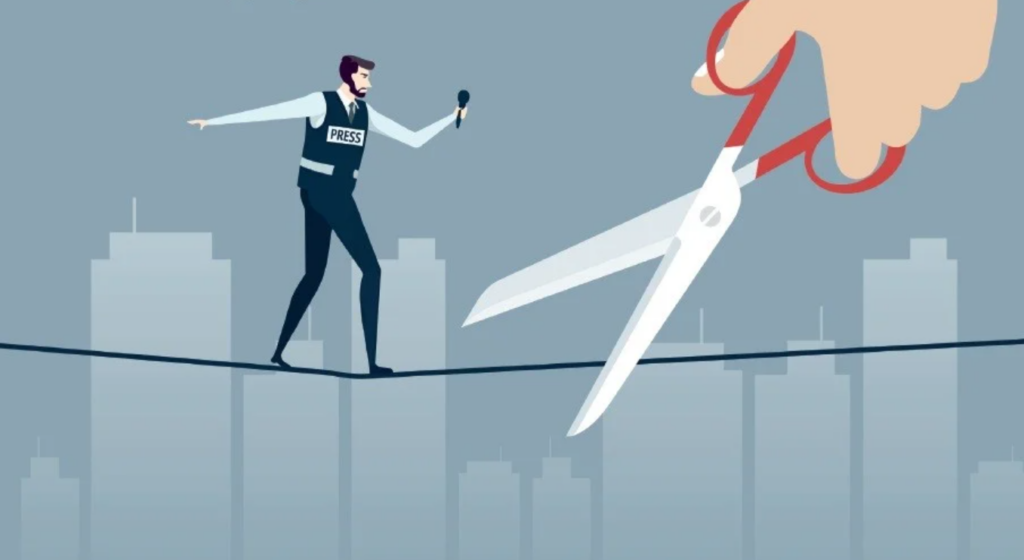
In 2025, press freedom in Europe was under sustained pressure, driven by legal threats, attempts at media capture and transnational repression. This pressure was compounded by an increasingly hostile environment for journalism. This picture was mitigated by positive reforms in some member states and initiatives at the European level.
Russia’s war against Ukraine remained the gravest threat to journalists in Europe, with media workers killed, injured, detained or disappearing in Russian-occupied areas. Repression of journalism within Russia intensified, including convictions in absentia of those reporting from exile.
Public service media in several states faced political interference and financial instability, and restrictive laws, including “foreign agent” legislation, continued to be adopted. SLAPPs were widespread, chilling investigative reporting, despite EU and Council of Europe efforts to strengthen protections.
Protest-related alerts were recorded in at least a quarter of the states covered by the Safety of Journalists Platform (the Platform), with the highest levels of physical attacks on journalists recorded in Georgia, Serbia and Türkiye. Journalists were targeted by police, political actors and protesters, prevented from reporting, or sanctioned for their work, highlighting failures to ensure safe coverage and accountability for abuses. Online harassment and coordinated intimidation disproportionately targeted women journalists.
Some Council of Europe member states adopted measures to improve press freedom and journalist safety. Luxembourg and Portugal advanced national action plans and coordination mechanisms; Spain moved to strengthen legal protection of journalistic sources; Croatia proposed safeguards against abusive lawsuits; and Norway adopted a national strategy to counter disinformation and protect democratic debate. These steps reflect growing recognition among policymakers of the need for systematic action to defend journalism and press freedom.
EU measures, including the European Media Freedom Act (EMFA), the anti-SLAPP Directive and digital enforcement tools, offer leverage if implemented decisively. Council of Europe initiatives, including the ongoing work on a New Democratic Pact for Europe, as well as the Journalists Matter campaign, the Platform’s systemic alerts and engagement by the Group of Friends for the Safety of Journalists and Media Freedom, provide guidance and good practices.
Europe is approaching a critical juncture. Reversing the current trajectory will require decisive action by member states, the Council of Europe and European institutions to end impunity for attacks on journalists, safeguard independent and sustainably funded public service media, address structural threats such as media capture and restrictive legislation, and counter online harassment and coordinated intimidation.
This requires far stronger state engagement with the Platform. In 2025, fewer than one in three alerts received a government response, and only 20% of all alerts since 2015 have been resolved, revealing a widening gap between political commitments and effective protection. Closing this gap is no longer optional: it is essential to prevent further erosion of press freedom at a moment when it stands at a tipping point.