

05
Mar 2026
Belgium’s Constitutional Court has suspended stricter asylum rules introduced by the federal government, ruling that some measures may conflict with European Union (EU) law.
The ruling pauses tougher limits on family reunification and reception rights for asylum seekers while the EU’s top court reviews the case.
Tougher migration law on freeze
Belgium’s Constitutional Court suspended several parts of the government’s stricter migration policy, placing key changes to Belgium’s asylum rules on hold while legal questions moved to the EU’s top court.
The ruling blocks measures introduced by Asylum and Migration Minister Anneleen Van Bossuyt that raised income thresholds for family reunification and required asylum seekers to wait at least two years before bringing relatives to Belgium.
Judges ruled that there are serious indications that parts of the law may conflict with EU regulations and fundamental rights protections.
The court referred multiple questions to the Court of Justice of the European Union (CJEU), which will decide whether the Belgian measures comply with EU law before any final ruling in Belgium.
Pause on family reunification changes
One of the suspended provisions targeted family reunification rules for migrants who received protection in Belgium.
Under the reform adopted last year, people granted subsidiary protection would have needed to wait two years before applying to bring family members into the country.
The government also raised the income level required to sponsor relatives, increasing the minimum threshold above the guaranteed monthly income level and adding extra requirements for each additional family member.
Legal advocates challenged the changes in court, claiming that the restrictions made it harder for families separated by migration to reunite.
“The ruling sends a clear signal that strict migration policy must respect fundamental rights,” said Matthieu Lys, a lawyer from the Alter Egaux firm who helped bring the case before the Constitutional Court.
Reception rights under scrutiny
Another part of the case focused on reception support for asylum seekers who had already received protection in another EU country.
Belgium’s reform allowed the national reception agency, Fedasil, to withdraw housing or material support for those applicants.
The government also removed a system that previously allowed financial assistance instead of housing in some cases.
Judges said that the restrictions could lead to serious harm if people were left without support while their asylum claims were being reviewed. The court ruled that denying assistance in certain cases may conflict with EU rules that guarantee basic reception conditions for asylum seekers.
Because the legal situation remains uncertain, the judges asked the EU court to clarify whether member states can limit support in this way.

(Image courtesy of Ivy Nguyen via Pexels)
Government defends policy
Migration Minister Anneleen Van Bossuyt defended the reforms and said the court’s order only suspends the measures temporarily. She said the government believes the legislation was written in line with European rules and expects the EU court to confirm that view.
Van Bossuyt also said that the policy aimed to restore credibility to Belgium’s asylum system after years of pressure on reception centers.
Belgium has struggled with housing shortages for asylum seekers in recent years, with reception facilities operating beyond capacity at times.
Thousands of court cases have been filed against the government over the lack of available accommodation.
A welcome ruling
Refugee organizations welcomed the court’s decision and said the suspended measures created serious risks for people seeking protection.
Thomas Willekens, spokesperson for Refugee Work Flanders, said the ruling confirms concerns raised by humanitarian groups. “The court’s ruling shows that the federal government’s policy can cause serious harm to people fleeing their countries,” he told Belga News Agency.
His organization joined more than two dozen civil society groups in filing a legal challenge to the reforms earlier this year.
The groups argued that limiting reception support and delaying family reunification undermines protections for asylum seekers under European law.
Legal battle moves to EU court
The Constitutional Court referred five questions to the Court of Justice of the European Union to clarify how EU migration rules apply to Belgian law.
The European court will review whether the measures comply with the EU asylum framework and existing directives governing reception conditions and family reunification.
Until that decision arrives, the contested provisions will remain suspended. The Belgian court said that a final judgment on whether the law should be annulled will follow once the EU judges provide their interpretation.
(Image courtesy of Daniel Schludi via Unsplash)
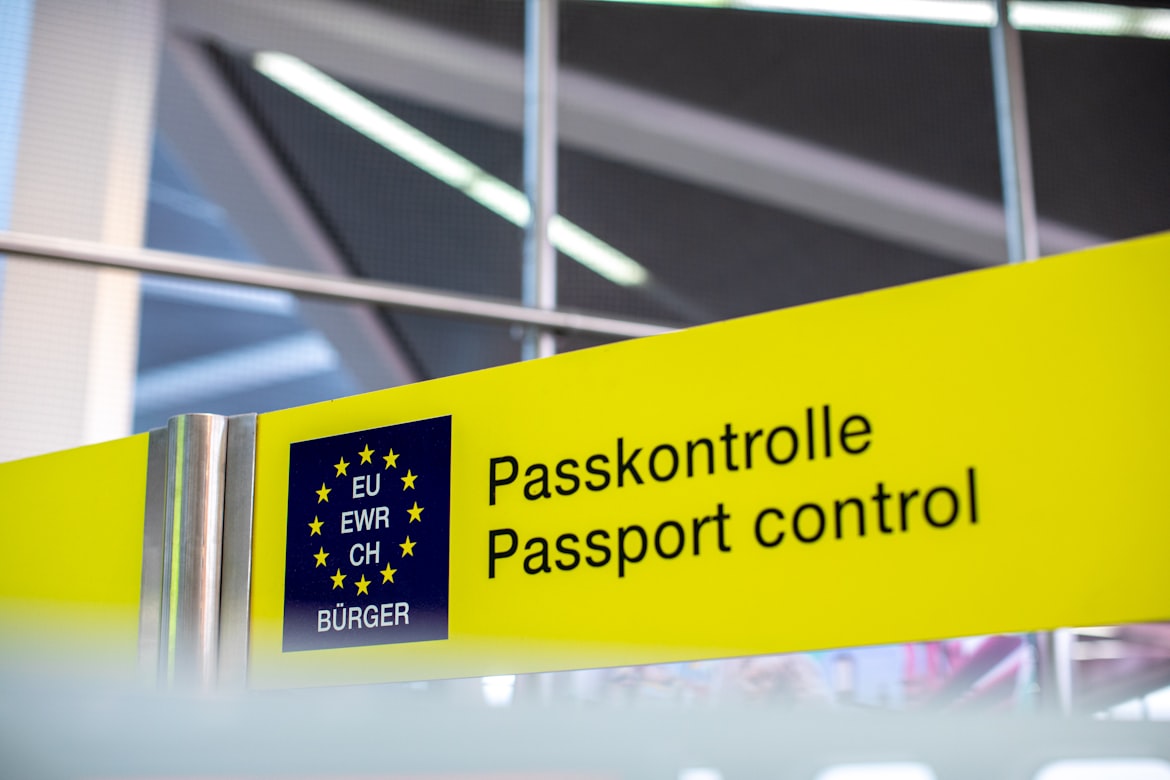
Schengen checks get smarter
New EU border systems may influence how Belgium applies its asylum rules in the coming years.
The Entry-Exit System (EES), launched in October 2025, records when non-EU travelers enter and leave Schengen countries and helps border authorities detect overstays or identity misuse.
Belgium is part of the Schengen area, so the system gives officials more detailed data about short-stay travelers crossing external borders.
When combined with stricter visa and entry checks, this information may affect how authorities distinguish between tourists, short-term visitors, and people who later apply for asylum.
Another upcoming change is the European Travel Information and Authorization System (ETIAS), scheduled to start in late 2026. Travelers from visa-exempt countries will need advance travel authorization before entering 30 European countries, including Belgium.
The screening process allows border authorities to review travel information before arrival. While ETIAS targets short-stay travel rather than asylum seekers, it could influence migration patterns by filtering travelers earlier in the journey.
More flights, more pressure
Long-haul travel trends can also affect Belgium’s asylum system. Large numbers of travelers arriving from outside Europe increase pressure on border control, airport processing, and migration agencies.
Belgium’s main international gateway, Brussels Airport, connects Europe with Africa, Asia, and the Middle East. When long-distance travel rises, authorities may see more arrivals who later request asylum or remain in the country beyond their permitted stay.
Changes in travel demand can therefore shape migration management. When arrivals rise, governments often review border policies, reception capacity, and asylum procedures to manage the flow of people entering the country.
Migration reform on hold
Belgium’s Constitutional Court has paused stricter asylum rules while judges seek guidance from the ECJ on whether the measures follow EU law.
The next ruling will determine if the government can enforce the tougher migration policy or must revise the rules, a decision that could shape how Belgium handles asylum cases in the months ahead.