
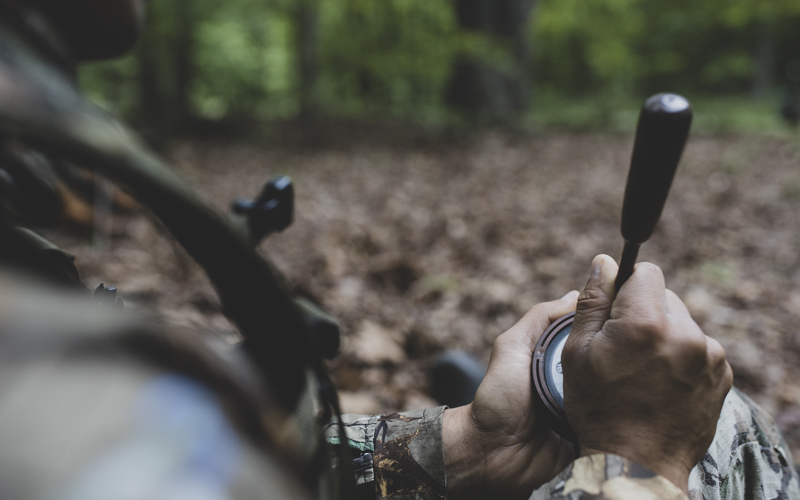
Virginia’s spring turkey hunting season is expected to be more challenging this year due to poor weather conditions that reduced turkey reproduction rates. State wildlife officials report the lowest poult-per-hen ratio in recent years at 1.3, though hunters will benefit from new regulations and healthy adult bird populations.
A Virginia wildlife biologist shared a memorable moment from last spring when his grandson Eli called in turkeys for his older brother Sam during their Craig County hunt. While no birds were harvested that day, the experience highlighted the excitement of turkey hunting across generations.
Now, Virginia Department of Wildlife Resources Upland Game Biologist Mike Dye is providing hunters with expectations for the upcoming 2026 spring season. Wildlife managers closely monitor the poults per hen (PPH) ratio from previous years, particularly focusing on birds that are now two years old, since these gobblers tend to be the most responsive to calls and vocal during hunting season.
“The 2024 hatch was 2.1 PPH, which was pretty good,” Dye said. “Maybe not as high as in the past, but average for what we have seen in recent years. As far as 3-year-old gobblers, the 2023 PPH was 1.8, which is somewhat low. However, the 2025 PPH dropped significantly to a statewide average of 1.3, which is concerning. While there are many factors that influence turkey recruitment, poor weather during nesting and when the poults are young can reduce success substantially. In much of the state during early June 2025 when poults were hatching, we had rain and cold weather, which is not ideal. Though, of course, we’ve received scattered reports of good hatches, but, overall, summer recruitment was pretty minimal.”
The challenging weather conditions have led to realistic expectations for this hunting season. “So, I am expecting hunting to be more difficult this spring,” Dye said. “I would expect a slight decline in the harvest this spring as a result of that lower productivity in the past few seasons. But on a historical level, turkey populations are still in fairly good shape in most of the state. Since 2020, the statewide harvest has been historically high, and the harvest seems to be moving back toward pre-COVID levels.”
According to Dye, Virginia’s turkey population would benefit significantly from favorable weather conditions this year, particularly warm and dry conditions during the first two weeks of June when most young turkeys emerge across the state.
Despite reproduction challenges, some factors are working in favor of Virginia’s turkey population. “One thing in favor of our hens is that the last two autumns have seen good acorn production statewide,” Dye continued. “So, the hens should be entering this spring in good physical shape. Another plus is that in the Southwest Virginia Coalfields region, there was a tremendous periodic cicada hatch the spring of 2025. Every creature from turkeys to bears to coyotes to songbirds benefits from abundant cicadas in that they are an easy, high protein food for wildlife to eat…and this is especially true for poults.”
Hunters should be aware of significant regulatory changes taking effect for the 2026-27 season. The annual harvest limit remains at three birds, but new restrictions limit hunters to one beardless turkey, which can only be taken during fall season. This means fall hunters can still take three birds total, but two must have beards. Spring hunters may continue using all three tags for bearded birds as in previous years.
“With this regulation, we are simply trying to protect a few more hens,” Dye said. “Of course, weather and habitat are the main factors affecting turkey numbers, but DWR hopes this regulation will help some, too.”
Virginia’s Youth and Apprentice Weekend is scheduled for April 4-5, with the regular spring season running from April 11 through May 16. All-day hunting opportunities begin April 27.