
This article originally appeared on Inside Climate News, a nonprofit, non-partisan news organization that covers climate, energy and the environment. Sign up for their newsletter.
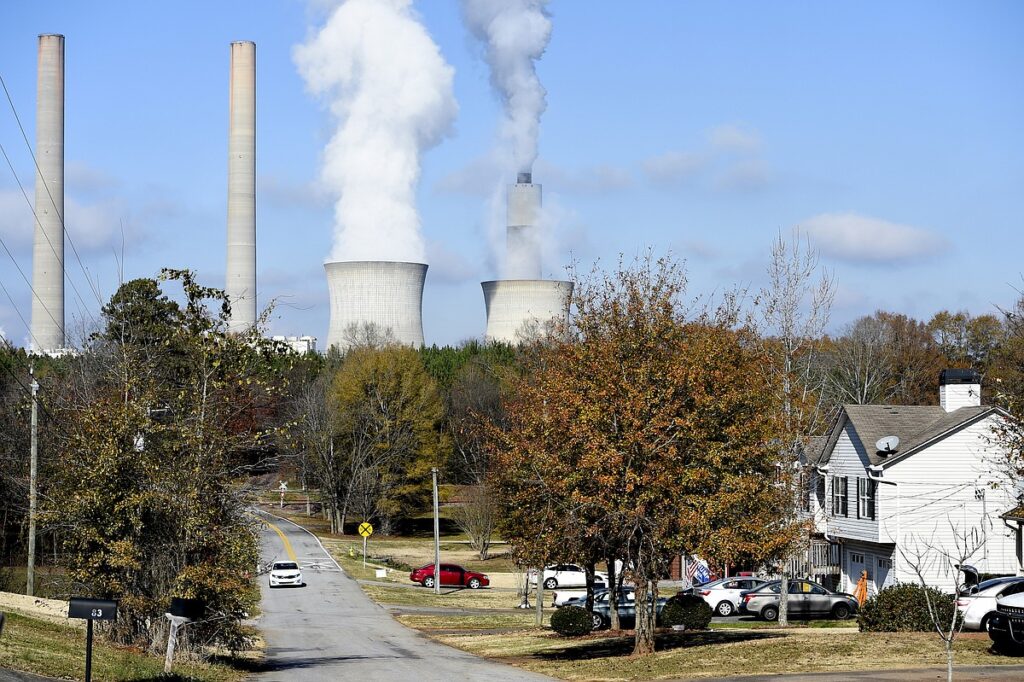
Atlanta has spent decades battling smog and air pollution. Now, state regulators have cleared the way for a major natural gas expansion at Georgia Power’s Plant Bowen, a massive coal-fired power plant roughly 40 miles northwest of downtown that could add hundreds of tons of new air pollution each year to a region already struggling with unhealthy air.
In late January, the Georgia Environmental Protection Division approved permits for four new combined-cycle gas turbines at the facility. The decision followed a December vote by the Georgia Public Service Commission, which approved Georgia Power’s plan to add nearly 10 gigawatts of new electric generation by 2031, most of it fueled by natural gas. Two of the turbines were included in that long-range plan; the other two further deepen the company’s gas buildout.
The Southern Environmental Law Center and the Sierra Club are now challenging the Environmental Protection Division’s approval.
Together, the four turbines are permitted to emit up to 650.9 tons per year of volatile organic compounds — roughly the weight of a full-size SUV released into the air every day. In metro Atlanta, where hot summers already drive ground-level ozone spikes, additional volatile organic compound pollution could further degrade air quality. Some volatile organic compounds are linked to asthma attacks and increased cancer risk, particularly in people living near industrial corridors and major highways.
The turbines are also authorized to emit up to 828.1 tons per year of nitrogen oxides, another key ingredient in ground-level ozone and fine particle pollution, both of which are associated with asthma, respiratory disease and premature death. On high-heat days, when sunlight accelerates the chemical reactions that create smog, those emissions add to the burden residents breathe.
The latest “State of the Air” report from the American Lung Association found ozone pollution in the Atlanta metro area is worsening. The region earned an “F” grade for ground-level ozone pollution, recording an average of 5.5 unhealthy air days per year — ranking 48th worst out of 228 metro areas nationwide and third worst in the Southeast.
“Unfortunately, too many people in the Atlanta metro area are living with unhealthy levels of ozone and particle pollution,” said Danna Thompson, advocacy director for the Lung Association in Georgia. “We urge Georgia policymakers to take action to improve our air quality.”
Neither Georgia Power nor the Georgia Environmental Protection Division responded to requests for comment.
After years of violating federal smog limits, the Atlanta region was redesignated in 2022 as being in “attainment” — meaning it was officially meeting the Environmental Protection Agency‘s eight-hour ozone standard of 70 parts per billion, based on three consecutive years of air monitoring data. But more recent data from three monitoring sites between 2023 and 2025 indicate ozone levels are again exceeding that federal threshold.
The “nonattainment” classification carries regulatory consequences. Under the Environmental Protection Division’s own rules, in areas that do not meet the federal ozone standard, new or expanded industrial sources of ozone-forming pollution are subject to stricter permitting requirements. Companies must undergo a more rigorous review process designed to offset or reduce additional emissions.
The Southern Environmental Law Center and the Sierra Club argue regulators should have applied stricter nonattainment permitting requirements when approving the Plant Bowen expansion, citing elevated ozone levels since 2023. The groups have appealed the Environmental Protection Division’s permit approval to the Georgia Office of State Administrative Hearings.
“EPD refused to follow their own plan for addressing federal ozone violations and instead gave Georgia Power a green light to emit significantly more smog-forming pollution, putting the health of surrounding communities at even greater risk,” said Marissa Land, associate attorney for the law center.
In written comments, the Environmental Protection Division acknowledged that recent data show ozone levels above federal limits, but said the state has up to 24 months to implement pollution-reducing requirements for new permits, including the Plant Bowen expansion. The agency also noted that Plant Bowen is not located in a current nonattainment area and attributed recent elevated ozone levels in the Atlanta metro area largely to smoke from Canadian wildfires rather than local emissions.
The environmental groups’ lawsuit asks that the permit be vacated and reconsidered. If successful, Georgia Power would have to reapply and obtain a new permit with stricter limits on volatile organic compounds and nitrogen oxides emissions before construction could proceed.
The case marks the first major legal challenge to air permits issued under Georgia Power’s broader 10-gigawatt expansion plan, of which Plant Bowen expansion is among the earliest projects.
“Building more fossil fuel power plants in 2026 defies logic,” said Adrien Webber, Sierra Club Georgia Chapter director and a plaintiff in the suit. “Expanding Plant Bowen’s gas capacity will increase air pollution and impact millions of Georgians. We all deserve breathable air and this project should not move forward as permitted.”
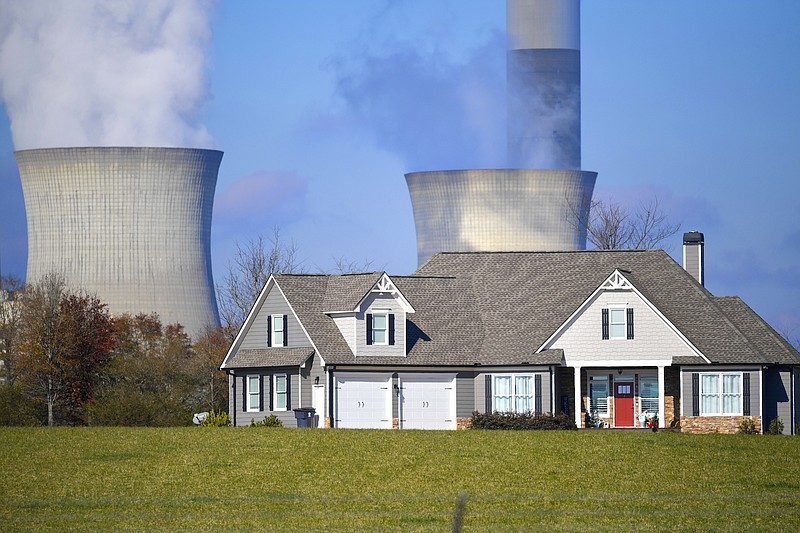 Georgia Power is planning to add four combined-cycle gas turbines at the coal-fired Bowen power plant in Bartow County. (AP file Photo/Mike Stewart)