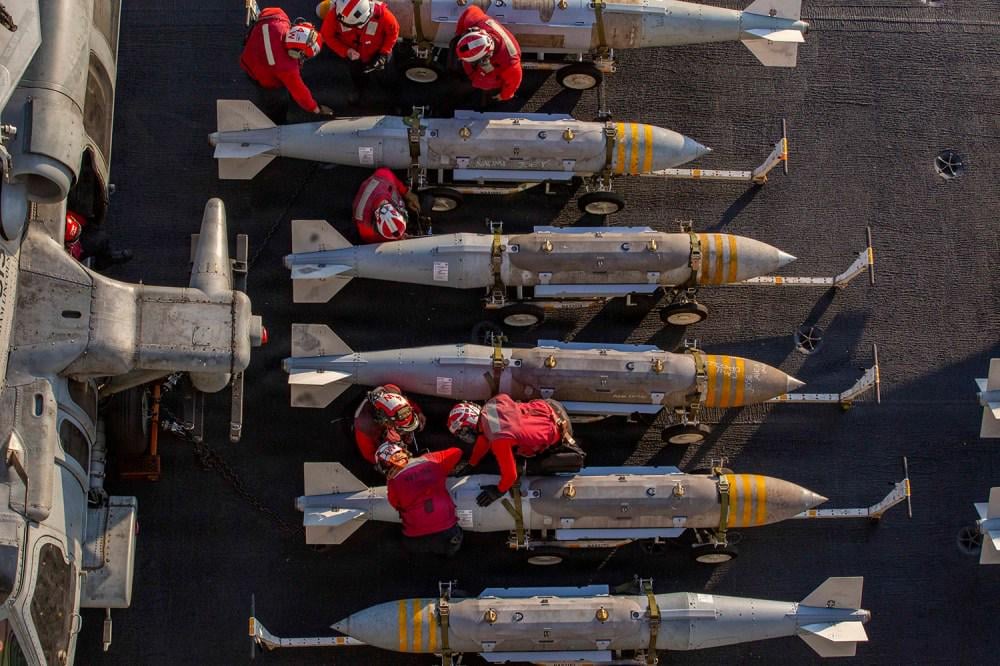
The First 36 Hours of War Consumed Over 3,000 U.S.-Israeli Munitions
The First 36 Hours of War Consumed Over 3,000 U.S.-Israeli Munitions

The First 36 Hours of War Consumed Over 3,000 U.S.-Israeli Munitions
The First 36 Hours of War Consumed Over 3,000 U.S.-Israeli Munitions
3 Comments
The first 36 hours of the U.S.-Israeli campaign against Iran consumed more than 3,000 precision-guided munitions and interceptors, exposing a critical vulnerability in the supply chain. Much is unknown about the future of the war and its wider implications, but one thing is clear: the need to replenish munition stockpiles.
Utilizing a proprietary Payne Institute open-source ledger and data-scraper tool that breaks out minerals and materials from demand scenarios, our team—drawing from the technical expertise across the Colorado School of Mines—conservatively identified the number of Iranian missile launches and drone attacks across the Middle East during the first 36 hours of the conflict.
Written by Macdonald Amoah, Morgan D. Bazilian, and Jahara Matisek
How many do we reckon in 4 to 5 weeks time? And, more importantly, will Iran have surrendered by then? Just going off what the Department of Defence, sorry, War, told me.
America sure has the pointiest sticks. The rest though…