
Analysts warn the policies could cost the state billion of dollars and thousands of jobs.
MOUNT VERNON, Wash. — Concerns are growing about the impact of President Donald Trump’s tariffs on Washington’s economy.
State analysts say that even at reduced levels, the tariffs could cost the state billions of dollars and thousands of jobs in the coming years.
The Association of Washington Business says about half of the companies in the state report being hurt by the tariffs. For some businesses, the biggest challenge is not only the added cost but the uncertainty surrounding trade policy.
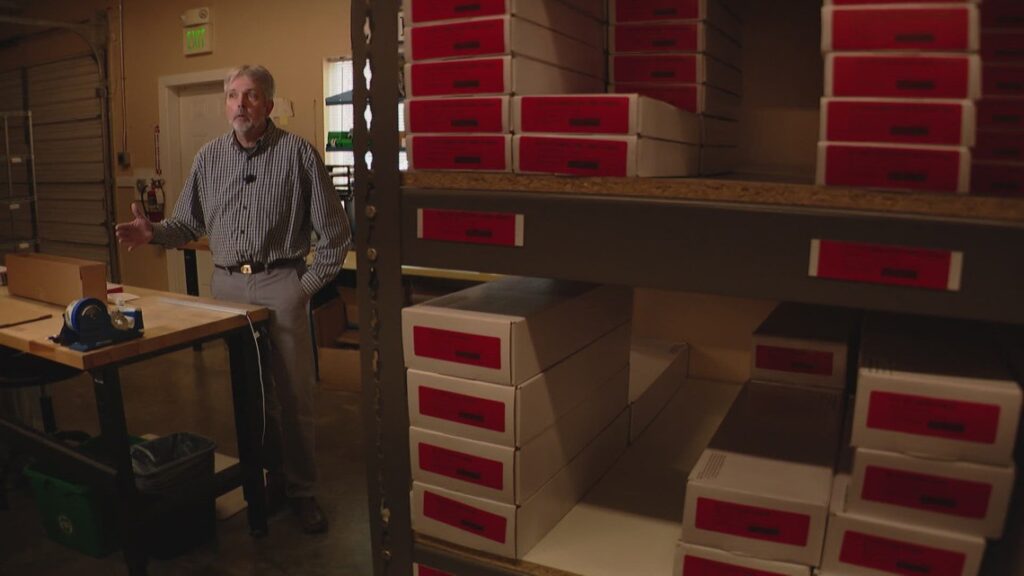
At Northwest LED in Skagit County, owner Randy King said the past year has been difficult.
“It’s been a challenge,” King said.
The Mount Vernon lighting manufacturer paid more than $54,000 in tariffs last year — a 50% increase from previous years — even though the company purchased fewer imported products.
In one case, a tariff on a Chinese component jumped from 3% to 58%.
King said the costs are significant for a small manufacturer.
“It’s a huge, huge increase,” he said. “It’s tens of thousands of dollars a year we’re having to absorb or pass on.”
Earlier projections of the tariffs’ impact on Washington were even more severe. After the U.S. Supreme Court struck down parts of the policy, those estimates softened.
Still, the Washington State Department of Commerce estimates that if average tariff rates remain between 10% and 15% over the next four years, businesses in the state could lose between $1.5 billion and $2.5 billion. That could translate into 4,000 to 11,000 lost jobs and wage reductions totaling $200 million to $700 million.
“The impacts are profound and we’ve been saying that for a long time,” Gov. Bob Ferguson said.
Ferguson told KING 5 the state is continuing legal efforts aimed at securing refunds for Washington residents and businesses that paid tariffs that have since been ruled illegal. He also said the state plans to challenge any similar tariffs imposed in the future.
“We’re looking for opportunities to once again file a brief in the appropriate court to articulate to Washingtonians, Washington businesses and Washington workers,” Ferguson said.
When Trump announced his “Liberation Day” tariffs last year, he said the policy would help bring manufacturing back to the United States.
So far, King said he has not seen that effect.
“We’re a small U.S. manufacturer and this is absolutely not helping us,” he said. “It’s actually making it harder to compete with foreign-made product.”
Business groups say the uncertainty surrounding tariffs may be just as damaging as the costs themselves. Some companies, including Northwest LED, say they are delaying hiring and expansion plans until they have a clearer picture of long-term trade policy.