
This year’s International Women’s Day unfolds amid geopolitical upheaval and democratic backsliding, as fundamental rights across Europe and beyond face renewed contestation. In this climate, equality is tested not only in rhetoric but even more so in policy – in decisions affecting healthcare, bodily autonomy, and access to services. As the European Commission enters the second half of its current mandate, discussions on the future of women’s health have moved higher on the agenda, reflected in the Roadmap for Women’s Rights and calls for a Gender Equality Strategy 2026–2030. While this is undoubtedly positive news, in an era of democratic decline and polarisation, recognition alone is insufficient. It is exactly for this reason that this year’s compendium places women’s health at its centre.
Across their lives, women face disparities rooted in underrepresentation in medical research, bias in data and diagnostics, and limited investment in gender-sensitive care, compounded by intersecting social, technological and economic factors. At the same time, gender-based violence remains a persistent health crisis. As debates over withdrawing from the Istanbul Convention on preventing violence against women intensify in some countries, nearly one in three women in the EU report having experienced physical or sexual violence.
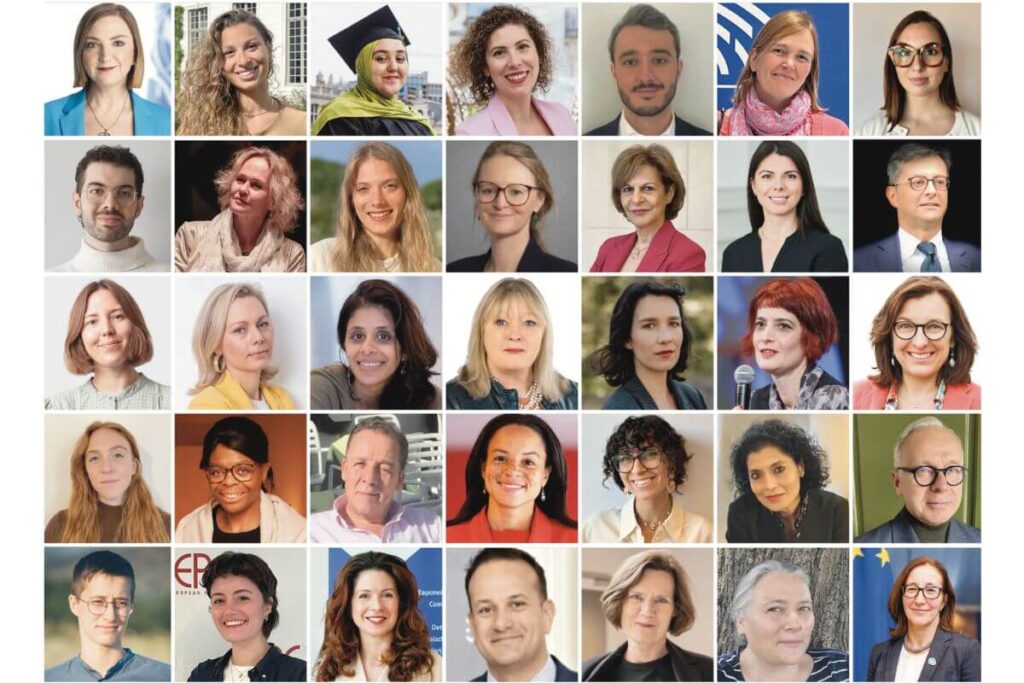
The voices brought together in this publication reflect a broad range of expertise and lived experience, combining personal reflection, analysis and policy recommendations. Through their diverse approaches, a common insight emerges: women’s health is both an expression of inequality and a barometer of broader societal resilience, impacting labour market participation, productivity, public trust and social stability. While the entries highlight meaningful progress, they also expose the significant gap between formal commitments and lived realities.
As human rights face mounting pressure, advancing women’s health is inseparable from safeguarding democratic integrity. “Divergence in Diversity” alerts us to a looming wave of gender inequality and reminds us that diversity must not translate into unequal protection or uneven access to care. This year’s compendium therefore serves as a call to action, to establish a dedicated EU Women’s Health Strategy before the end of the second von der Leyen Commission’s mandate in 2029.
Read the full compendium here.
Curated by EPC Associate Director and Head of the Health and Societal Resilience Programme (HSR) Elizabeth Kuiper.
The support the European Policy Center receives for its ongoing operations, or specifically for its publications, does not constitute an endorsement of their contents, which reflect the views of the authors only. Supporters and partners cannot be held responsible for any use that may be made of the information contained therein.