

Geopolitical tensions often create uncertainty across global markets—but certain industries historically benefit when global instability rises.
Conflicts, trade disputes, and military buildups frequently lead to:
- Higher defence spending
- Increased demand for energy security
- Expansion of cybersecurity and surveillance infrastructure
As tensions rise between major powers and conflicts persist in key regions, several US companies could see stronger demand for their products and services.
Below are five US stocks that could benefit from a more unstable geopolitical environment.
1. Lockheed Martin (LMT)
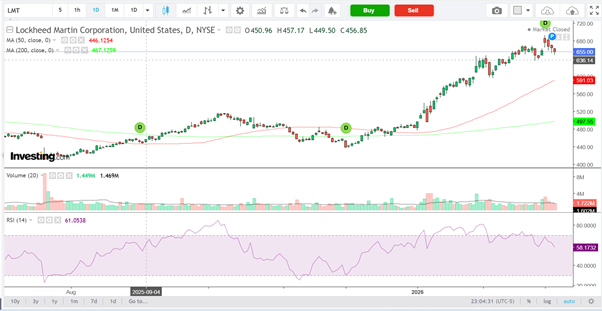
Lockheed Martin (NYSE:) is the world’s largest defence contractor and a major supplier of advanced weapons systems.
Why it benefits
- Producer of the F-35 fighter jet used by multiple NATO countries
- Missile defence and military satellite systems
- Long-term government contracts
As governments increase defence budgets, companies like Lockheed Martin typically see stronger order backlogs and rising revenues.
2. Northrop Grumman (NOC)
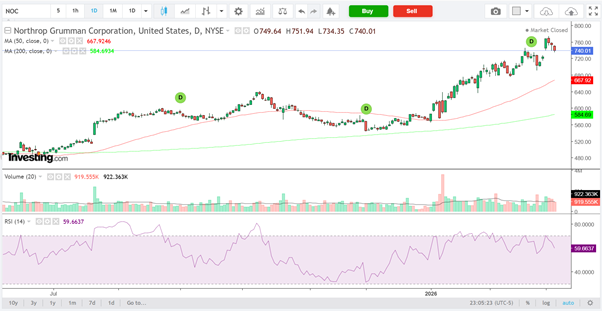
Northrop Grumman (NYSE:) plays a critical role in advanced military technologies.
Key exposure
- Strategic missile defence systems
- Space and satellite programs
- Next-generation stealth aircraft
With rising global competition in space and defence technologies, Northrop Grumman stands to benefit from increased military investment.
3. RTX Corporation (RTX)
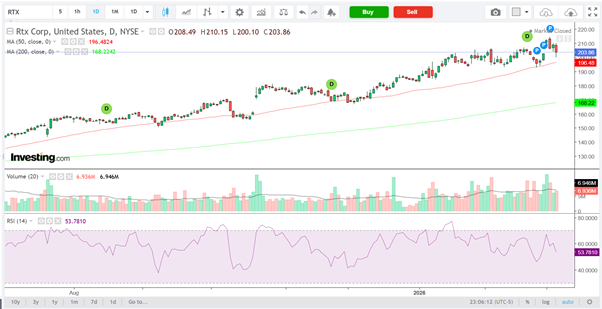
Rtx Corp (NYSE:) (formerly Raytheon Technologies) is a leading manufacturer of missile defence systems.
Why it matters
- Patriot missile systems used globally
- Air defence technologies
- Military avionics and radar systems
Missile defence systems are increasingly in demand as geopolitical tensions escalate, particularly among NATO allies.
4. Exxon Mobil (XOM)
Energy markets often react immediately to geopolitical disruptions.
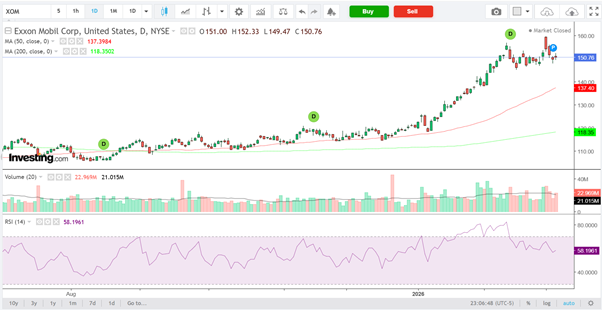
Why Exxon Mobil (NYSE:) benefits
- Large global oil production portfolio
- Integrated refining and energy infrastructure
- Strong exposure to higher crude prices
Conflicts in energy-producing regions can restrict supply and drive oil prices higher, improving margins for major energy companies.
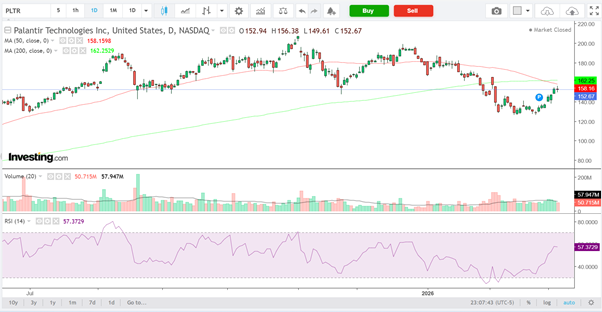
5. Palantir Technologies (PLTR)
Palantir Technologies (NASDAQ:) has emerged as one of the fastest-growing defence technology companies.
Key advantages
- AI-powered intelligence and defence analytics
- Contracts with US and allied governments
- Military decision-support software
Governments increasingly rely on advanced data analytics and artificial intelligence for military and intelligence operations.
Why Defence and Energy Stocks Often Outperform
Historically, geopolitical instability drives increased spending in a few key areas.
Defence Spending
Governments typically raise military budgets during periods of geopolitical tension.
Major global powers—including the United States and many NATO members—have recently announced long-term increases in defence spending.
Energy Security
Energy supply disruptions can quickly push commodity prices higher.
Oil producers often benefit when markets worry about supply interruptions in regions such as the Middle East or Eastern Europe.
Cybersecurity and Intelligence
Modern geopolitical competition increasingly occurs in digital domains.
This is driving investment in:
- cybersecurity
- artificial intelligence
- data intelligence platforms
Companies providing these technologies may see long-term growth opportunities.
Geopolitical tensions create uncertainty for markets, but they also reshape sector leadership.
In periods of rising global instability, investors often rotate toward:
- defence contractors
- energy producers
- cybersecurity and intelligence firms
While no investment is immune to volatility, companies positioned at the centre of national security and energy supply chains often benefit from increased global tensions.
For investors watching geopolitical developments, these sectors may remain among the most strategically important areas of the US stock market.