
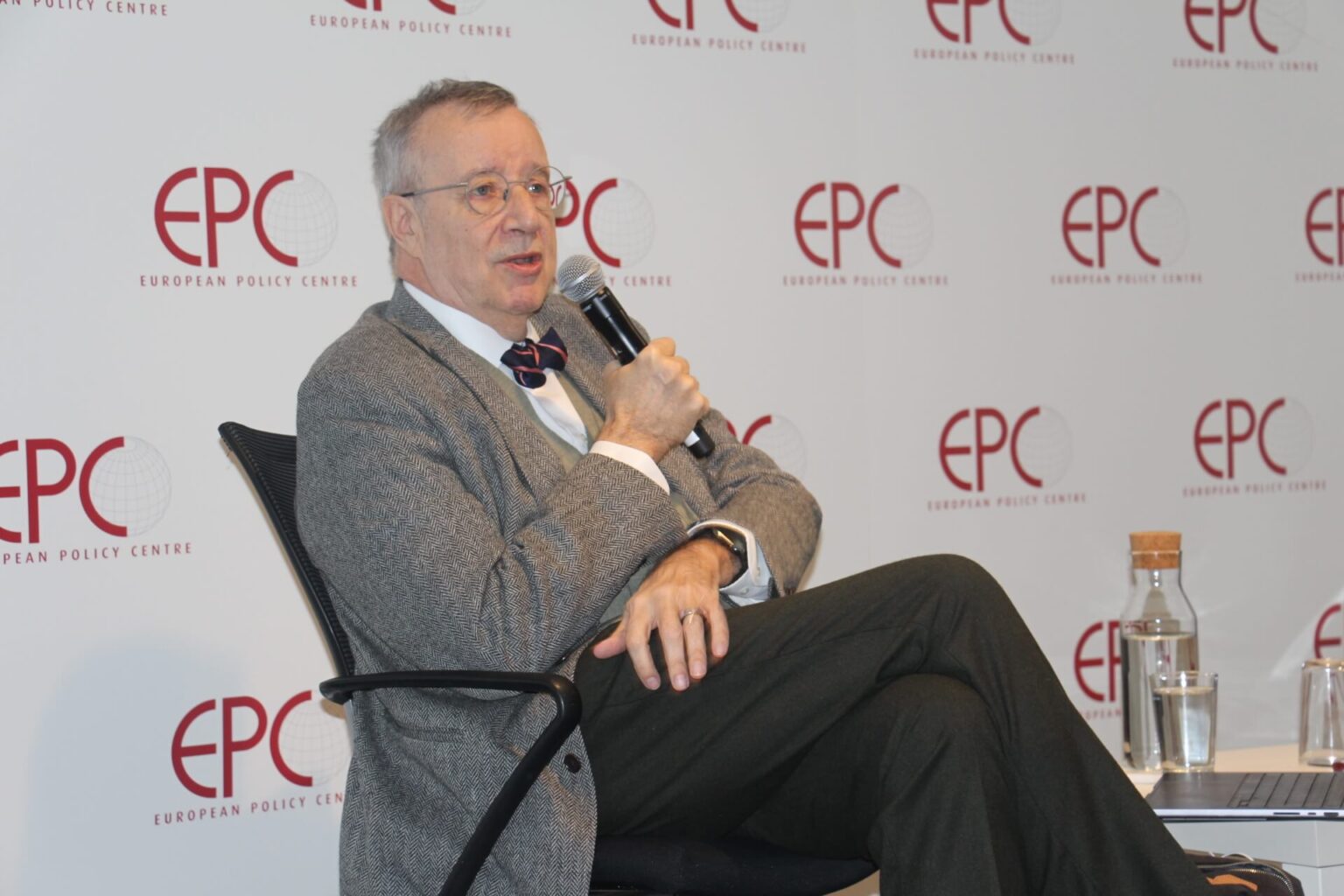
Former President of Estonia Toomas Hendrik Ilves examined the evolving nature of war and the role of the Council of the Baltic Sea States (CBSS) as part of the EPC’s Thought Leadership series.
Created in 1992 to integrate postcommunist states, the CBSS lost much of its purpose as all regional countries except Russia joined the EU and NATO. However, in 2022, Russia’s full-scale invasion of Ukraine forced member states to reassess the organisation. Today, it is concerned with hybrid threats and preparing plans for joint civilian evacuations in case of Russian aggression.
Hendrik pointed out, “Countries like Estonia, Latvia, Lithuania — and in some ways Finland — have extensive experience with evacuations during Russian invasions. They have dealt with largescale population movements in the past.” “Yesterday’s (CBSS) agreement, at least, is a start,’’ he continued. “They will draw up a plan detailing who takes whom, where, and how. It’s a step forward.”
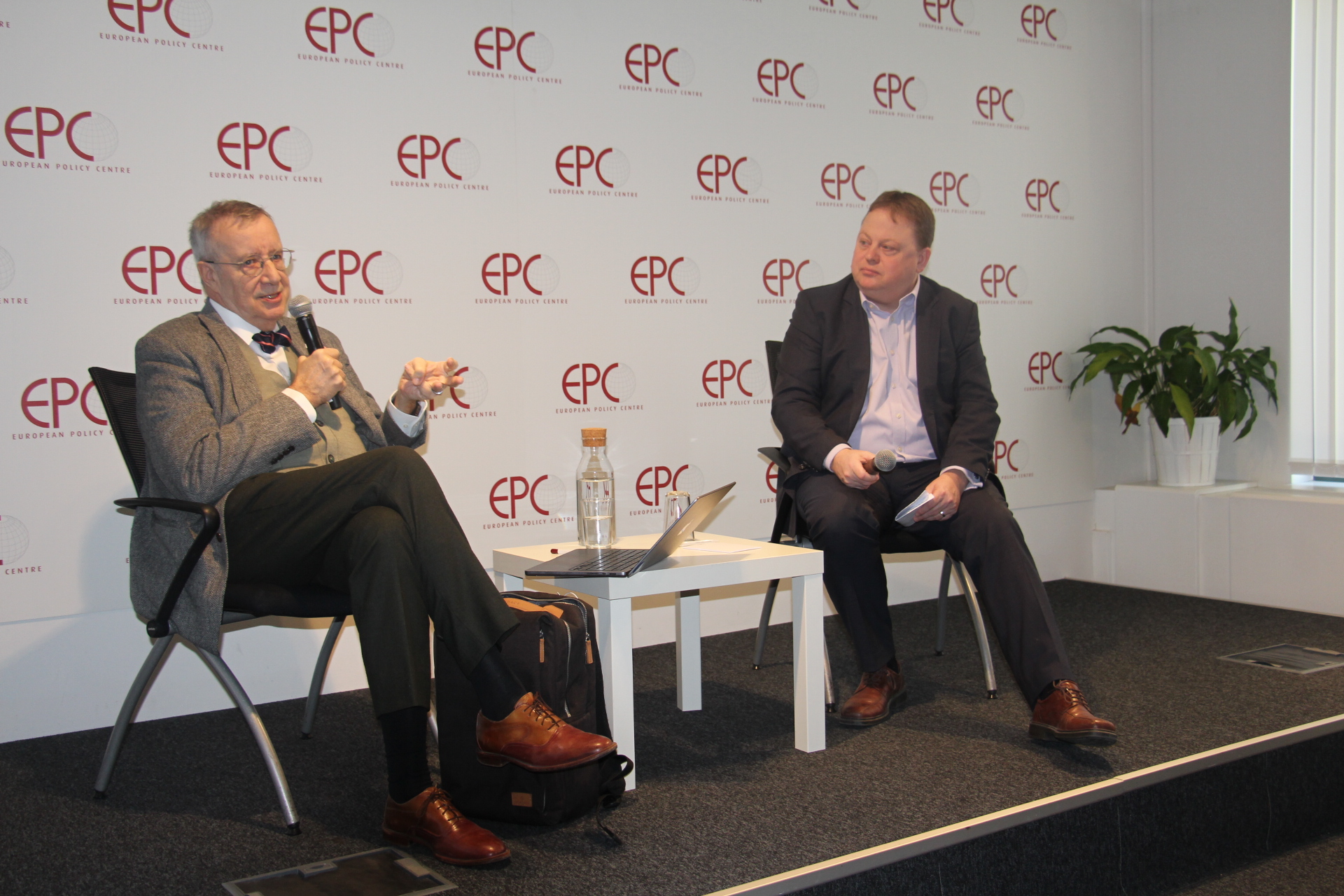
The discussion was moderated by EPC Chief Executive Fabian Zuleeg (right) and featured a keynote speech by Former President of Estonia Toomas Hendrik Ilves (left). Photo by: EPC.
The Baltic states are continuously confronted with sabotage, cyberattacks, disinformation, and many other crossborder operations.
The former president called on both the EU and NATO to do more to confront “sub-threshold” threats that were below NATO article 4 and 5. He said, “We’ve seen attempted assassinations, such as the plot against the CEO of Rheinmetall, Europe’s largest defence company. We’ve seen sabotage attempts, like the trainderailment plot in Poland two months ago. A section of rail had been removed — something that could have caused mass casualties given the traffic on that line.”
For Hendrik, “hybrid warfare” is a misnomer and explains why these threats are not taken seriously enough. “It allows states to claim that no formal response is required. But that does not mean it is not war. This is how Russia wages war today. We must recognise this as war and mobilise some form of response.”
Hendrik insists that “there must be consequences”.
EU responses could include ending visas, and drastically reducing the number of Russian diplomats in Europe.
The Estonian believes that it is important that Ukraine is brought into the EU, “because EU membership at least provides a degree of security.”
At the same time, he sees challenges: “I do not see EU membership happening unless there is a major reform of the Common Agricultural Policy. France, Poland, and Germany will never accept extending full CAP benefits to the breadbasket of Europe.”
Watch the full discussion bellow.
If you are interested in high-level discussions, revisit our previous Thought Leadership Forums with:
Theo Francken, Belgian Minister for Defence
Magnus Brunner, European Commissioner for Home Affairs and Migration
Matthew Whitaker, US Ambassador to NATO
Rajnish Singh is a Media Outreach Executive at the EPC Communications team.
The support the European Policy Center receives for its ongoing operations, or specifically for its publications, does not constitute an endorsement of their contents, which reflect the views of the authors only. Supporters and partners cannot be held responsible for any use that may be made of the information contained therein.