
A fact rarely acknowledged is that the French love Lions tours. While I am assured they adore the games between their Anglo-Celtic rivals and the big three in the deep south, the main reason the French are great supporters of the Lions is because in the season after a Lions tour, Le Tricolore usually wins the Six Nations.
The French championship win in 1967 followed the 1966 Lions tour of New Zealand and Australia. In the seasons after the 1980 and 1986 Lions tours, the French won the Five Nations. This trend accelerated when the professional era erupted. The French have won the championship in 1998, 2002, 2006, 2010 and 2024. All seasons after the Lions headed south.
In 2026, they are the red-hot favourites to continue that tradition.
A member of the victorious French team from 1967 once explained to me: “We are the only major rugby-playing nation that repulsed the British Empire. Every year after a Lions tour, we like to remind the world of that fact.”
Of course, those lines were delivered with a glass of wine in his hand, a wicked boyish glint in ageing eyes and a cheeky smile under his exceptionally large and beautiful bent nose.
Warming to his argument, he added: “The Roast Beef,” which is the affectionate nickname the French use when referring to the English, “are always overcooked after the Lions”. This year, the burnt beef metaphor is sprinkled with a bunch of shamrocks, as the largest ever contingent of Irish Lions have also struggled to find consistency this season.
At the time of that famous French championship win in 1967, the overwhelming majority of French citizens regarded rugby as a game from the agricultural south. When a Test match was played in Paris, the Parisians prepared themselves for a weekend when the rednecks came to the big smoke.
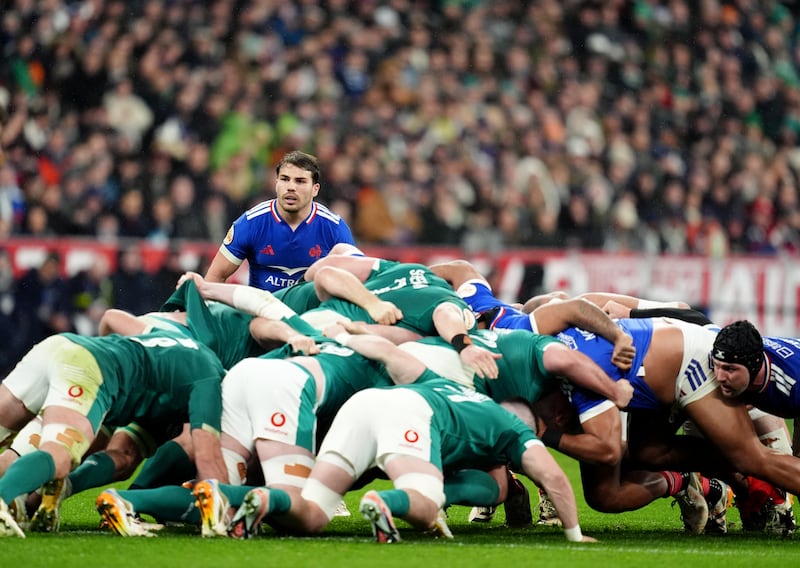
France’s Antoine Dupont sees things that other don’t. Photograph: Adam Davy/PA Wire
Today, the extraordinary growth in popularity of the Top 14 club rugby competition is attracting record numbers of spectators to games, while its televised match of the week, at the unlikely time of 9.15pm on Sunday evenings, tops the ratings and regularly fills giant stadiums across the country. Olympic gold-medal winning super star Antoine Dupont is one of the most recognised faces in France.
Needless to say, oceans of money follow such success.
With such financial resources, French clubs wield enormous political power. Much of World Rugby’s inability to carve out a meaningful global playing calendar can be attributed to the refusal of the Top 14 clubs to reform the structure of their arduous, August-to-June season. For more than 15 years, the club’s power allowed them to sit above the national cause and they did not fully support the French team.
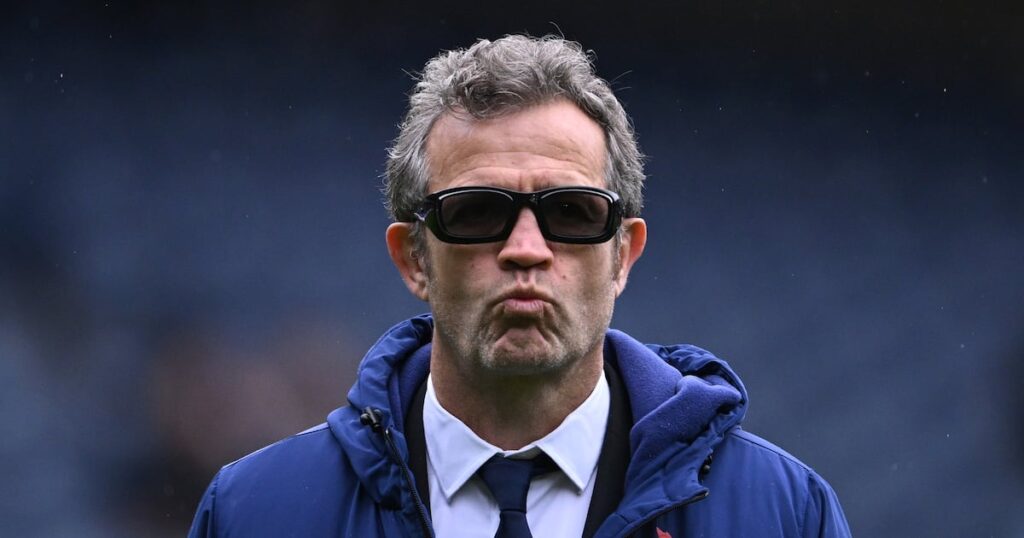
When Fabien Galthié was appointed as the French national coach after the 2019 World Cup, his first task was political reform. He and then-president of the French federation, Bernard Laporte, took on the might of the clubs, eventually forcing them to once again place the national team at the top of the French rugby priority list.
Their political success is reflected in the winning percentages. The French coaches who preceded Galthié were Guy Noves and Jacques Brunel. They did not have the political support of the clubs. Their winning percentages were 33.33 per cent and 41.67 per cent, respectively. Galthié has recorded an excellent winning percentage of 75 per cent.
After professionalising the shambolic coaching structure that the national organisation had descended into after a decade of neglect, Galthié completely overhauled the tactical approach of the French.
While the Springboks are clearly the world’s best after they added a skilful running element to their natural power game, Galthié has France nipping at their heels as he injected extreme power to combine with the legendary French running skills. Galthié now selects skilful, powerful athletes.
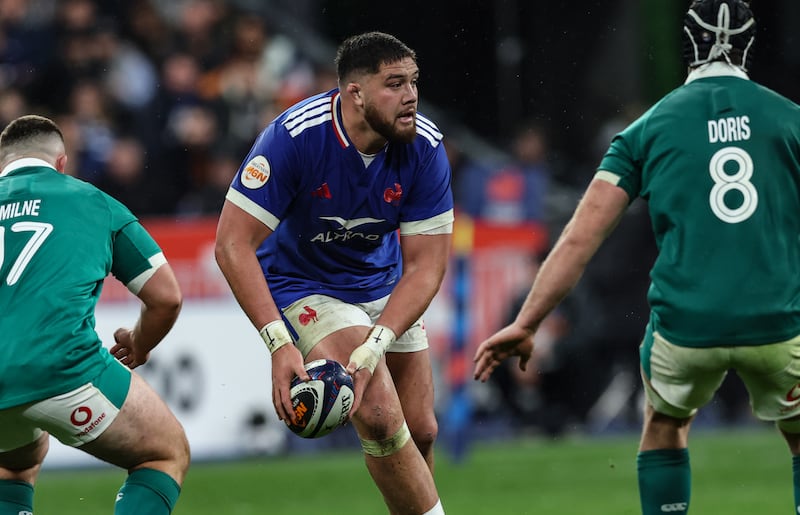
France’s Emmanuel Meafou is extraordinarily effective. Photograph: Billy Stickland/Inpho
The New Zealand-born, Australian-raised secondrower Emmanuel Meafou is the perfect example. This 6ft 8in, 145kg giant was raised playing rugby union and league in Oz. He has the ball skills of a centre and the physical presence of a Goliath. When his power, combined with excellent ball distribution, is injected into play, it has an extraordinary effect.
This weekend at Murrayfield, Galthié’s coaching will take on an ironic twist. In years gone by, the legendary Scottish commentator, Bill McLaren, asked, “Which French team will we see today? The creative running geniuses or the players who, with Latin emotion, shrug their shoulders with disinterest?”
The irony that would bring a smile to McLaren’s face is that it is now the French who are the consistent performers and his beloved Scots are the emotionally unpredictable. In season after season, the Scots have delivered displays that have varied with random unpredictability. This year, they turned up in Rome to face the Italians like an unmotivated bunch of schoolboys. A few days later, their opening 20 minutes against the English contained such a powerful intensity that they blew the men in white off the park.
While the Scots often mentally drop when facing Wales and Italy, Gregor Townsend, to his credit, regularly has his Scottish teams mentally on song for the English and French.
No matter the outcome, the educated Murrayfield crowd will have the joy of witnessing another performance from Dupont. Like very few individuals in the history of our game and unlike any other player I have seen, Dupont can win a match with his inexplicable ability to find space and attack it.
Despite the Dupont factor, 143 years of history tell us that going through this tournament undefeated is not an easy mission. As the saying goes, if it was easy, then everyone would do it. While Galthié has made consistency a feature of this French team, if their mindset is even slightly off kilter and the Scots are in the right mood, then it will be a great battle.
In my imagination, I can picture the seconds before kick-off at a frenzied Murrayfield. As the hairs on my forearm raise, I listen to the wondrous lilt of McLaren, asking his famous question but strangely in reverse: “Which Scotland will we see today?”
Bill, I honestly don’t know. But the answer will determine the result.
Follow our rugby WhatsApp channel
If you want the latest rugby news, analysis and opinion then you should follow our dedicated WhatsApp channel. From Gerry Thornley to Owen Doyle and Gordon D’Arcy, we have every angle covered.
Find the channel here.