
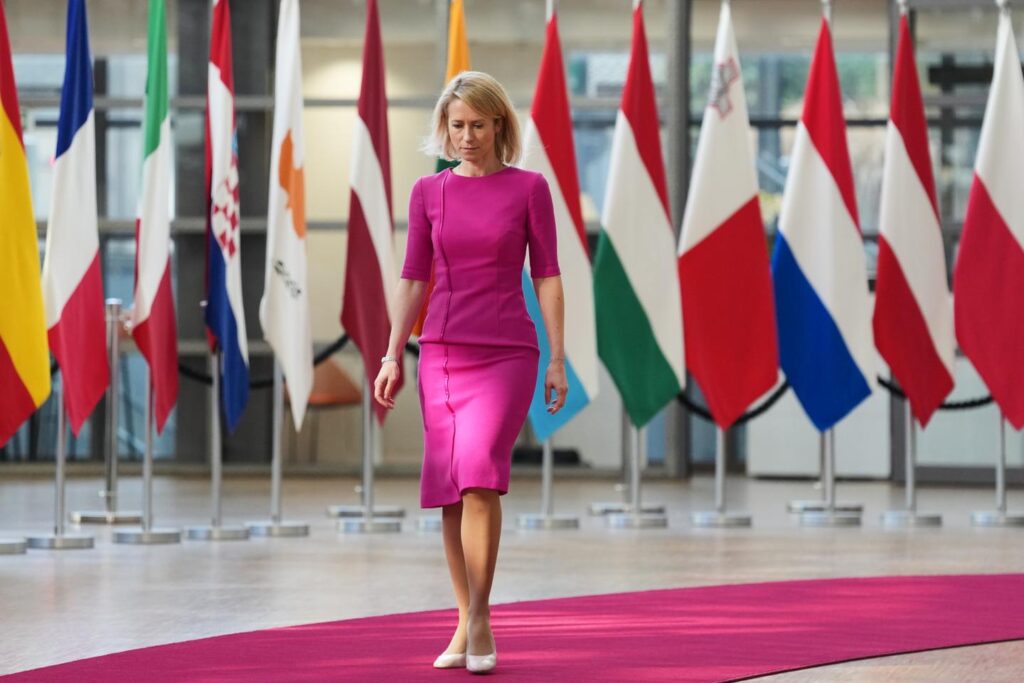
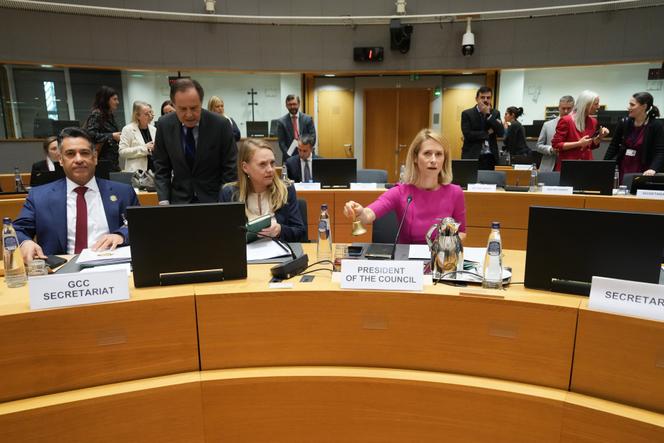
 Fahad Aljaimaz, head of the Gulf Cooperation Council delegation to the European Union, and Kaja Kallas, EU foreign policy chief, during a videoconference with EU foreign ministers and Gulf Cooperation Council representatives in Brussels, March 5, 2026. VIRGINIA MAYO / AP
European foreign policy is not made in the European Parliament, but it is nevertheless the European Assembly that has been home to the most important supporters of the Iranian people and civil society in Europe. Over the past three years, the Parliament has adopted at least 10 resolutions calling for tougher sanctions against the Tehran regime or celebrating Iranian women’s resistance against the Islamic Republic.
The attack on Saturday, February 28, by the US and Israel against Iran stunned and shook not only European capitals, which were not forewarned, but also a chamber deeply divided over the path the continent should now follow. Some welcomed without hesitation the toppling of a regime despised for decades for targeting its own people, its Middle Eastern neighbors and Europe. Others had serious reservations about both the method and consequences of such an action.
Since the outbreak of hostilities, European heads of state and government, as well as various European Union institutions, have remained notably silent, apart from Spanish Prime Minister Pedro Sanchez’s clear stance against the war and the policies of US President Donald Trump. Political groups in the European Parliament are still seeking the right balance ahead of a plenary debate scheduled for March 11.
You have 80.58% of this article left to read. The rest is for subscribers only.