
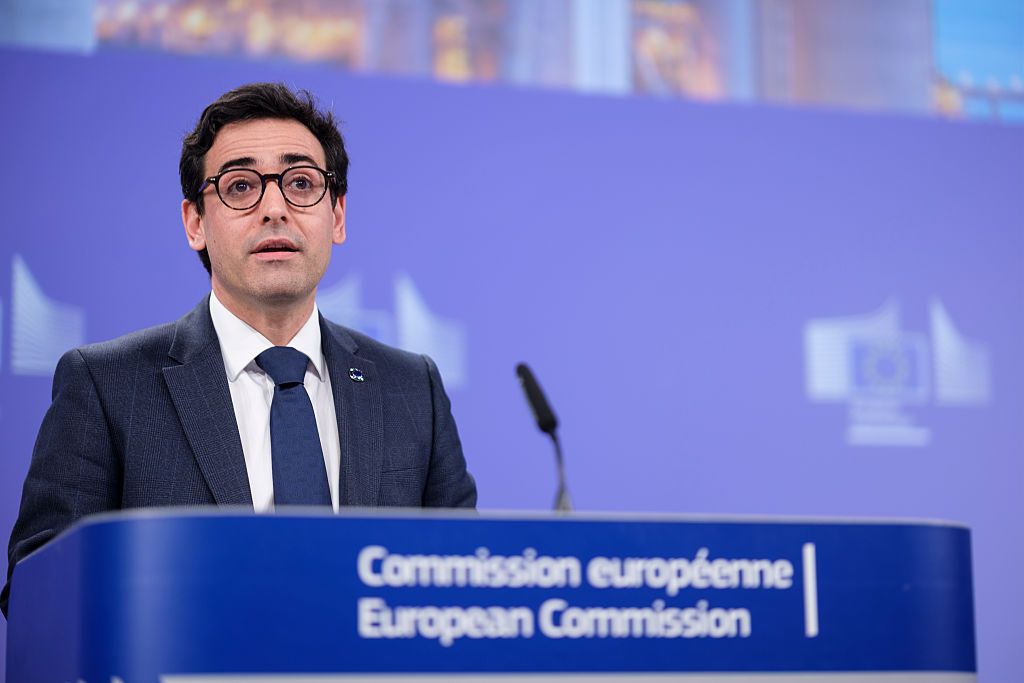
The European Commission unveiled its long-awaited “Buy European” rules on Wednesday – aimed at boosting domestic production and competitiveness in key strategic sectors in the face of intense international pressure and the changing geopolitical environment.
The “Industrial Accelerator Act” sets out new rules under which EU governments must prioritise European production in public contracts across defence, digital and industrial sectors. It does this by setting minimum targets for European-made parts that specific strategic and/or energy-intensive products must include to benefit from government subsidies or procurement contracts.
Don’t miss the latest investment and personal finances news, market analysis, plus money-saving tips with our free twice-daily newsletter
Don’t miss the latest investment and personal finances news, market analysis, plus money-saving tips with our free twice-daily newsletter
‘Buy European’ – will it work?
The ‘Buy European’ strategy is part of Europe’s response to what French president Emmanuel Macron described last month as a “geopolitical and geo-economic state of emergency”. If the continent does not invest in its economy and lift barriers to growth more quickly, it will be “swept aside” by US technology and imports from China, he said. Addressing the root causes of Europe’s relative economic decline has become increasingly urgent since the Covid pandemic and soaring energy prices following Russia‘s invasion of Ukraine laid bare the continent’s vulnerability to supply shocks.
And promoting home-grown industry will help protect the EU’s €2.58 trillion manufacturing industry in the face of high energy prices, cheap imports from China and elsewhere in Asia. Donald Trump’s volatile trade agenda, anti-European rhetoric and hostile threats to cut off trade with Spain over its opposition to war on Iran have made the question more pressing. It is time, says Stéphane Séjourné, the EU’s executive vice-president for prosperity and industrial strategy, for Europe to stand up for itself.
Is the whole of the EU behind this ‘buy European’ idea?
There have been disagreements. France was the prime driving force behind the new rules. Germany took a lot of convincing – along with the Netherlands and Sweden, among others – arguing for an approach more inclusive of key trading partners (including the UK). Even this week, the haggling went right up to the wire. Now the final agreed text will be subject to approval by the 27 EU states and the European parliament before becoming law – and there may well be plenty of wrangling to come.
Will it work?
It will be difficult, says Pierre Briançon on Breakingviews. The new rules are an attempt to “deal with the paradox that the bloc’s ambitious green industrial policy risks shrinking its manufacturing base”. Given Donald Trump‘s aggressive America First agenda and that China subsidises its industry to the tune of 4% of annual GDP, the EU has good reason to shore up its manufacturing base.
But the “buy local” idea is also fraught with risks. Unless non-EU members such as the UK and Norway are included, the plans risk turning into a series of hostile trade measures against close partners. It’s also important for the EU not to shore up “lost causes”, such as the solar-panel industry that long ago became dominated by China.
And the rules will need to be “implemented and tested with pragmatism”, and open to revision if the results are underwhelming, or if the impact is that European cars (for example) get more expensive and exports suffer. “Brussels will need to act with flexibility and subtlety – two qualities seldom associated with the bloc’s enforcement police.”
What else should Europe do?
European “independence” encompasses everything from defence to financial markets. On defence, Macron made a historic offer this week to station French nuclear assets in Germany and several other European countries, as well as inviting them to take part in joint nuclear exercises and support missions.
It’s the most important revision to France’s nuclear doctrine in a generation – a welcome step towards the same commitment Europe’s other nuclear power, the UK, already extends to Nato members.
On financial markets, the French president echoes the recommendations of Mario Draghi’s 2024 report on European competitiveness, calling for common European bonds – drawing in part on Europeans’ high savings rate – to boost investment in defence and security, green technology and AI.
Why is that so important?
Because without them Europe is “working backwards”, says the Spanish business minister Carlos Cuerpo in the FT. “We are debating defence, security budgets, industrial policy, digital sovereignty and energy grids without the one thing that would make them all affordable: a collective form of credit that the world trusts.”
Nor could there be a better time to create Europe’s answer to US Treasuries. With US leadership and stability under question, global portfolios are diversifying rapidly and investors are looking for high-quality, liquid safe assets. Since 2025, the euro has appreciated 15% against the US dollar. But “we are getting a stronger currency without the strategic dividends it should deliver: cheaper financing, deeper liquidity and greater financial stability”.
To do this will require a broader financial infrastructure, including the creation of futures and derivatives markets that allow institutional investors to hedge. And it will require iron discipline and determination on the part of politicians. The changed world has made this an existential question for Europe.
This article was first published in MoneyWeek’s magazine. Enjoy exclusive early access to news, opinion and analysis from our team of financial experts with a MoneyWeek subscription.
Explore More