
Last Updated:March 07, 2026, 22:58 IST
While Team India enter as defending champions, they are chasing a feat that has eluded every host nation in the tournament’s 19-year history




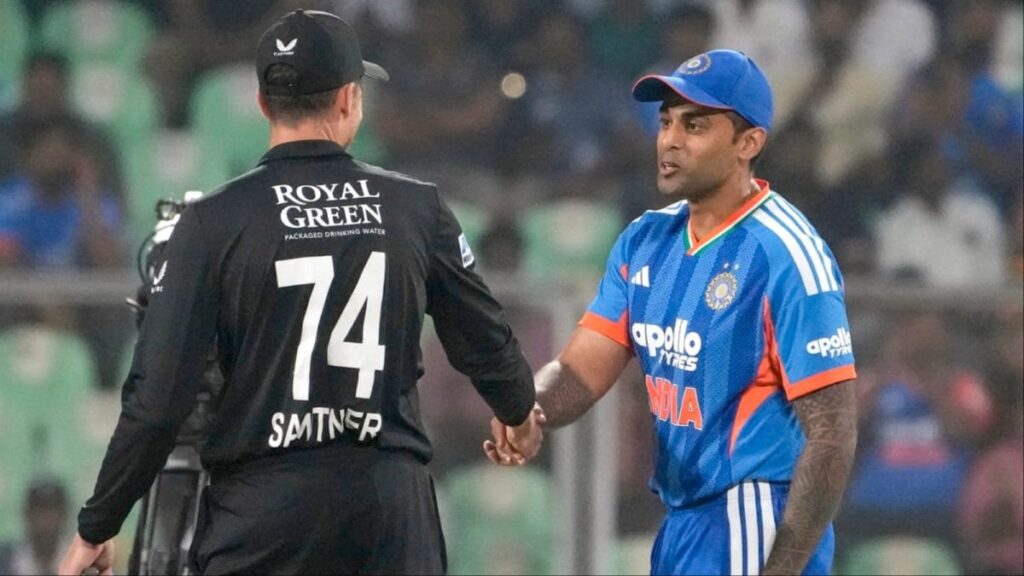
Suryakumar Yadav will captain India in the T20 World Cup 2026 final against New Zealand. (Picture Credit: PTI)
The stage is set for a historic blockbuster on Sunday, as India faces New Zealand in the T20 World Cup final at the Narendra Modi Stadium in Ahmedabad. While the “Men in Blue” enter as defending champions, they are chasing a feat that has eluded every host nation in the tournament’s 19-year history: winning the trophy on home soil.
Across nine previous editions of the T20 World Cup, from South Africa in 2007 to the USA and West Indies in 2024, the “host nation jinx” has remained stubbornly intact. Even in 2016, when India last hosted the event, they were knocked out in the semi-finals by the eventual winners, the West Indies. Now, Suryakumar Yadav’s side stands on the precipice of history, looking to become the first team to defend their title and the first to conquer the “home curse”.
‘Ghosts of 2023’
The primary challenge for India isn’t just the opposition but the sheer atmospheric pressure of the world’s largest cricket stadium. The “Ahmedabad jinx” is a fresh wound for many Indian fans, harking back to the 2023 ODI World Cup final, where an unbeaten Indian team suffered a heartbreaking defeat to Australia on this very ground.
To combat the “ghosts of 2023″, the Indian management has reportedly adopted a “reset” strategy. Reports indicate the team have changed their usual hotel in Ahmedabad and even altered their training schedule to shift the psychological energy of the camp. Captain Suryakumar Yadav has been vocal about maintaining a “fearless” brand of cricket, a mantra that saw India pile up a record 253 runs in their semi-final victory over England at the Wankhede.
Tactical Shifts: Red Soil and Relay Catches
Unlike the sluggish, used black-soil pitch that stifled India in the 2023 final, Sunday’s summit clash will be played on a fresh “mixed-soil” surface. Composed of approximately 70% red soil, the wicket is expected to offer true pace and bounce, favouring aggressive stroke-makers like Sanju Samson, who enters the final in the form of his life following a match-defining 89 in the semi-finals.
However, the 7 pm start introduces the inevitable “dew factor”. In Ahmedabad, the evening moisture can turn the ball into a “bar of soap” for spinners, potentially neutralising India’s weapon of choice, Varun Chakaravarthy. To counter this, India has leaned heavily on “relay fielding” and high-intensity catching drills, exemplified by Axar Patel’s miraculous boundary-line assist that turned the tide against England.
The New Zealand Hoodoo
While India holds the overall head-to-head advantage in T20Is, the World Cup narrative tells a different story. New Zealand remains India’s “bogey team” in this format, boasting a perfect 3-0 record against the Men in Blue in T20 World Cup encounters. Under Mitchell Santner, the Black Caps have embraced a “giant-killer” tag, having dismantled South Africa by nine wickets to reach the final.
For India to break the jinx, they must navigate the potential opening spell of Jacob Duffy, who has been in record-breaking form this year. If India’s top order, led by the explosive Ishan Kishan, can survive the Powerplay and set a target north of 200, the “home curse” may finally be lifted.
A Legacy in the Making
A victory on Sunday would be more than just a trophy; it would cement this era of Indian cricket as the most dominant in the shortest format. India would become the first-ever three-time T20 World champions and the first to win back-to-back titles. As the sun sets over the Sabarmati on Sunday, a nation will hold its breath to see if 2026 is finally the year the hosts have the last laugh.
March 07, 2026, 22:58 IST
Read More